
The best Perplexity AI alternatives in 2026 are ChatGPT (most versatile for extended conversations and code analysis), Google Gemini (strongest for multimodal research and Google ecosystem integration), Claude (best for long-document analysis and nuanced reasoning), and Phind (purpose-built for developer questions with code-aware search). For engineering teams needing answers about their own codebase rather than the public internet, codebase intelligence tools like Glue provide private-repository-aware AI that Perplexity and general-purpose assistants cannot.
I've used Perplexity AI heavily for technical research at Salesken — evaluating ML frameworks, comparing infrastructure options, synthesizing API documentation. It's excellent for general questions. For deep codebase-specific research, I kept hitting limits.
Perplexity AI changed how people search for information. Instead of parsing ten blue links, you ask a question and get a cited, synthesized answer. For general research, it's excellent. For engineering teams with specific technical needs, it has limitations worth understanding.
Whether you're hitting Perplexity's usage limits, need deeper technical capabilities, or want an AI research tool that understands your specific codebase (not just the public internet), here are the best alternatives organized by what you actually need.
Why Engineers Look for Perplexity Alternatives
Perplexity excels at general knowledge retrieval - the kind of question where the answer exists somewhere on the public internet and you need it synthesized quickly. "What's the difference between gRPC and REST?" or "How does Kubernetes handle pod scheduling?" These are questions Perplexity answers well.
But engineering work involves a different class of questions:
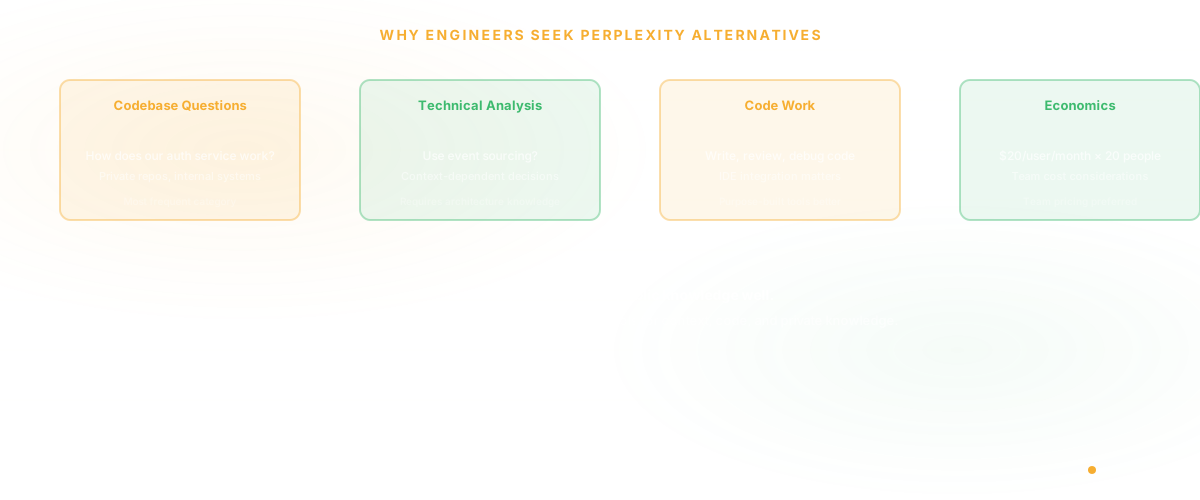
Codebase-specific questions. "How does our authentication service work?" Perplexity can't answer this because it can't read your private repository. This is arguably the most frequent category of technical question, and no general-purpose AI search tool can touch it.
Deep technical analysis. "Should we use event sourcing for our order management system?" requires understanding your specific scale, team capabilities, existing architecture, and business constraints. Perplexity gives you the generic pros-and-cons article. You need contextual analysis.
Code generation and debugging. Perplexity can explain code concepts but isn't designed for writing, reviewing, or debugging code in the way purpose-built coding assistants are.
Rate limits and pricing. Perplexity Pro costs $20/month per user. For a 20-person engineering team, that's $400/month. Some teams want comparable functionality at lower cost or without per-seat pricing.
Best Perplexity AI Alternatives
For General AI Research
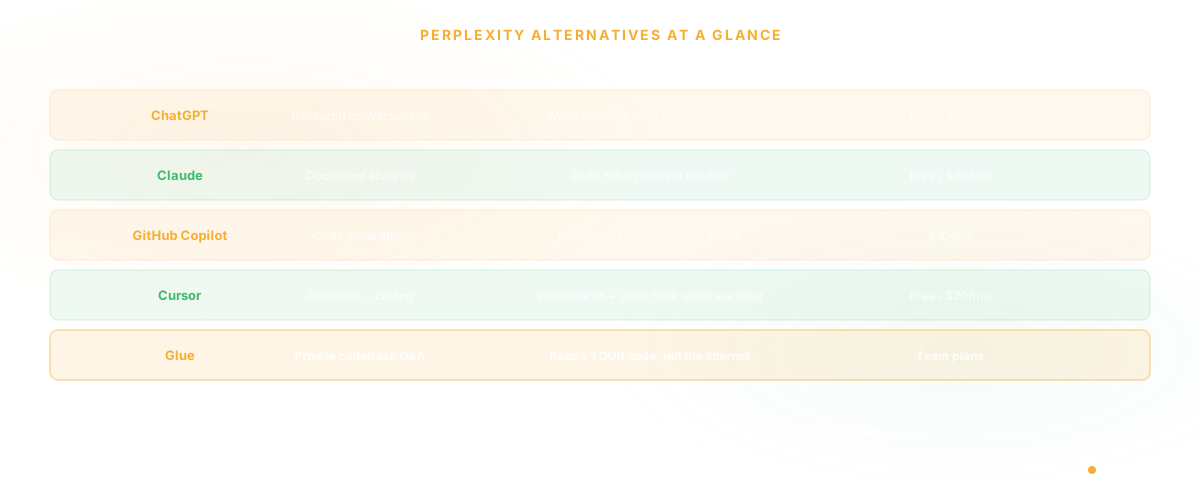
ChatGPT (OpenAI) - The most versatile general-purpose AI. With web browsing enabled, ChatGPT can search the internet and synthesize answers similar to Perplexity. The advantage is deeper conversational ability - you can follow up, refine, and iterate on complex questions in ways that Perplexity's search-first model doesn't always support.
- Best for: Extended research conversations, document analysis, multi-step reasoning
- Pricing: Free tier available, Plus at $20/month, Team at $25/user/month
Claude (Anthropic) - Excels at long-context analysis and nuanced reasoning. Claude can process entire documents, codebases (up to 200K tokens), and provide detailed technical analysis. For engineers who need to analyze large technical documents, RFCs, or research papers, Claude's context window is a significant advantage over Perplexity.
- Best for: Long document analysis, code review, nuanced technical writing
- Pricing: Free tier available, Pro at $20/month, Team at $25/user/month
Google Gemini - Integrated with Google's search infrastructure, Gemini provides real-time information access with Google's knowledge graph backing it. The Deep Research feature can conduct multi-step research autonomously and compile findings.
- Best for: Real-time information, Google Workspace integration, multimodal queries
- Pricing: Free tier available, Advanced at $20/month
For Code-Specific Questions
GitHub Copilot - Purpose-built for code generation and understanding within your IDE. Copilot doesn't search the web like Perplexity, but it understands code context in ways no general AI tool can. Copilot Chat can answer questions about code, explain functions, and suggest refactoring approaches.
- Best for: Inline code assistance, IDE-integrated Q&A, code generation
- Pricing: $10/month individual, $19/user/month business
Cursor - An AI-first code editor that combines Perplexity-style web search with deep codebase understanding. You can ask questions about your code AND search documentation in the same interface. For engineers who want one tool for both research and coding, Cursor is the closest thing to "Perplexity for code."
- Best for: Combined research and coding, codebase-aware Q&A, AI-assisted development
- Pricing: Free tier, Pro at $20/month
Phind - Originally built as "Perplexity for developers," Phind specializes in technical search with code-aware answers. It searches programming documentation, Stack Overflow, and technical blogs, then synthesizes answers with code examples.
- Best for: Programming-specific questions, framework documentation, debugging help
- Pricing: Free tier available, Pro at $15/month
For Codebase Intelligence (Your Private Code)
Glue - This is the category that Perplexity and its direct competitors fundamentally can't address. Glue doesn't search the public internet - it reads your private codebase. Ask "how does the payment service handle refunds?" or "what would break if I changed the user schema?" and Glue answers from your actual code, not from Stack Overflow.
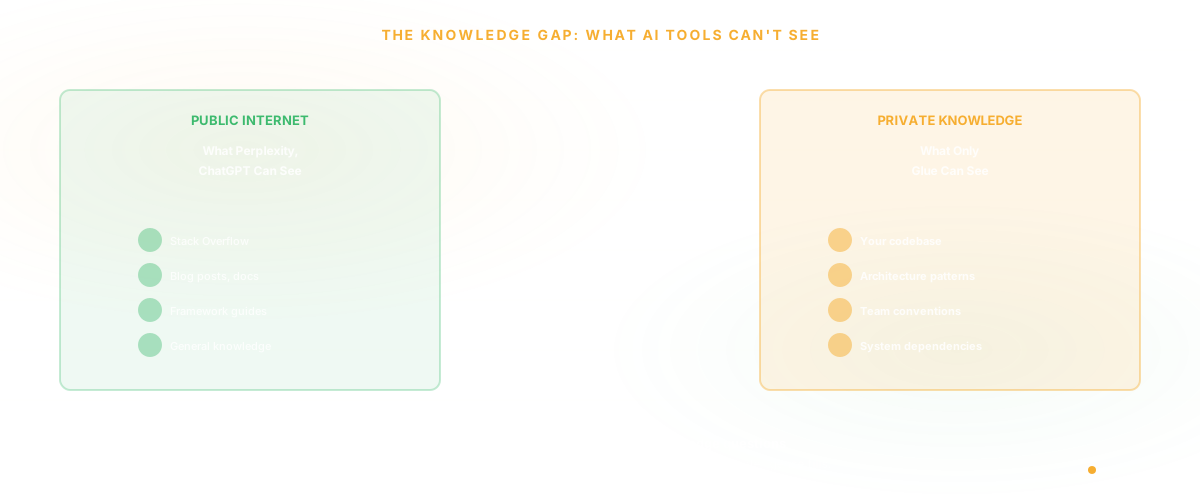
For engineering teams, the most important questions aren't about public knowledge (which Perplexity handles well). They're about private knowledge - how YOUR system works, who owns what, where the complexity lives, and what the dependencies are. Glue is purpose-built for these questions.
- Best for: Codebase Q&A, architecture understanding, dependency mapping, onboarding
- Pricing: See getglueapp.com for current plans
For Academic and Deep Research
Elicit - Purpose-built for research paper analysis. If you're doing literature reviews, evaluating technical approaches with academic backing, or need to find and synthesize research papers, Elicit is significantly better than Perplexity at navigating academic databases.
- Best for: Academic research, literature reviews, evidence synthesis
- Pricing: Free tier, Plus at $10/month
Consensus - Another academic search engine that uses AI to synthesize findings from peer-reviewed papers. Useful when you need evidence-backed answers rather than blog-post-level explanations.
- Best for: Evidence-based technical decisions, research synthesis
- Pricing: Free tier available, Premium at $9.99/month
How to Choose the Right Alternative
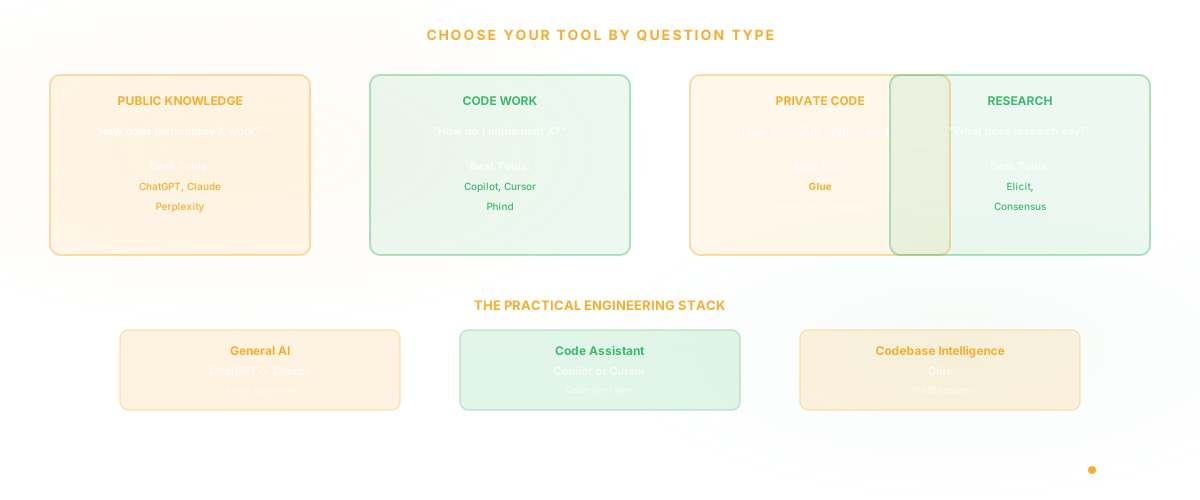
The right Perplexity alternative depends on what kind of questions dominate your workflow:
"How does technology X work?" - Perplexity, ChatGPT, or Claude. These are public-knowledge questions where general AI tools excel.
"How do I implement X in my code?" - Copilot, Cursor, or Phind. These are coding-context questions where IDE integration and code awareness matter.
"How does OUR system work?" - Glue. This is the private-knowledge question that no public AI tool can answer. If this category represents a significant portion of your team's questions (and for most engineering teams, it does), codebase intelligence is the missing layer.
"What does the research say about X?" - Elicit or Consensus for academic research. Perplexity for general web research.
For a deeper look at how AI coding tools create their own challenges, see our post on AI coding tools and technical debt, and our comparison of AI code assistants vs codebase intelligence.
Most engineering teams don't need to choose one tool. The practical stack is: a general AI assistant (ChatGPT or Claude) for broad questions, a coding assistant (Copilot or Cursor) for code-level work, and codebase intelligence (Glue) for understanding your own system. Together, these cover the full spectrum of questions an engineering team encounters daily.
Frequently Asked Questions
What is the best free alternative to Perplexity AI?
ChatGPT's free tier with web browsing, Google Gemini's free tier, and Phind's free tier are the strongest free alternatives. Each has limitations compared to Perplexity Pro - lower usage limits, fewer features - but for casual research they're capable substitutes.
Is Perplexity AI better than ChatGPT?
For quick factual research with citations, Perplexity is generally better - it's optimized for search. For extended conversations, code analysis, document processing, and creative tasks, ChatGPT is more versatile. They're complementary tools rather than direct substitutes.
Can Perplexity AI read my codebase?
No. Perplexity searches the public internet. It cannot access private repositories, internal documentation, or your codebase. For AI that reads and answers questions about your private code, codebase intelligence tools like Glue are purpose-built for this use case.
What is the best AI tool for software engineers?
There's no single best tool - the best stack combines a coding assistant (GitHub Copilot or Cursor) for writing code, a research tool (Perplexity or ChatGPT) for learning and problem-solving, and codebase intelligence (Glue) for understanding your own system. Each addresses a different category of engineering questions.
Related Reading
- AI for Product Management: The Difference Between Typing Faster and Thinking Better
- AI Product Discovery: Why What You Build Next Should Not Be a Guess
- Cursor for Product Managers: The Next AI Shift Nobody Is Talking About
- AI Code Assistant vs Codebase Intelligence: Why Agentic Coding Changes Everything
- Knowledge Management System Software for Engineering Teams
- The Product Manager's Guide to Understanding Your Codebase