Comparison
SonarQube enforces code quality standards in CI/CD. Glue translates technical metrics into business impact for product teams.
I've evaluated dozens of engineering tools across three companies. What matters isn't the feature list — it's whether the tool actually changes how your team makes decisions.
SonarQube is the industry standard for automated code quality scanning in CI/CD pipelines. If you care about security vulnerabilities, code coverage, and technical debt metrics, SonarQube is the tool your engineering team is probably already using. But SonarQube and Glue answer different questions for different people.
SonarQube is a robust static code analysis platform that automatically scans your code for security vulnerabilities (OWASP top 10, CWE classifications), code quality issues (code smells, complexity violations, potential bugs), and code coverage gaps. It integrates directly into your CI/CD pipeline and blocks merges that violate your quality gates.
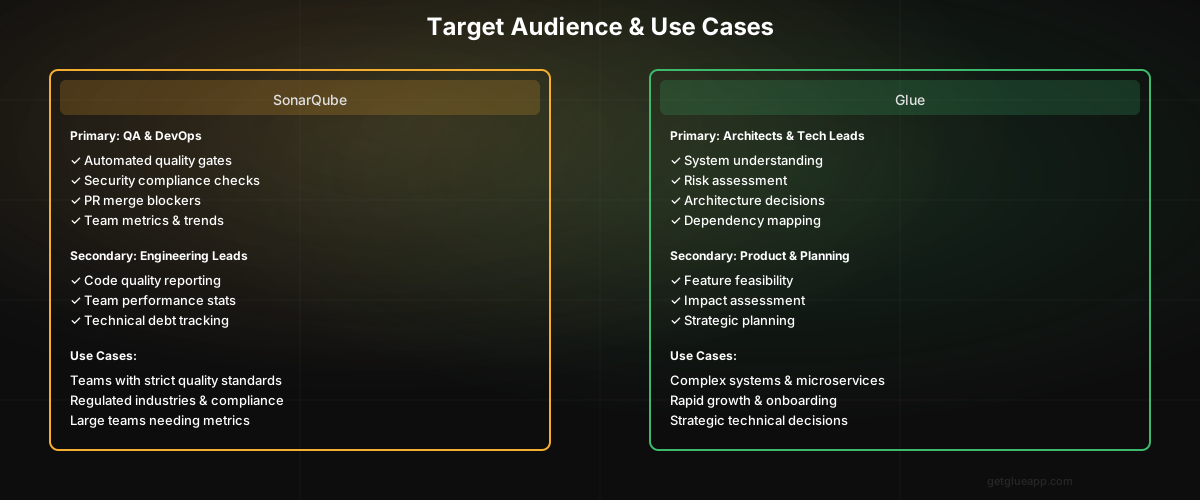
For engineers and QA teams, SonarQube output is meaningful and actionable: "This method has cyclomatic complexity of 18, refactor it." "Missing null check on line 547." "Hardcoded password in configuration."
SonarQube also provides quality dashboards that show trends: are code coverage ratios improving or declining? Are you introducing more vulnerabilities than you're fixing? How does one service's quality compare to another?
The output of SonarQube is technical: it speaks in the language of code analysis. That language is native to engineers. It's noise to everyone else.
Glue translates code-level signals into business impact. When SonarQube reports a cyclomatic complexity issue, Glue understands: this module is a bottleneck for team velocity. When SonarQube finds a cluster of OWASP vulnerabilities, Glue asks: which modules contain the highest concentration of security risk, and what does that mean for your product?
Glue also provides understanding that SonarQube doesn't measure: architectural patterns and dependencies (is this module critical to other systems?), ownership and responsibility clarity (who should actually own this risk?), and change patterns that correlate with instability.
Glue is built for PMs, EMs, and CTOs who need to understand code quality in terms of business impact, not technical scores.
SonarQube tells engineers what's wrong with their code. Glue tells product leaders what that wrongness means for their business.
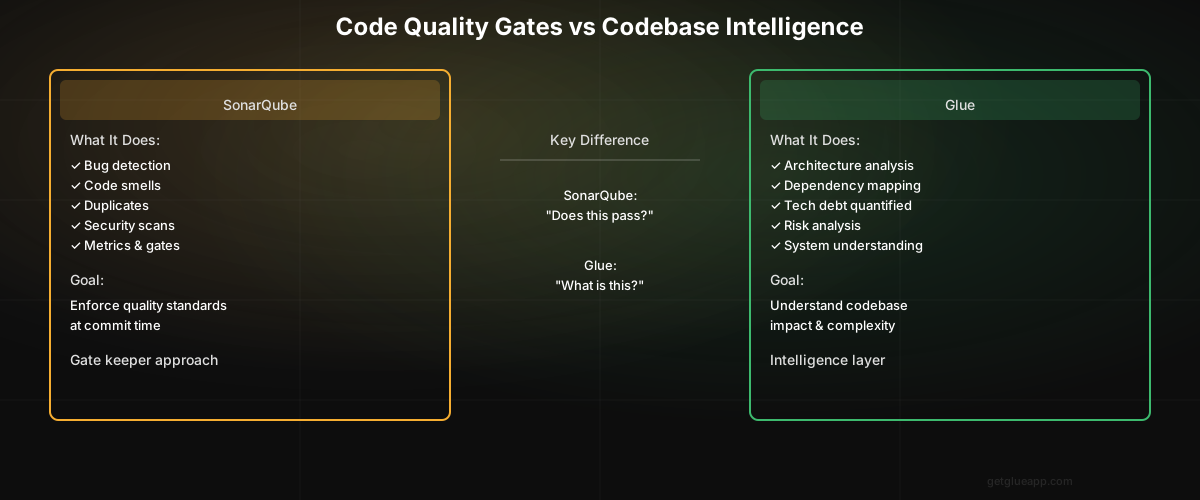
Take a concrete example. SonarQube flags that the payments module has 6 security vulnerabilities and a code coverage ratio of 62%. That's meaningful to the engineer who needs to fix it. But a PM asking "Is it safe to ship the new payment flow?" doesn't know what to do with those numbers. Glue translates: "The payments module has concentration of security issues relative to similar modules. This module is a critical dependency for 8 other modules. We recommend addressing this before shipping new payment features."
Or another example. SonarQube shows code complexity scores. Glue shows: "This module has high complexity AND is owned by two teams AND changes frequently. That's a structural risk pattern."
SonarQube is a quality gate that enforces standards. Glue is a decision-support tool that helps you understand structural risks.
| Capability | SonarQube | Glue |
|---|---|---|
| Security vulnerability detection | Excellent (OWASP, CWE) | Not primary |
| Code quality metrics | Comprehensive | Not primary |
| Code coverage tracking | Yes | Not applicable |
| CI/CD pipeline integration | Native | Not applicable |
| Automated quality gates | Yes | No |
| Code smell detection | Yes | Not applicable |
| Complexity scoring | Detailed | Not applicable |
| Architectural risk identification | No | Core feature |
| Business impact of code quality | Limited | Core feature |
| Ownership-aware risk | No | Yes |
| Root cause of quality issues | Limited | Yes |
| Product-team usability | Low | High |
If your primary need is automated quality enforcement in your CI/CD pipeline, SonarQube is essential. You want to catch security vulnerabilities before code reaches production. You track code coverage as a quality metric. You have architectural standards (max cyclomatic complexity, duplication thresholds) that you want to enforce automatically.
SonarQube is also better if you need detailed static analysis dashboards for your engineering team to track progress on code quality improvements.
Choose Glue when the person asking about code quality is not an engineer writing code. When your CTO needs to explain to the board why a codebase refactor is necessary, SonarQube scores won't convince them (they don't understand cyclomatic complexity), but Glue's connection to business impact will.
Choose Glue if you've already invested in SonarQube but your PMs and EMs still can't act on the results because they don't translate to business language. Glue bridges that gap.
Choose Glue when you need to understand not just that code quality is bad, but WHY it's bad (architectural structure, ownership confusion, change patterns) and WHAT to do about it.
Q: Can I use both SonarQube and Glue?
Yes. They serve different purposes. SonarQube enforces quality standards in your pipeline. Glue helps leadership understand the business impact of those quality measures and identify structural root causes.
Q: Does Glue detect security vulnerabilities like SonarQube?
Glue doesn't do security scanning. If you need vulnerability detection, SonarQube (or another SAST tool) is essential. Glue adds context to the security risk picture.
Q: If my team already uses SonarQube, does Glue add value?
Yes. SonarQube tells engineers what to fix. Glue tells your PM and EM which things to prioritize based on architectural impact and tells your CTO how to explain the quality situation to leadership.
Q: How do complexity scores from SonarQube relate to Glue's analysis?
SonarQube shows individual method or class complexity. Glue shows how complexity is distributed across modules and how that affects team velocity and dependency risk. Different levels of analysis.
Q: Can I use Glue's insights to configure SonarQube quality gates better?
Yes. Understanding which modules are architecturally critical helps you set appropriate quality gate thresholds. Glue can inform SonarQube configuration.
Keep reading
Related resources