Comparison
Sourcegraph excels at code search for engineers. Glue provides codebase intelligence for product teams. Understand the differences and when to use each.
I've evaluated dozens of engineering tools across three companies. What matters isn't the feature list — it's whether the tool actually changes how your team makes decisions.
Sourcegraph is one of the most sophisticated code intelligence platforms available - a developer powerhouse for navigating large, complex codebases. But it solves a fundamentally different problem than Glue. Sourcegraph is built for engineers who already know what they're looking for. Glue is built for product teams who need to understand what they're asking engineers to build.
Sourcegraph is exceptional at what it does: code search at scale. It indexes your entire codebase and lets developers search across repositories with precision, navigate dependencies instantly, understand usage patterns of specific functions or classes, and perform batch changes (refactoring, security fixes) across thousands of files simultaneously. The product is genuinely powerful for large engineering teams that need sub-second search across massive monorepos or complex polyrepo architectures.
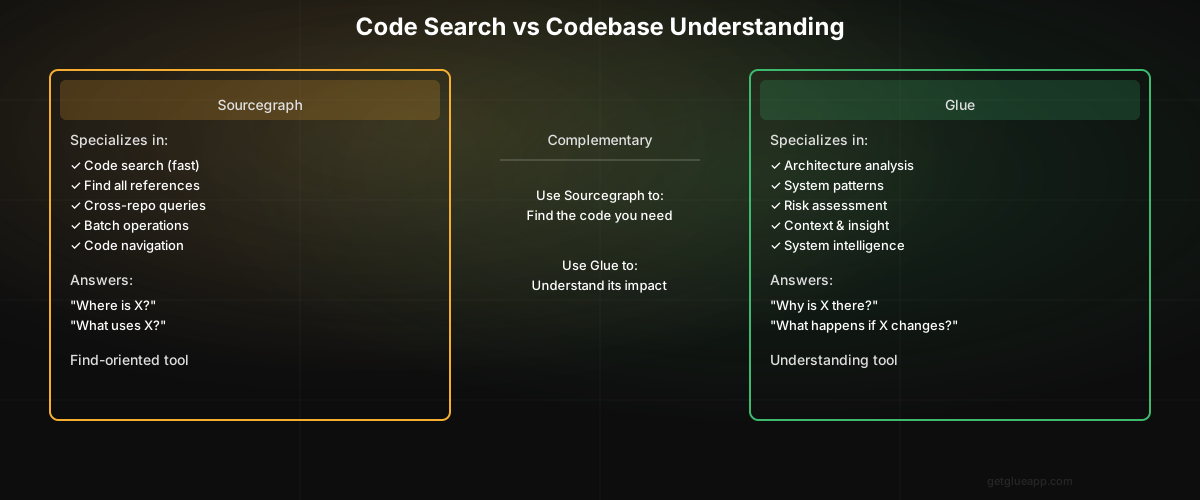
Sourcegraph also provides code insights dashboards that track patterns like language usage distribution, IDE extension adoption, and custom analytics on code patterns. For engineering teams with dedicated code search power users, Sourcegraph is the standard.
The core assumption in Sourcegraph: you already know what you want to find. You know the function name, the module structure, the search pattern. Your question is "where is this used?" or "how has this changed?" - questions that require keyword precision.
Glue starts from the opposite assumption: product teams don't know what they're looking for. They have business questions. "Why are we slow to ship features in the payments module?" "Who actually owns the authentication system?" "What's the risk in this architectural pattern?" "How has this codebase component changed over time?"
Glue connects to your codebase and answers these questions in plain language without requiring search query expertise. It understands code structure, ownership patterns, architectural dependencies, change history, and complexity - and translates that into product language that PMs, engineering managers, and CTOs can act on.
Sourcegraph requires you to know what you're searching for; Glue translates business questions into codebase understanding. Sourcegraph is a search tool; Glue is an intelligence tool.
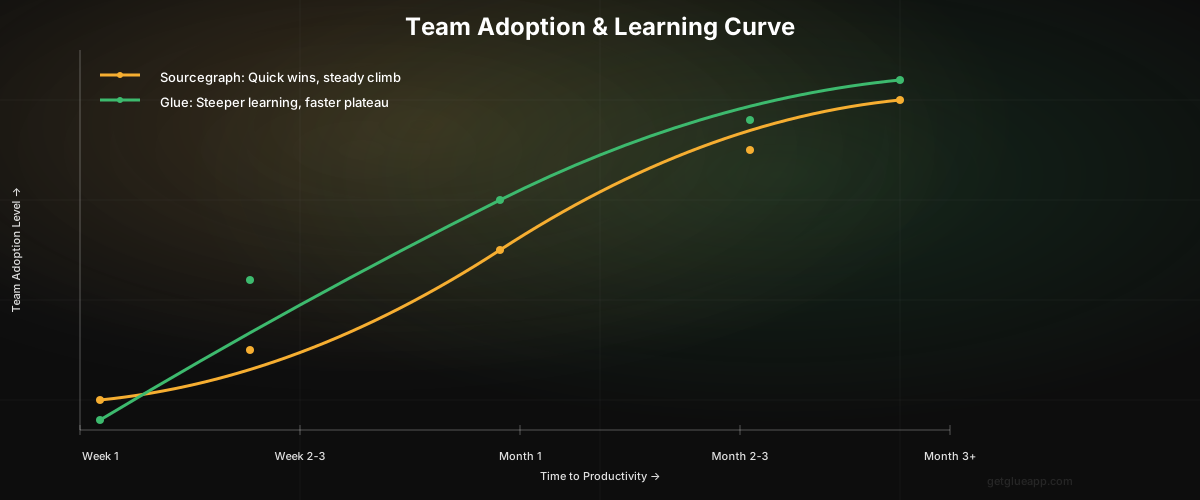
Sourcegraph's strength is precision and speed at scale - if you know the search term, you get instant answers across hundreds of repositories. Glue's strength is accessibility and context - you can ask questions in plain language and get answers that connect technical reality to business impact.
Think of it this way: Sourcegraph answers "Is X used in Y?" Glue answers "Why are we slow at Z, and what in our codebase is causing it?"
| Capability | Sourcegraph | Glue |
|---|---|---|
| Search precision (known queries) | Excellent (multi-repo, sub-second) | Not primary purpose |
| Natural language questions | No (requires search syntax) | Yes |
| Architectural pattern understanding | Limited (search-based) | Core capability |
| Ownership and responsibility mapping | Manual or external integration | Derived from codebase |
| Change history context | Search-based navigation | Connected to business impact |
| Complexity and risk identification | Via search patterns | Structured analysis |
| Primary user | Engineers and code reviewers | PMs, EMs, CTOs |
| Time to value for non-engineers | High (requires learning syntax) | Low (plain language) |
If your primary need is powerful code search and navigation for your engineering team, Sourcegraph is the right tool. Teams with large monorepos, complex dependency graphs, or frequent batch refactoring benefit significantly from Sourcegraph's search capabilities and refactoring tools. If your engineers spend significant time searching for code patterns, navigating to callers/callees, and understanding usage across repositories, Sourcegraph pays for itself immediately.
Sourcegraph is also stronger if you need strict code insights around specific metrics like language adoption or IDE usage patterns.
Choose Glue when the primary user asking questions about the codebase is not an engineer. When your PM needs to understand if a feature request is technically feasible without pinging five engineers. When your EM needs to see which modules are structural bottlenecks before assigning the next sprint. When your CTO needs to articulate technical risk to the board without walking them through a search interface.
Glue is also the right choice if you need codebase understanding that stays current without manual maintenance - Glue derives insights directly from your code, not from indexed search patterns that can go stale.
Q: Can I use both Sourcegraph and Glue together?
Yes. They serve different users. Sourcegraph for your engineering team's code search and refactoring; Glue for your product and leadership teams' codebase intelligence. Many teams use both.
Q: Does Glue require integration with Sourcegraph?
No. Glue connects directly to your codebase and git history. Sourcegraph is separate infrastructure.
Q: If Sourcegraph has code insights dashboards, isn't that similar to Glue?
Sourcegraph insights are designed for engineering-focused metrics (language distribution, IDE adoption patterns). Glue insights are designed for product-focused questions (architectural risk, ownership clarity, complexity bottlenecks). Different audience, different output.
Q: We already use Sourcegraph. Why would we add Glue?
Because your PMs and EMs probably aren't using Sourcegraph, and if they tried, they'd find the search interface isn't designed for product questions. Glue is built for that user.
Keep reading
Related resources