Comparison
Jellyfish tracks engineering effort allocation. Glue reveals codebase structure and root causes. Understand how they complement each other.
I've evaluated dozens of engineering tools across three companies. What matters isn't the feature list — it's whether the tool actually changes how your team makes decisions.
Jellyfish tracks where engineering effort goes. Glue explains why the codebase is the way it is. Together they answer the complete question: "Are we investing correctly, and is that investment actually resulting in a healthy system?"
Jellyfish is a well-executed engineering management platform that connects engineering metrics to business outcomes. It aggregates data from your git history, pull requests, tickets, and deployment systems to show you: what percentage of engineering time goes to features vs. bug fixes vs. technical debt, how teams compare on cycle time and deployment frequency, deployment risk and reliability trends, and engineering investment allocation by initiative or team.
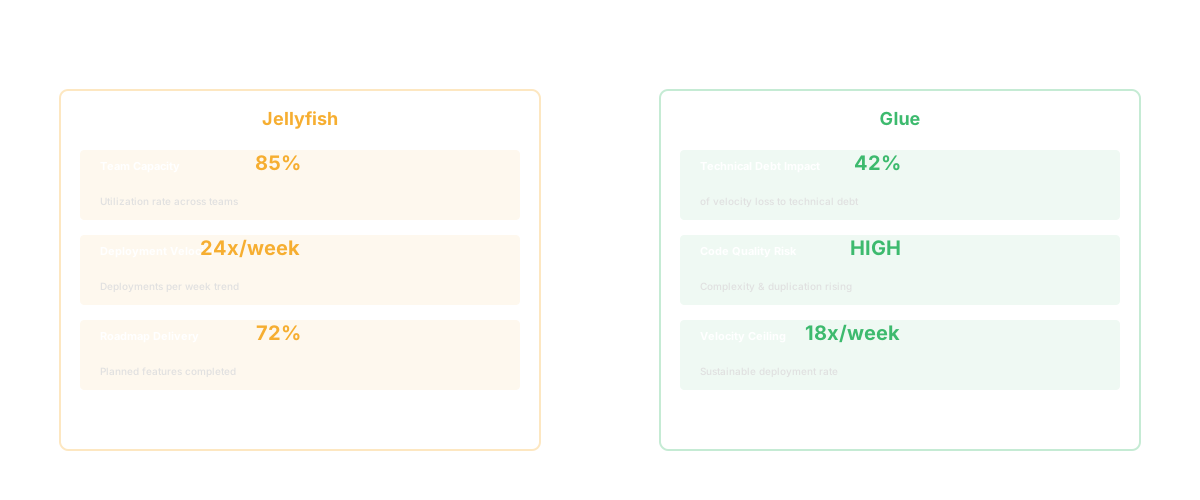
For engineering managers and CTOs, Jellyfish provides real data on whether teams are spending time the way you think they are, whether you're actually shifting investment toward debt reduction, and how engineering throughput correlates with business outcomes. The signal Jellyfish provides is structural: it shows the time budget allocation and delivery velocity. It answers "where is our engineering effort going?"
Glue answers "what is actually happening in the codebase as a result?" When Jellyfish shows that a team spent 40% of the last quarter on bug fixes, Glue shows you which specific modules those bugs cluster in, whether those modules are structurally problematic, which dependencies create the bug risk, and whether the team's fixes are actually addressing root causes or just treating symptoms.
Glue also provides visibility into the codebase that metrics alone can't capture: architectural patterns and risks, code complexity and cognitive load distribution, ownership clarity, and change frequency patterns that signal instability.
The relationship between Jellyfish and Glue is diagnostic. Jellyfish identifies that something looks off: "Team B is shipping 30% slower than Team A." Glue explains the structural reason: "Team B owns the core data module which has 15 undocumented dependencies and cyclomatic complexity over the threshold everywhere."
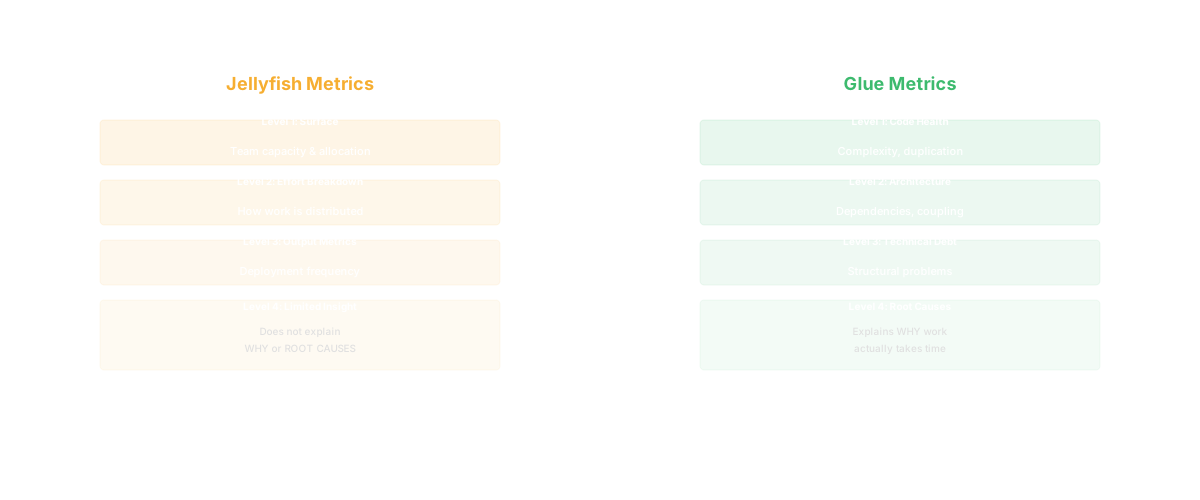
Jellyfish is backward-looking and aggregated (we spent 40% on bugs). Glue is current and structural (here's why the codebase will keep producing bugs). Jellyfish shows the symptom; Glue reveals the disease.
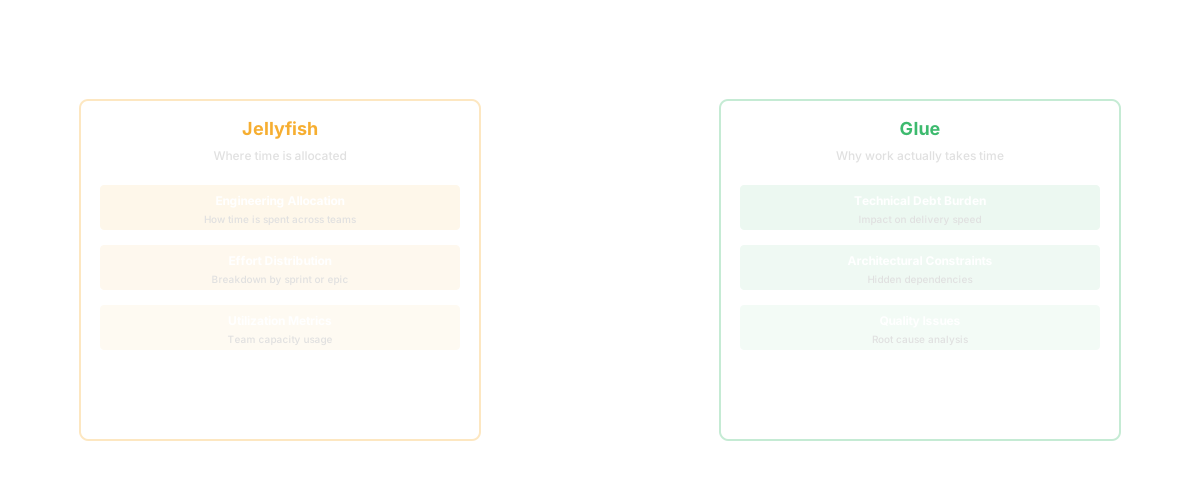
For a CTO making investment decisions, Jellyfish shows the cost; Glue shows what that cost is actually buying. For an EM planning the next quarter, Jellyfish shows time allocation; Glue shows what that allocation should be based on actual system state.
| Capability | Jellyfish | Glue |
|---|---|---|
| Engineering time allocation | Core feature | Not applicable |
| Cycle time and throughput metrics | Excellent | Not applicable |
| Bug and debt investment tracking | Yes | Not applicable |
| Deployment frequency and risk | Yes | Not applicable |
| Architectural pattern understanding | No | Core feature |
| Code complexity and cognitive load | No | Core feature |
| Ownership and responsibility clarity | No | Core feature |
| Root cause of performance issues | Limited (metric-level) | Yes |
| Codebase stability indicators | No | Yes |
| Team-to-codebase mapping | Limited | Detailed |
| Time-based decisions | Primary | Not applicable |
| Structural decisions | No | Primary |
If your primary need is understanding where engineering effort is distributed and whether that distribution matches your strategy, Jellyfish is the better tool. You need data on team velocity, cycle time, and whether you're actually shifting investment toward debt when you say you are. You want to see which initiatives are taking longer than expected and why. You're building an engineering metrics culture based on data rather than intuition.
Jellyfish also provides deployment risk analytics and reliability metrics that Glue doesn't focus on.
Choose Glue when you understand your time allocation (Jellyfish tells you that), but you need to understand WHY certain work is taking longer, WHY bugs cluster in certain areas, and WHAT structural changes would actually improve delivery velocity.
Choose Glue if you're a CTO trying to explain to the board why hiring more engineers won't solve a cycle time problem (the bottleneck is architectural, not headcount). Choose Glue if you're an EM trying to decide whether to consolidate teams around specific modules or reorganize by feature area - you need codebase structure, not just velocity metrics.
Q: Should we use both Jellyfish and Glue?
Yes, for the complete picture. Jellyfish tells you the time story. Glue tells you the structural story. Together they answer "are we investing correctly in the right systems?"
Q: Doesn't Jellyfish show why bugs happen?
Jellyfish can correlate metrics ("this team has more bugs"), but it can't show the actual structural causes in the code without additional tools. Glue does that directly.
Q: Can Glue replace Jellyfish for team performance metrics?
No. Glue doesn't track team velocity, cycle time, or deployment metrics. If you need those, Jellyfish is the right tool for that job.
Q: How does Glue's architectural data help with Jellyfish insights?
Example: Jellyfish shows Team A's cycle time is 2x Team B's. Glue reveals Team A owns modules with 3x the architectural complexity. Now you know the issue isn't team capability - it's system structure. That changes how you plan.
Q: How does Jellyfish compare to LinearB and Swarmia?
Jellyfish emphasizes engineering investment allocation and executive-level reporting, while LinearB focuses on PR cycle time analytics and Swarmia tracks developer experience metrics. They optimize at different organizational layers. For a full side-by-side analysis, see our LinearB vs Jellyfish vs Swarmia comparison.
Keep reading
Related resources