
A product intelligence platform combines three data layers—customer behavior analytics (Amplitude, Mixpanel, PostHog), codebase intelligence (architecture, dependencies, technical debt), and competitive intelligence (feature gaps, positioning, market signals)—into a unified system that connects what users do with what's technically possible and what competitors offer. Most teams only have the first layer, which is why roadmaps slip: product analytics shows what customers want but not what the codebase can deliver or what competitors are shipping.
Your product analytics dashboard looks great. Your roadmap still slips every quarter. Here's why: you're seeing half the picture.
Most product intelligence platforms show you what customers are doing — they track behaviors, measure retention, map funnels, identify drop-off points. Pendo, Amplitude, Mixpanel, PostHog — excellent at this. They've built the industry standard for understanding customer behavior at scale.
But there's another half that almost nobody has built into a product intelligence platform: the engineering reality underneath. What's actually in your codebase? What can it deliver? What technical debt is constraining what's possible? What architectural decisions from three years ago are shaping what you can ship this quarter?
I lived this gap for years. At Salesken, our product analytics were solid — we could see exactly where users struggled in the call coaching interface, which features drove retention, where the funnel leaked. But when the PM took those insights to the roadmap, the engineering estimates were wrong 40% of the time. Not because the engineers were bad at estimating. Because the estimates were made without visibility into the actual codebase constraints.
A product intelligence platform that only sees customer behavior is navigating with one eye closed.
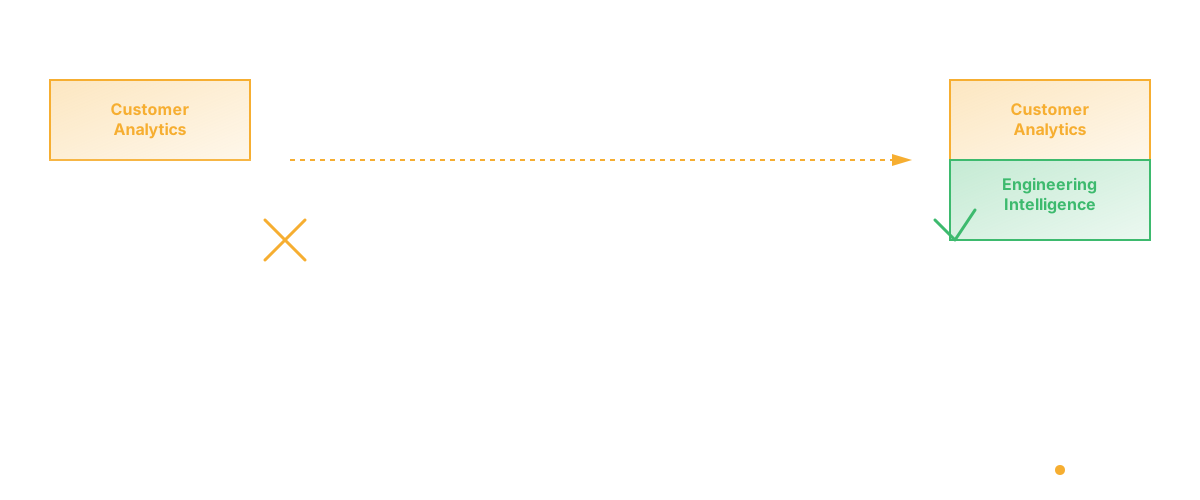
Where Plans Break
The problem isn't that your analytics are wrong. It's that you're making roadmap decisions with incomplete information.
A customer asks for something that sounds simple — add a filter here, create a new view there. Your analytics tell you it would improve retention. It goes on the roadmap. Then engineering starts scoping. The filter requires refactoring a core data model. The view requires a new pipeline for real-time data. The estimate balloons from two weeks to six.
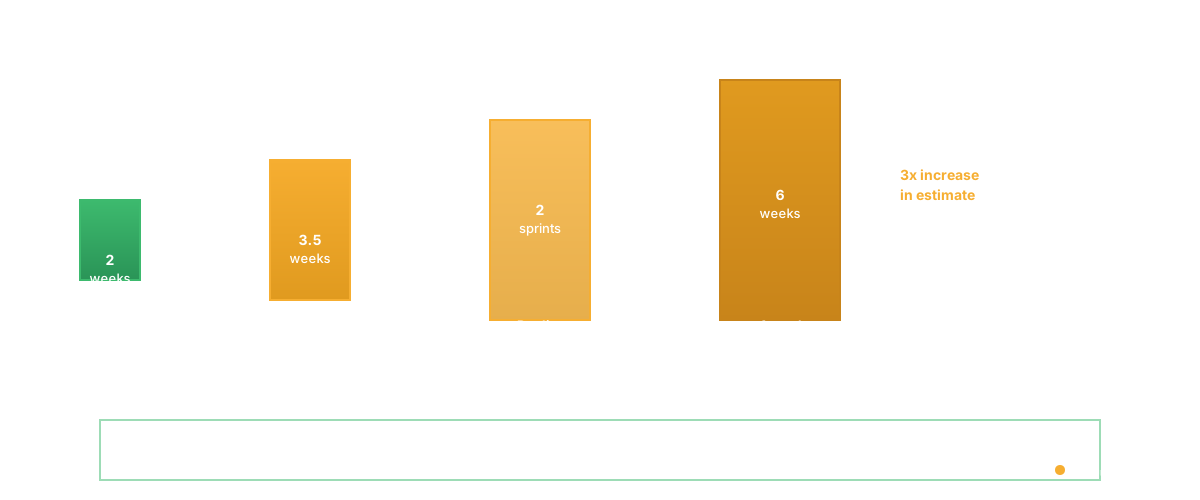
At UshaOm, where I ran a 27-engineer e-commerce team, this pattern repeated quarterly. Our PM would build a confident roadmap based on customer feedback and market analysis. By mid-quarter, 30-40% of the features had slipped because engineering reality didn't match planning assumptions. The PM wasn't wrong about what customers wanted. She was wrong about what the codebase could deliver in the timeline she'd committed to.
The gap between what customers want and what your codebase can deliver is where most product plans break. Not in the analytics. Not in the strategy. In the translation layer between "customers need X" and "our system can do X in Y weeks."
The Two-Layer Platform
A complete product intelligence platform has both layers.
Customer intelligence layer. Behavioral analytics, retention cohorts, funnel analysis, feature usage, churn signals. This is where Amplitude, Mixpanel, and PostHog live. This layer tells you what customers are doing and what they need.
Engineering intelligence layer. Codebase health, feature inventory, technical debt map, dependency graph, code ownership, bus factor analysis. This layer tells you what you can actually build and how fast.
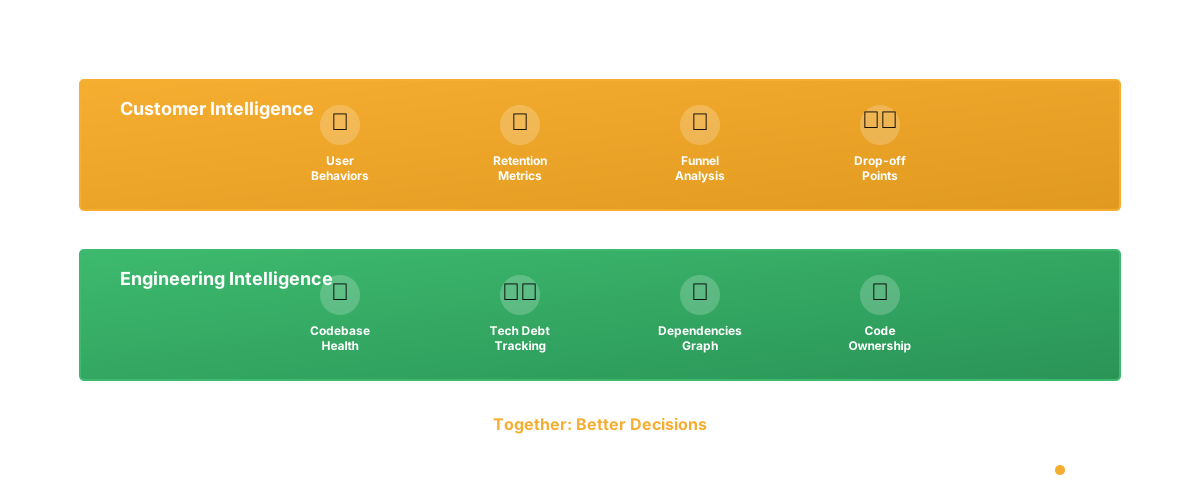
When both layers work together, the decision process changes fundamentally.
A feature request comes in. Customer analytics say there's demand — top request from a key segment. You check the engineering intelligence layer. The feature requires changing a service with three critical dependencies. The code has high complexity and low test coverage. There's tech debt in a related area that would need addressing first.
Now you have real information. Not just whether customers want it, but whether you can deliver it in the timeline your roadmap assumes. Maybe you deprioritize because the engineering lift is too high. Maybe you pay down the debt first. Maybe you ship a simpler version that avoids the risky parts.
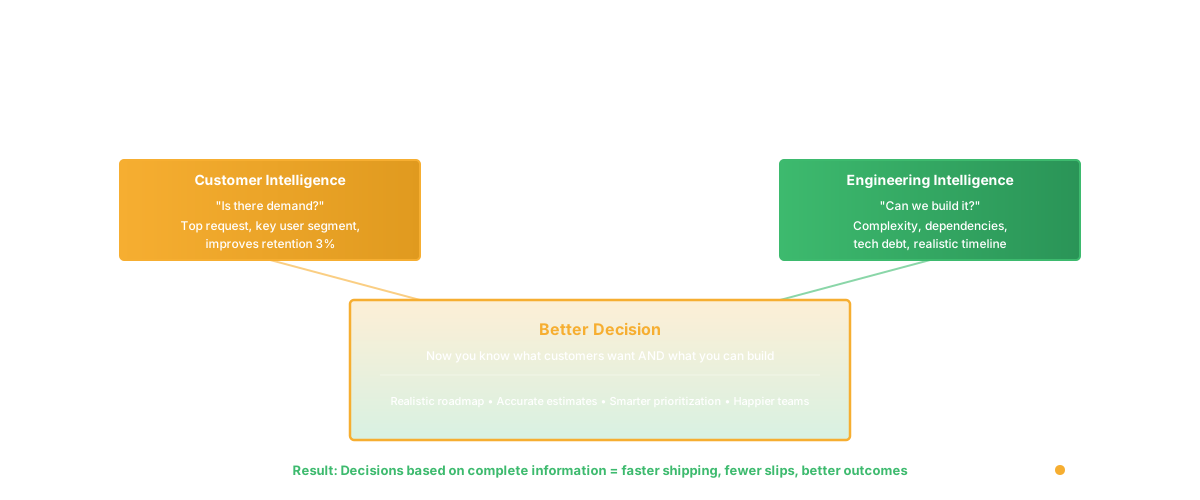
At Salesken, we had a concrete example. Customer data showed that managers wanted a real-time dashboard of ongoing calls — which reps were on calls, what topics were being discussed, how sentiment was trending. The PM estimated two sprints based on conversations with one engineer. Engineering intelligence (which at the time was just me reading the codebase) showed: the real-time event bus could handle it, but the dashboard frontend wasn't designed for live data. We'd need WebSocket infrastructure, which didn't exist. Real scope: 5 sprints, not 2. We chose to ship a polling-based version in 2 sprints instead — not as elegant, but it worked and shipped on time. That tradeoff was only possible because we understood both the demand and the constraint.
What the Engineering Intelligence Layer Answers
These aren't academic questions. They're the questions that separate roadmaps that ship on time from ones that slip.
Is this technically feasible in Q2? Not "can we build it eventually" but "given our current architecture, dependencies, and debt, can we build it in the next 10 weeks?"
What's the actual complexity? Not a gut estimate from a single engineer. Actual cyclomatic complexity, dependency count, and change history for the affected modules.
Who owns this part of the system? Git-derived ownership, not org chart assumptions. At Salesken, the "official" owner of our analytics service hadn't committed to it in 8 months. The actual owner was a junior engineer who'd been doing all the maintenance. Knowing the real owner changed how we planned the work.
What technical debt is blocking us? Not "we have tech debt" (everyone does). Which specific debt in which specific modules is slowing down which specific features?
What have we already built that we're not leveraging? Feature inventory. At UshaOm, we discovered through a codebase audit that we'd built a customer segmentation engine 18 months earlier that nobody remembered. The PM was about to spec a new one. We saved a month of work.
Why Spreadsheets and Conversations Don't Scale
Most teams try to solve this with spreadsheets and hallway conversations. A PM talks to a tech lead, gets a rough estimate, puts a number in the roadmap. The conversation happens in isolation — just PM and one engineer — so important context gets lost.
This worked at UshaOm when we were 8 engineers. By the time we were 27, the PM couldn't maintain accurate mental models of 4 major services, 15 microservices, and their interdependencies. Nobody could. The hallway conversations became meetings. The meetings became ceremonies. The ceremonies became overhead that slowed everything down without improving accuracy.
The architecture diagram in Confluence hadn't been updated in 6 months. The "technical landscape" document was three versions behind. The PM's mental model of the system was based on how it worked when she joined, not how it worked now.
A product intelligence platform with an engineering layer replaces all of that with a living, evolving view of what your codebase actually is and what it can deliver. Not a diagram someone drew. Not a conversation someone had. Current state, derived from the code itself.
Who Benefits
Product managers get accurate scoping data before committing to timelines. Instead of "engineering says 3 sprints" they see "this touches 4 services, has 12 dependencies, and the core module has a bus factor of 1 — here's why it's 3 sprints, and here's what we could descope to make it 1.5."
Engineering managers get visibility into structural bottlenecks. Which modules are slowing down cycle time? Where is debt accumulating fastest? Which teams are overloaded based on code ownership concentration?
CTOs get a strategic view of technical health. Not anecdotes from the last retro. Data: deployment frequency trending down in the payments service, complexity increasing in the analytics pipeline, bus factor of 1 on three revenue-critical modules.
The whole team gets shared context. Product understands engineering constraints. Engineering understands product priorities. Decisions are made with both layers visible, not through negotiation between people with different incomplete pictures.
What This Looks Like in Practice
At Salesken, after building internal tooling that gave us something approximating an engineering intelligence layer, our quarterly roadmap accuracy improved from about 60% to 85%. Not because we got better at estimating — because we got better at understanding what we were estimating against.
The biggest shift wasn't the accuracy. It was the conversations. Instead of "can we build X?" the question became "what's the cheapest way to deliver the outcome customers need, given our current architecture?" That question produces better products, not just better timelines.
The honest limitation: building this layer is hard. Explicit code dependencies (imports, function calls) are straightforward to map. Implicit dependencies (shared database tables, runtime configuration, feature flags) are harder. At Glue, we're building this engineering intelligence layer. The explicit dependency mapping works well. The implicit dependency detection is still evolving.
Related Reading
- AI Product Discovery: Why What You Build Next Should Not Be a Guess
- Cursor for Product Managers: The Next AI Shift Nobody Is Talking About
- The Product Manager's Guide to Understanding Your Codebase
- The CTO's Guide to Product Visibility
- Software Productivity: What It Really Means and How to Measure It
- Dependency Mapping: How to Know What Will Break Before You Break It
- Complete Guide to Competitive Intelligence for SaaS
- Competitive Battlecards
- How to Do Competitive Analysis When You Can't See Code
- What Is AI Competitive Analysis?
- What Is a Competitive Battlecard?
- Glue for Competitive Gap Analysis
Frequently Asked Questions
What is a product intelligence platform?
A product intelligence platform combines codebase analysis, competitive intelligence, and product analytics into a unified system that helps teams understand what their product actually does, how it compares to competitors, and where technical constraints affect product strategy. It bridges the gap between code dependencies that engineering sees and the feature roadmap that product owns.
How is product intelligence different from product analytics?
Product analytics tools like Amplitude and Mixpanel track user behavior and feature adoption. Product intelligence goes deeper by connecting user behavior data with codebase reality, including technical debt that affects feature delivery, architectural constraints revealed through dependency mapping, and competitive feature gaps.