Comparison
CodeClimate bundles code quality and engineering metrics. Glue provides architectural intelligence. Understand the difference.
I've evaluated dozens of engineering tools across three companies. What matters isn't the feature list — it's whether the tool actually changes how your team makes decisions.
CodeClimate has evolved through several iterations and ownership changes. Today it operates as two connected products: CodeClimate Quality (static code analysis and technical debt) and CodeClimate Velocity (engineering metrics). Understanding the positioning matters because it competes in multiple categories at once - and that's both a strength and a limitation.
CodeClimate Quality handles automated code review, static analysis, and technical debt tracking similar to SonarQube - security vulnerabilities, code smells, test coverage, complexity scoring. It's installed in your CI/CD pipeline and surfaces quality issues to developers.
CodeClimate Velocity measures engineering metrics: cycle time, throughput, deployment frequency. It aggregates these metrics to show engineering team performance over time.
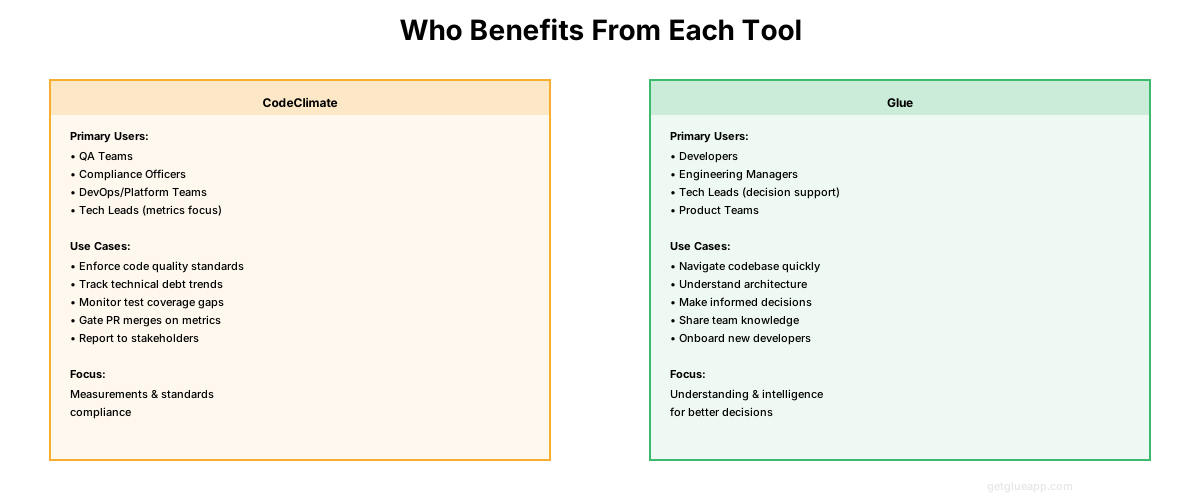
The product philosophy behind CodeClimate was initially about bridging the gap between code quality and business metrics - the idea that quality concerns should connect to team productivity. That's a solid concept. In execution, CodeClimate functions as: a quality gate tool (like SonarQube) plus an engineering metrics tool (like Jellyfish or Swarmia), bundled together.
Glue doesn't do static code analysis (that's SonarQube's job) or engineering metrics (that's Jellyfish/Swarmia's job). Glue fills a different gap: connecting the codebase itself ( - not code quality scores, not engineering metrics) to business impact.
Glue asks: What's the architectural shape of this codebase? Which modules are most important? Who owns what? What patterns of change correlate with problems? When a PM asks "why are we slow," Glue answers with structural analysis, not quality scores or velocity metrics.
CodeClimate bundles quality + velocity metrics. Glue offers architectural intelligence.
Think about what happens when CodeClimate tells you something like: "Code quality has declined 8% and cycle time has increased from 3 to 5 days." CodeClimate shows you the two metrics are related, but not why. Is it because engineers are shipping lower quality code? Or is the code more complex now and therefore takes longer to review safely?
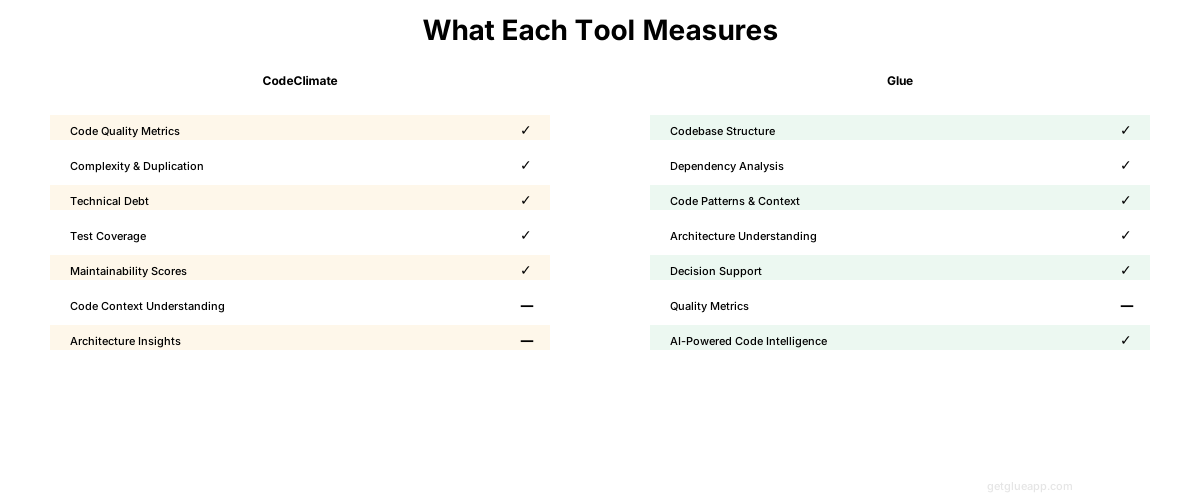
Glue would show: the modules you're working on now have 2x the architectural coupling of the modules you worked on three months ago. That's why cycle time increased - not because engineers got slower or code quality got worse, but because the system structure changed.
CodeClimate approaches the problem: quality + velocity metrics should correlate. Glue approaches it: system structure drives everything else (quality, velocity, maintainability).
| Capability | CodeClimate Quality | CodeClimate Velocity | Glue |
|---|---|---|---|
| Static code analysis | Yes | No | No |
| Security vulnerability detection | Yes | No | Not primary |
| Code coverage tracking | Yes | No | Not applicable |
| CI/CD integration | Yes | No | Not applicable |
| Quality gate enforcement | Yes | No | No |
| Cycle time measurement | No | Yes | Not applicable |
| Engineering metrics | No | Yes | Not applicable |
| Architectural analysis | No | No | Core |
| Dependency mapping | Limited | No | Yes |
| Ownership clarity | No | No | Yes |
| Module criticality | No | No | Yes |
| Structural risk | No | No | Yes |
Choose CodeClimate if you want an integrated platform that handles both code quality and engineering metrics in one place. If your engineering team is using SonarQube or similar, but you also want engineering metrics, CodeClimate bundles them.
CodeClimate Quality works well if you need automated code review and coverage tracking integrated into your CI/CD without setting up a separate tool.
CodeClimate Velocity works if you want engineering metrics without maintaining relationships with multiple vendors.
Choose Glue when you need to understand the codebase itself - not the code quality scores, not the team metrics, but the actual structure and how it affects product reality.
Glue is the better choice if your problem isn't "we need more tools," it's "we need our product leaders to understand why engineering is hard." You already have quality tools and metrics tools. You need the missing middle: architectural intelligence.
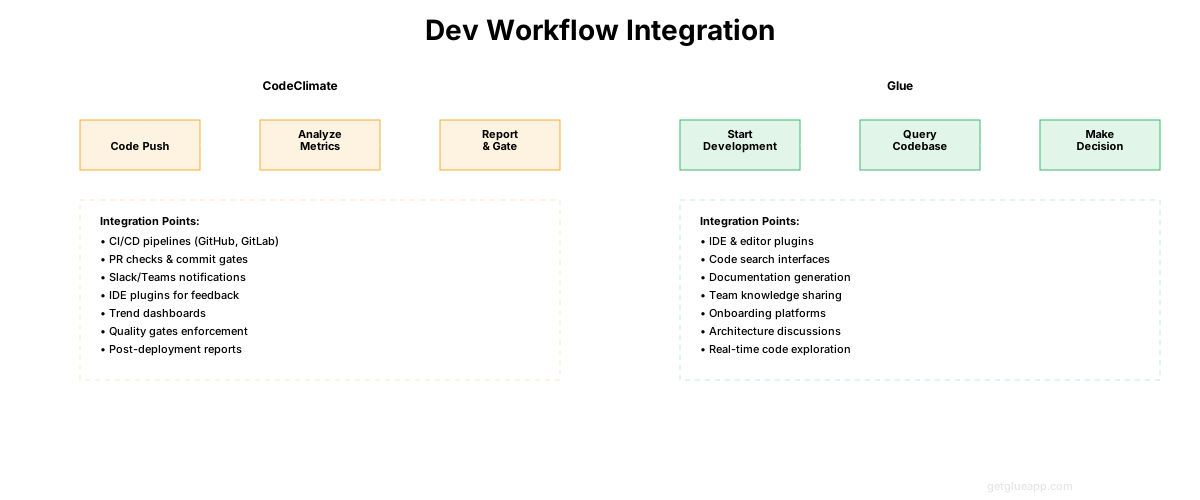
Choose Glue if you're trying to make decisions about system refactoring, team structure, or capacity planning based on codebase structure, not just metrics.
Q: Can CodeClimate replace SonarQube?
Yes, for code quality gating. CodeClimate Quality does similar static analysis. The difference is integration scope and ecosystem - SonarQube is more widely integrated with enterprise CI/CD systems. For most teams, either works.
Q: Should I use CodeClimate or Jellyfish/Swarmia for metrics?
If you're building around CodeClimate anyway, CodeClimate Velocity is convenient. If you're starting fresh, Jellyfish and Swarmia offer more sophisticated metrics. CodeClimate Velocity is solid but not best-in-class for engineering analytics.
Q: Does CodeClimate's bundle offer value as a single platform?
Yes, if integration and single-vendor simplicity matter to you. There are trade-offs: some teams prefer best-of-breed tools even if they require integration.
Q: How does Glue relate to CodeClimate's quality + velocity bundle?
They answer different questions. CodeClimate says: "Code quality is X and team velocity is Y." Glue says: "Here's WHY code quality is X and team velocity is Y based on system structure." Glue provides the diagnostic layer.
Q: Could CodeClimate add Glue-like features?
Potentially, but it would require different engineering and data collection. CodeClimate operates from quality scores and metrics. Glue operates from direct codebase analysis. Different approaches to the same space.
Q: If I use CodeClimate, do I need Glue?
Depends on your needs. If product teams need to understand codebase impact, yes. If you only care about developer-facing quality and metrics, CodeClimate may be sufficient.
Keep reading
Related resources