Glossary
Understand AI technical debt - code that works locally but violates architectural patterns. Learn detection, prevention, and remediation strategies.
At Salesken, we had a 'tech debt' label in Jira with 200+ tickets. When our board asked how much technical debt we had, I couldn't give them a number. That experience taught me that unmeasured debt is invisible debt.
AI technical debt is a specific form of technical debt introduced by AI-generated code - code that is locally correct but architecturally inconsistent with the surrounding system. It emerges when AI systems generate code that works in isolation but violates the patterns, conventions, and architectural constraints of the broader codebase. Unlike classical technical debt (intentional shortcuts taken to move faster) or infrastructure debt (deprecated dependencies), AI debt is characterized by architectural inconsistency at scale: code that is individually sound but collectively creates friction.
AI technical debt has emerged as a distinct problem because AI code generation tools have become ubiquitous. Teams are using Copilot, Cursor, and similar tools to generate code at unprecedented velocity. This acceleration brings benefits - faster implementation, fewer blocked engineers - but also risks.
The core issue: AI learns patterns from training data and replicates them. If it's trained on diverse codebases, it sees diverse patterns. When dropped into a specific codebase with strong architectural conventions, it often misses those conventions. Result: code that works but is structurally inconsistent.
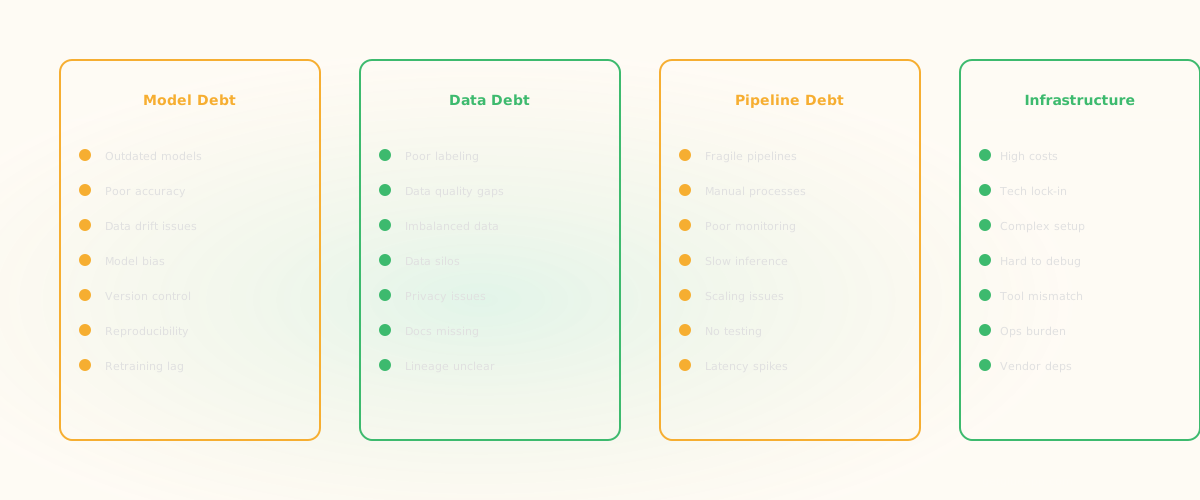
Concrete examples:
Individually, these aren't catastrophes. But they accumulate. And because they're generated at velocity, they accumulate fast. Soon you have modules where 50% of the code is AI-generated, stylistically inconsistent, and architecturally at odds with the rest of the system.
Why does this matter? Consistency reduces friction. When code follows patterns consistently, changes are faster, reviews are faster, maintenance is easier. Inconsistency creates friction: reviews take longer (reviewers have to understand multiple patterns), changes are riskier (inconsistent code is often fragile), and maintenance is harder (each piece of AI code has its own logic).
For teams using AI heavily, this friction compounds quickly.
Classical technical debt is usually deliberate. A team says "we'll use a quick-and-dirty solution now and refactor later." They document it, they know where it is, and they (sometimes) come back to fix it.
AI technical debt is usually accidental. No one decides "let's generate inconsistent code." It happens because the tools don't understand your codebase's conventions. It's diffuse - scattered across the codebase wherever code was generated.
Classical maintenance debt accumulates because code ages poorly - dependencies get outdated, patterns fall out of fashion. AI technical debt is the opposite - it's new code that doesn't fit the current system.
Infrastructure debt is about dependencies and tools. AI technical debt is about architectural patterns and conventions.
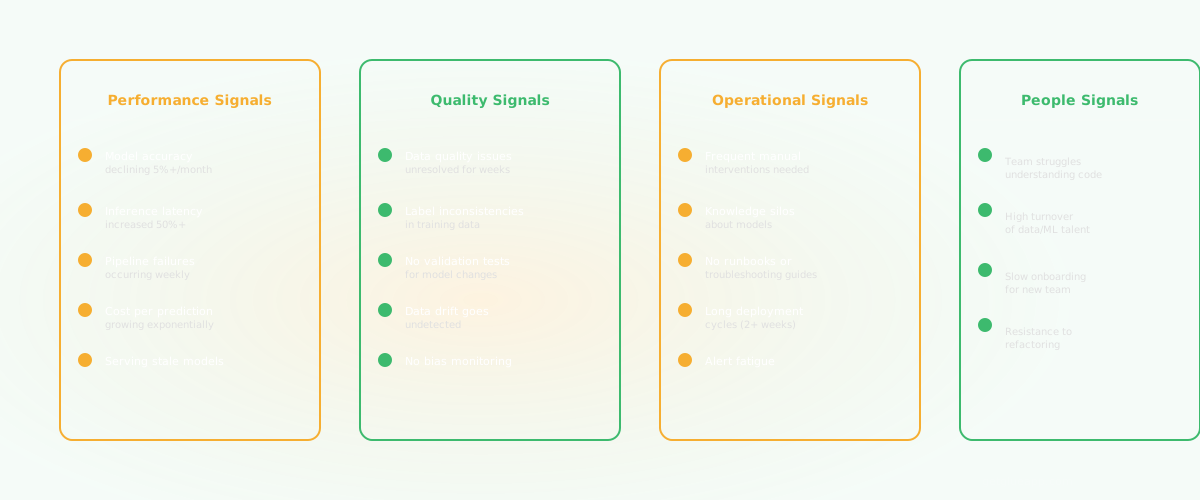
The combination makes AI debt particularly insidious: it's new, it looks modern, but it creates friction precisely because it doesn't fit the existing architecture.
Detection requires structural analysis beyond syntax. Tools need to understand:
Pattern inconsistency analysis can flag AI-generated code that's structurally misaligned. Some of this can be automated: complexity analysis, duplication detection, dependency graph inspection.
Prevention requires guardrails on AI code generation. Rather than turning Copilot loose on your codebase, constrain it:
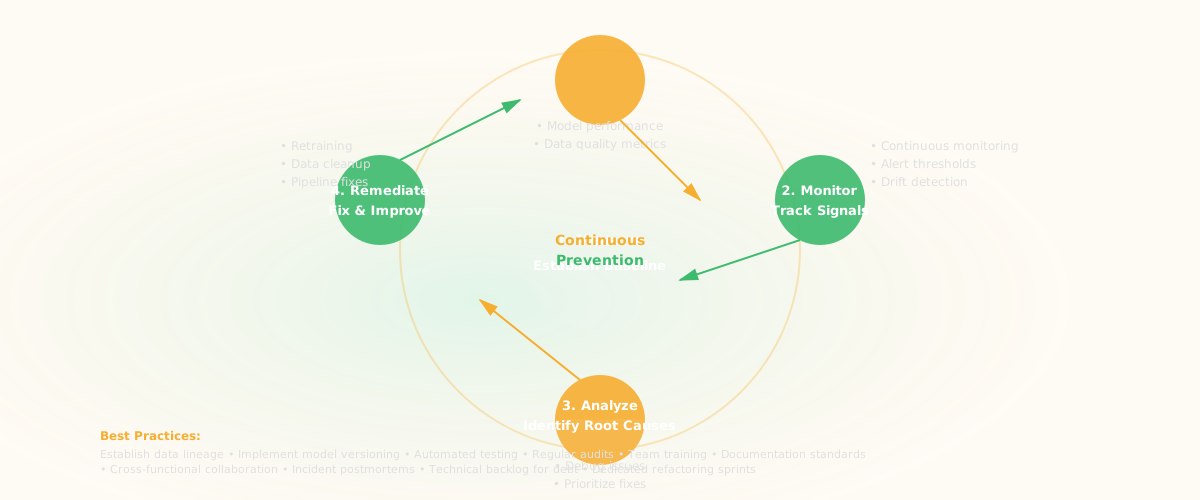
The most effective approach: use AI for specific, well-defined tasks where patterns are clear and tight. Use it for test generation (patterns are standardized). Use it for boilerplate (low architectural complexity). Be more cautious with core business logic or architectural boundaries.
Once AI technical debt has accumulated, remediation is similar to classical technical debt work:
The difference: AI debt tends to cluster. If you have inconsistent error handling in generated code, you probably have it in multiple places. Remediation can be more systematic - a unified refactoring across multiple generated code paths.
AI-generated code is always worse: Not true. AI is excellent at boilerplate, tests, and routine transformations. The problem isn't AI code per se - it's architecturally inconsistent AI code.
The solution is to never use AI code generation: Overkill. The solution is to use AI code generation within constraints. Use it for well-defined tasks. Review generated code carefully. Don't let it violate your architectural boundaries.
We'll fix AI technical debt later: Unlikely. Technical debt left unfixed compounds. Address architectural inconsistencies as they're created, not later. Establish code review standards that catch inconsistency before it lands.
Q: How do we detect AI-generated code that's architecturally inconsistent?
Automated analysis of patterns (complexity, dependency flow, error handling patterns, abstraction levels). Code review with awareness of your architectural standards. Tools that compare generated code against established patterns in your codebase.
Q: Is all AI-generated code problematic?
No. AI is great at routine tasks - generating boilerplate, tests, simple transformations. The problems emerge when AI is used for high-complexity tasks or for code that spans architectural boundaries. Use AI where patterns are clear and standardized.
Q: Should we disable Copilot and similar tools?
Not necessarily. The productivity gains can be significant. Instead: set standards for where and how AI-generated code is acceptable. Code review processes that catch architectural inconsistencies. Constraints on which tools are used where.
Keep reading
Related resources