Comparison
Compare Glue codebase intelligence to Backstage developer portal. Backstage for infrastructure at scale, Glue for product-engineering alignment. Detailed comparison.
I've evaluated dozens of engineering tools across three companies. What matters isn't the feature list — it's whether the tool actually changes how your team makes decisions.
Backstage is a powerful developer portal platform built by Spotify that gives engineering teams a central hub for software catalogs, service ownership, and documentation. Glue is codebase intelligence for the product side of engineering. Both address code visibility problems, but they solve them at different layers and for different audiences. Understanding where they differ helps teams choose the right tool for their specific challenge.
Backstage is an open-source framework for building an internal developer platform. It provides a catalog of services, ownership metadata, system design documentation, and integration points for internal tools. Large engineering organizations use it to answer questions like "which team owns this service?" and "what's the health status of this infrastructure component?" Backstage requires significant engineering investment: you need a dedicated platform team to configure it, maintain it, integrate it with your CI/CD pipelines, and keep the service catalog current.
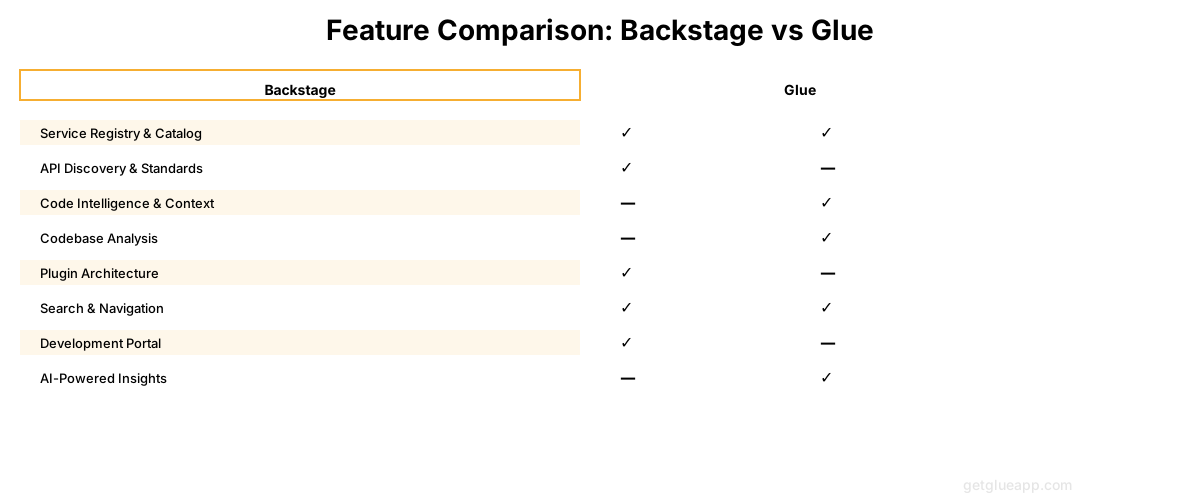
Backstage's strength is as a platform for building infrastructure visibility at scale. It's designed for organizations with 200+ engineers where fragmentation across tools creates real operational friction. The cost of running Backstage is justified when you're reducing toil across dozens of teams. Its primary users are infrastructure engineers and developers looking for service context while working on the platform.
Backstage is architect-facing. Setup, maintenance, and configuration require engineering resources. Most value flows to engineers navigating infrastructure.
Glue connects directly to your codebase and answers natural language questions: "what does the checkout flow do?" "who owns the payments module?" "what changed last sprint?" "where is the highest technical debt?" It generates accurate documentation from actual code, maps dependencies, visualizes code health metrics, and provides context for product-engineering decisions without requiring anyone to read source code.
Glue is designed for day-one usability. You connect your GitHub or GitLab repo, and within minutes PMs and engineering managers start asking questions. No setup project. No platform team required. No metadata to maintain manually. The documentation stays current because it's generated from the code itself. Primary users are PMs, engineering managers, and CTOs who need codebase context for product decisions.
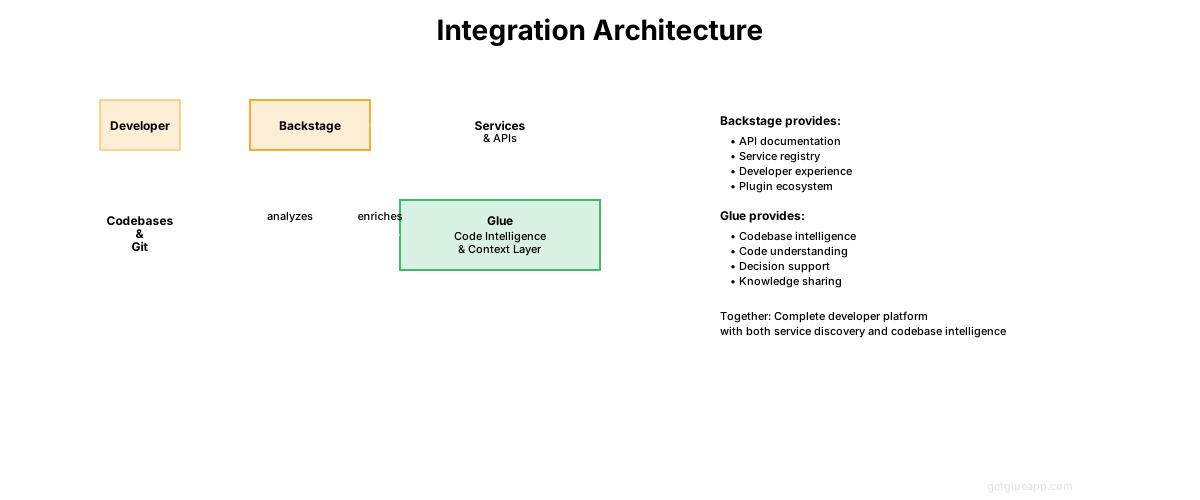
Glue is product-facing. Setup takes hours, not months. Value flows to PMs and engineering managers who can now answer their own questions about technical constraints.
Backstage is a platform you build on. Glue is a product you use on day one.
| Capability | Backstage | Glue |
|---|---|---|
| Setup time | 3 - 6 months | Hours |
| Requires platform team | Yes | No |
| Direct codebase integration | Limited | Native |
| Primary users | Engineers, infrastructure | PMs, engineering managers |
| Documentation maintenance | Manual (metadata) | Automatic (from code) |
| Natural language queries | No | Yes |
| Code health visualization | No | Yes |
| Dependency mapping | No | Yes |
| Day-one value | Low | High |
Choose Backstage if: you have 200+ engineers, a dedicated platform team, and operational fragmentation is your biggest problem. You need a scalable hub for service catalogs, CI/CD integration, and infrastructure metadata. You're willing to invest 3 - 6 months for a tool that will solve infrastructure visibility at your scale.
Choose Glue if: you need product-engineering alignment without building a developer portal. Your PMs ask "what will this change cost?" and you want them to see the answer without hiring more engineers. You want accurate, current codebase documentation without manually maintaining it. Your team is 20 - 500 engineers and you want time-to-value in hours, not months.
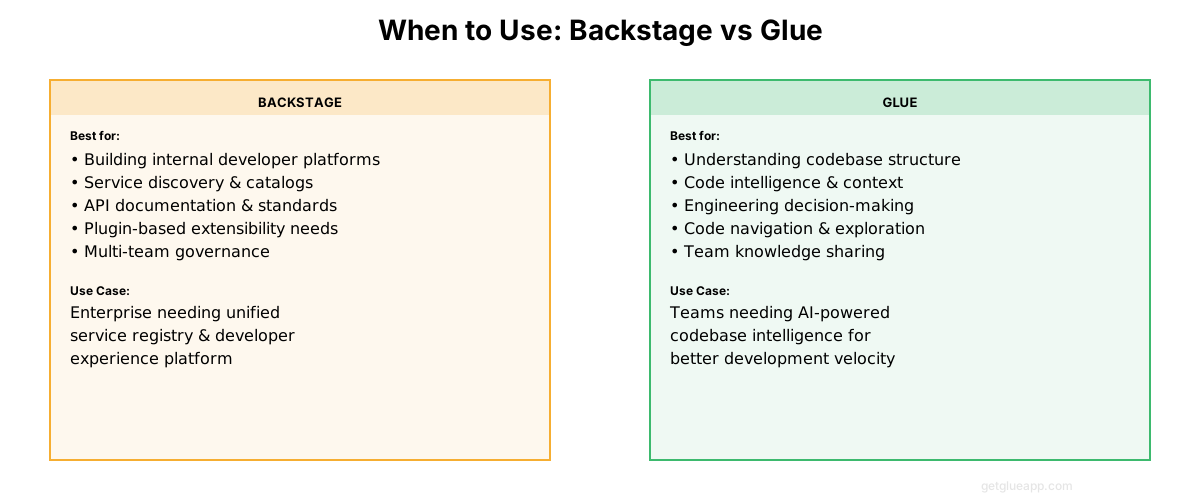
Is Glue trying to replace Backstage? No. Backstage is infrastructure-focused, Glue is product-focused. You could use both: Backstage for DevOps teams to answer infrastructure questions, Glue for PMs and product engineers to answer feature and technical debt questions. Different layer, different audience, different workflow.
Can I still use Backstage? Completely. Backstage is still active, well-maintained, and valuable for large organizations. If you already have a Backstage deployment, it will continue to work and serve infrastructure teams. Glue doesn't conflict with it.
Isn't Backstage free and open source? Yes. And Glue is a commercial product with a free tier. What matters is what problem you're solving and for whom. Backstage solves infrastructure visibility. Glue solves product visibility. Both solve real problems. Neither is universally "better."
Can I use them together? Yes. Backstage handles infrastructure and DevOps visibility. Glue handles product and feature visibility. They operate at different layers, so they complement each other rather than compete. Your infrastructure team uses Backstage, your PMs use Glue.
What if Backstage adds codebase intelligence? It might, and that would be great. Backstage is an open platform and could integrate codebase analysis. If that happens, the decision becomes about configuration complexity (Glue takes hours, Backstage takes months) and primary audience (infrastructure engineers vs product managers). Different design, different use case.
Keep reading
Related resources