
A code intelligence platform is a software tool that makes codebase structure, dependencies, ownership, and change history queryable in real time — providing product managers and engineering leaders with architectural visibility without requiring them to read code. Unlike static analysis tools (which find bugs), code coverage tools (which measure testing), or security scanners (which identify vulnerabilities), code intelligence platforms answer contextual questions: "who owns this module?", "what depends on this service?", and "what changed since last quarter?" Code intelligence is always current because it derives from live code, commits, and changes — unlike documentation, which becomes stale.
Building Glue taught me that the biggest problem in engineering isn't writing code — it's understanding the code you already have.
Most product managers have never heard the term "code intelligence platform." That's a problem, because you probably need one.
Here's why: engineering has built an amazing toolkit over the last 10 years. Static analysis tools that find bugs automatically. Code coverage tools that tell you what you're not testing. Security scanning that identifies vulnerabilities. Performance profilers that show you where time is being spent.
All of this tooling is brilliant. And all of it is built for engineers.
The outputs go to engineering dashboards. The metrics are in pull request checks. The insights are in code review comments. A PM can't answer the questions a PM actually needs to answer with any of these tools.
What PMs Actually Need to Know About Code
Here are the questions I ask in product strategy meetings:
- "What's the fastest thing we could ship this quarter?"
- "Which engineer owns the payment module?"
- "What changed in the checkout flow since last week?"
- "How much of our user authentication system is covered by tests?"
- "If we refactor this service, what else breaks?"
- "Which features touch the database performance bottleneck?"
None of these questions can be answered by static analysis tools. But they're all answerable if you have visibility into your codebase.
Right now, I have to ask an engineer. I can't see it myself.
The Gap: Code Analysis vs. Code Intelligence
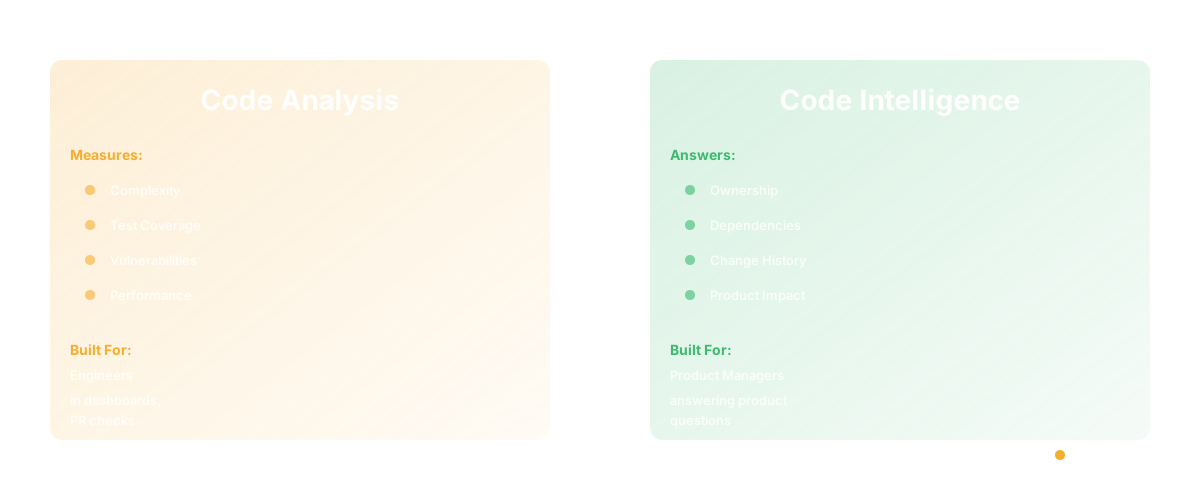
Engineering has tools that analyze code. They measure:
- Complexity (is this function too hard to understand?)
- Coverage (are these lines tested?)
- Vulnerabilities (does this code have a security issue?)
- Performance (is this code slow?)
These are brilliant measurements. But they're all about the code itself.
Code intelligence is different. It answers questions about:
- Ownership (who owns this code? who recently changed it?)
- Dependencies (if I change this, what breaks?)
- Change history (what changed in this module this sprint? who made those changes?)
- Organizational impact (how does this code affect other teams?)
- Product surface (which features touch this piece of code?)
This is the layer that translates code analysis into product intelligence. It's what sits between "the checkout module has high cyclomatic complexity" and "the checkout module is hard to change and features in that area take longer."
What a Code Intelligence Platform Does
A code intelligence platform makes your codebase queryable by non - engineers. That doesn't mean PMs learn to code. It means the codebase answers questions.
You can ask:
- "Show me all files modified in the last sprint" and get a list
- "Show me all services that depend on the user service" and see the dependency graph
- "Show me the change history for the authentication module with explanations for why each change was made"
- "Which engineer made the most changes to billing - related code?"
- "What test coverage do we have for the checkout flow?"
- "Show me all TODOs in the payment processing code"
A good code intelligence platform gives you answers. A great one lets you drill down - click on a file, see its history, understand who knows it, see what depends on it.
The Product Manager Use Case
Here's a concrete example of how this changes product work.
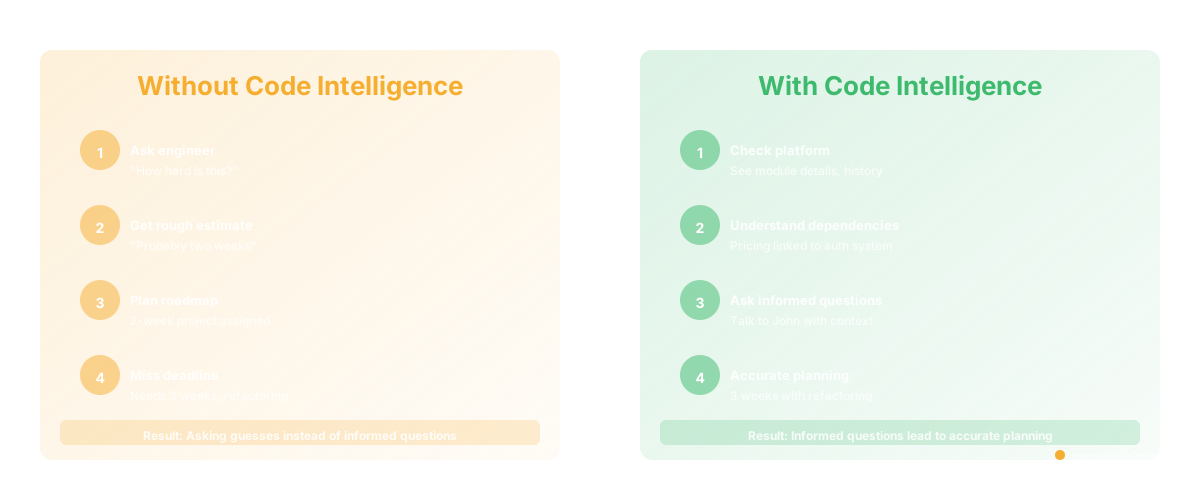
Without code intelligence:
- I'm planning features for Q2. I want to add "custom pricing per customer" to our B2B product.
- I ask the pricing team engineer: "How hard is this?"
- He says: "I don't know, probably two weeks. It depends on what the auth system does."
- I assign it to the Q2 roadmap as a 2 - week project.
- In Q2, turns out the pricing logic is tied to the customer authentication system in ways that require three weeks of refactoring.
- We miss the date. The stakeholder is angry. The engineer explains why (but we should have known this).
With code intelligence:
- I'm planning features for Q2. I want to add "custom pricing per customer."
- I check the code intelligence tool. I can see: the pricing module, what it touches, its recent change history, its test coverage.
- I can see that pricing changes interact with the customer service and the auth system.
- I can see that the last person to change pricing was John, 8 weeks ago, and the commit message explains the architecture.
- I ask John (not blind) about implementation, and we agree it's a 3 - week project with a refactoring prerequisite.
- I build the roadmap accordingly.
The difference: I went from asking guesses to asking informed questions.
Types of Questions Code Intelligence Answers
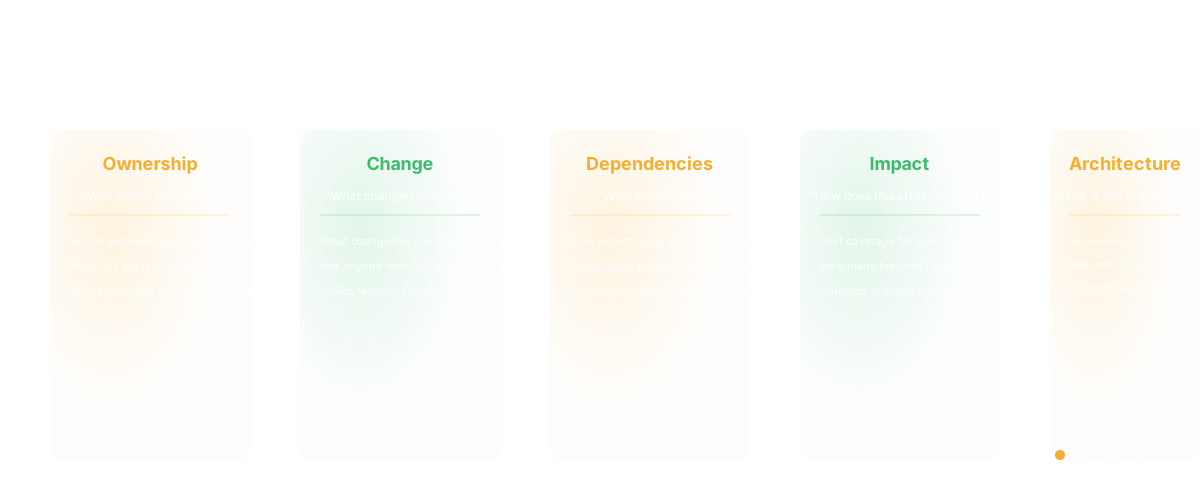
Ownership Questions: "Who knows this code?"
- Which engineer owns the payment module?
- Who was the last person to touch the auth system?
- Who can review changes to the recommendation algorithm?
Change Questions: "What changed and why?"
- What changed in the checkout flow this sprint?
- Has anyone modified the database schema lately?
- Which features touched the core identity service in the last quarter?
Dependency Questions: "What will break if we change this?"
- If we refactor the user service, what other services are affected?
- Which parts of our system depend on the third - party payments API?
- What happens in the data pipeline if we change the customer schema?
Impact Questions: "How does this affect our product?"
- How much of our user - facing code is covered by tests?
- How many features touch the database performance bottleneck?
- If we deprecate this API endpoint, which products break?
Architecture Questions: "How is this organized?"
- What's the structure of the microservices we depend on?
- How do the web and mobile codebases share code?
- What's the flow of data through the customer journey?
Why You Need This
Code intelligence platforms matter because they change the dynamic between product and engineering.
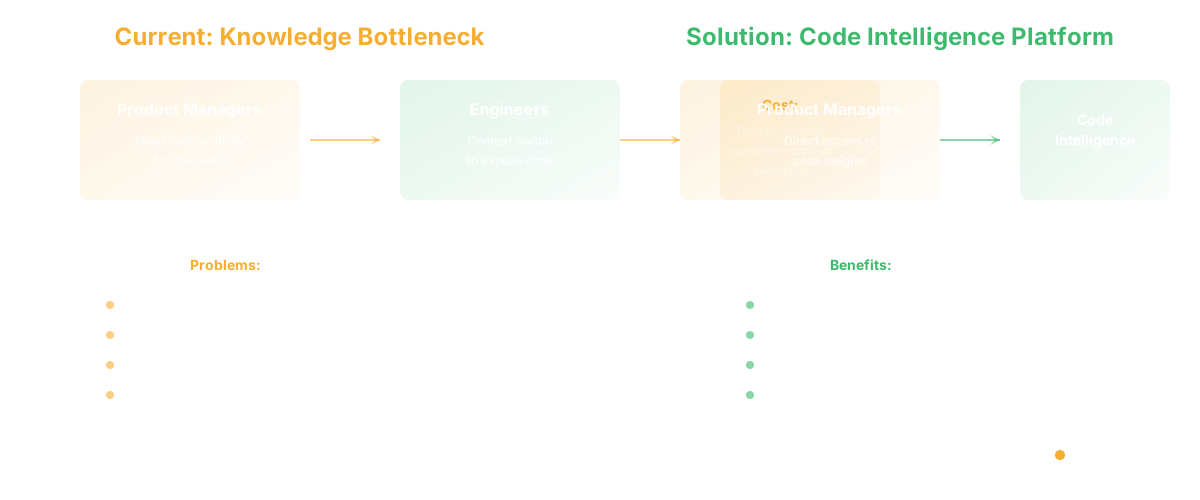
Right now, engineering is the keeper of code knowledge. PMs have to ask, engineers have to explain. It's a bottleneck. It's also a communication breakdown waiting to happen - engineers aren't always good at explaining code to non - engineers.
With a code intelligence tool, product and engineering can speak the same language. PMs can look up answers independently. Engineers can point to a dashboard instead of explaining for the 100th time why something is hard.
It's the difference between "trust me, this is hard" and "here's what makes it hard, and here's data showing it."
Glue's Approach
We built Glue because we felt this gap acutely. As the company grew, product questions about the codebase became a constant context switch for engineers. "What changed this sprint?" "Who owns this module?" "How does feature X interact with Y?" These should not require pinging an engineer.
Glue is a code intelligence platform built specifically for the product - engineering interface. It doesn't replace static analysis or code coverage tools. It sits on top of them and asks: "What does this code thing mean to the business?"
You can see every file changed in a sprint with explanations. You can map which features touch which code. You can track ownership and dependencies. You can understand architectural changes without asking someone.
When You Need a Code Intelligence Platform
Ask yourself:
- Do PMs regularly wait for engineers to answer questions about what's in the codebase?
- Do you have gaps between what product thinks is hard and what engineering knows is hard?
- Do you struggle to understand dependencies between services or features?
- Is knowledge about your codebase concentrated in a few people's heads?
- Do you have trouble assessing technical feasibility without asking engineers?
If any of these are true, you need code intelligence. It doesn't have to be Glue. But you need something that makes the codebase transparent to the people making product decisions.
Frequently Asked Questions
Q: Isn't this what code documentation is for?
A: Documentation rots. Code intelligence is querying your actual codebase in real time — it's the foundation of codebase intelligence. It's always current because it's derived from your real code, your real commits, your real changes. Documentation is important, but code intelligence is the foundation.
Q: Do I need to learn to code to use a code intelligence platform?
A: No. A good code intelligence platform speaks product language, not engineering language. Instead of "this file has cyclomatic complexity of 34," it says "this module has been changing frequently and is complex, which makes future changes slower." Instead of showing you diffs, it explains what changed in terms of features and products.
Q: Will this make PMs try to make engineering decisions?
A: That's a risk, but a manageable one. Yes, PMs with more visibility into the codebase might try to dictate technical decisions. The answer is culture, not visibility restriction. The conversation should be "I see this module is complex and hard to change. What do you think we should do about it?" Tools like dependency mapping help frame these conversations with data. not "I see this is complex, make it simpler."
Related Reading
- Code Dependencies: The Complete Guide
- Dependency Mapping: A Practical Guide
- Software Architecture Documentation: A Practical Guide
- C4 Architecture Diagram: The Model That Actually Works
- Code Refactoring: The Complete Guide to Improving Your Codebase
- Knowledge Management System Software for Engineering Teams
- What Is Code Intelligence?