Comparison
Learn how Glue and Productboard complement each other. Productboard handles customer feedback and roadmaps, while Glue provides the technical feasibility intelligence you need.
Building products across three companies — Shiksha Infotech, UshaOm, and Salesken — taught me that the hardest part of product development isn't building. It's knowing what to build and why.
You're building a product, and you need to know two things: what should we build next, and can we actually build it? Productboard is excellent at the first question. Glue answers the second. They're not competitors - they're complementary tools that, together, give product and engineering teams a complete picture.
Productboard is a product management platform built around feedback and prioritization. It collects customer feedback from support tickets, interviews, surveys, and reviews, then helps you organize that feedback into feature requests. From there, you can build visual roadmaps, share them with stakeholders, and track progress toward quarterly goals. Productboard excels at turning customer voice into product decisions. It's become the standard for teams that need a single source of truth for "what are customers asking for?"
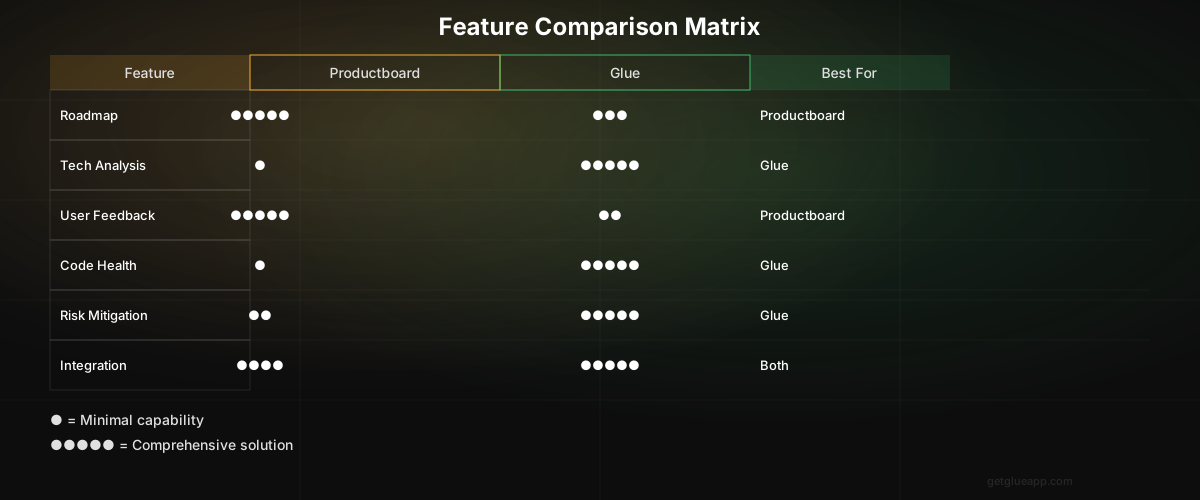
The platform includes roadmap visualization, portfolio planning, integration with Slack and Jira, and weighted prioritization frameworks. For PM teams, it's comprehensive and well-designed. Productboard understands your customers. What it doesn't understand is your codebase.
Glue connects directly to your codebase and answers technical questions in natural language. A PM can ask: "What does the checkout flow do?" or "Who owns the payments module?" or "What changed in the last sprint?" and get answers derived directly from the code itself. Glue builds a live map of your technical architecture, dependency flows, code ownership, and recent changes. It's not a roadmap tool. It's a codebase intelligence layer that makes your roadmap decisions grounded in technical reality.
Glue is built for the product side of engineering - PMs, product managers, and CTOs who need to understand their product's technical constraints without reading code. It surfaces code health, technical debt, and dependency risks that affect feasibility.
Productboard asks and answers: What do customers want, and how should we prioritize? Glue asks and answers: What's actually in our product, and what will it cost to change it?
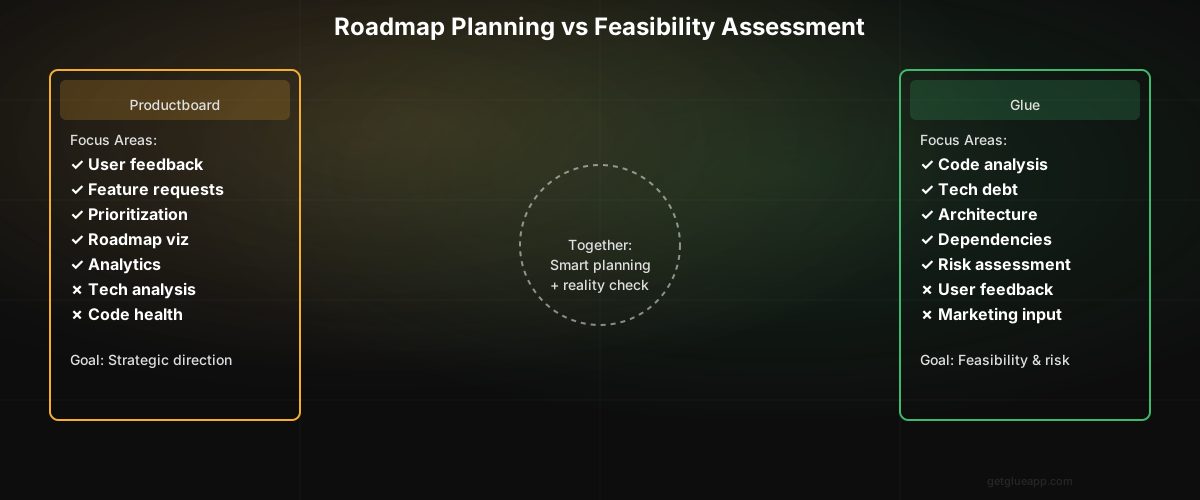
Here's the practical difference: you're in a Productboard meeting discussing a new feature request that's generated lots of customer votes. It sounds valuable. Your gut says build it. But someone needs to ask: Is this even feasible? Where does this touch the codebase? Who owns that module? What's the technical debt? How long would this actually take? That's where Glue comes in. It answers those questions in minutes, not days of engineering investigation.
| Capability | Productboard | Glue |
|---|---|---|
| Customer feedback collection | Excellent | Not designed for this |
| Roadmap visualization | Best in class | Not a roadmap tool |
| Prioritization frameworks | Comprehensive | Not applicable |
| Codebase understanding | None | Complete |
| Technical ownership mapping | None | Primary feature |
| Code health visibility | None | Primary feature |
| Feasibility assessment | Requires engineering input | Direct codebase data |
| Real-time code changes | No visibility | Always current |
If your core challenge is understanding customer needs and building a shared roadmap across product, engineering, and leadership, Productboard is the right tool. It's specifically designed for that workflow. If you need a visual roadmap your CEO can look at on the board, Productboard is built for that use case. If you're collecting feedback from multiple channels and need a single system to manage it, Productboard is proven. Many successful product teams have Productboard as their source of truth for customer feedback and roadmap planning.
If you're a PM or engineering leader sitting in a prioritization meeting and you need to know whether something is feasible and what it will cost, Glue is the answer. If you want to understand your product's technical constraints before committing to a roadmap, Glue provides that context. If your engineering team is struggling to explain technical complexity to product, Glue bridges that gap. If you need to answer questions about code ownership, dependency risks, or technical debt impact, Glue is designed for this. If you want your roadmap informed by technical reality rather than discovered afterward, use Glue before roadmap meetings.
Q: Do we need both? Many product teams use both. Productboard for feedback and roadmap planning, Glue for technical feasibility assessment. They answer different questions in the product development process.
Q: Can Glue replace Productboard? No. Glue is not a feedback collection or roadmap tool. If you need customer feedback management, you need Productboard or similar. Glue complements it.
Q: Can Productboard replace Glue? No. Productboard has no connection to your codebase and can't answer technical questions. If you need technical intelligence, you need Glue.
Q: How do they integrate? Most teams use them in sequence: Productboard identifies what to build, Glue assesses technical feasibility, then both systems track the decision. They're part of the same workflow but operate independently.
Q: Is Glue only for PMs? No. Engineering leaders, CTOs, and tech leads also use Glue. The difference is that Glue is designed for the product-facing side of engineering, whereas Productboard is purely product-focused.
Keep reading
Related resources