
Clean code is a means to an end, not the end itself. The end is software that's maintainable, understandable, and solves the problem. Code that's over-abstracted and over-engineered is often harder to understand than code that's "dirty" but clear.
I've read code that was "clean" by every guideline and had no idea what it did. At Salesken, we inherited a module for real-time audio processing that looked beautiful on paper: tiny functions, perfect naming, dependency injection everywhere. It took a new engineer three days to understand what it actually did. Meanwhile, our ML team's inference code was dense, had long functions, and minimal abstraction. Any ML engineer could read it and understand the pipeline in an hour. The difference wasn't cleanliness. It was clarity.
Clean Code in 60 Seconds
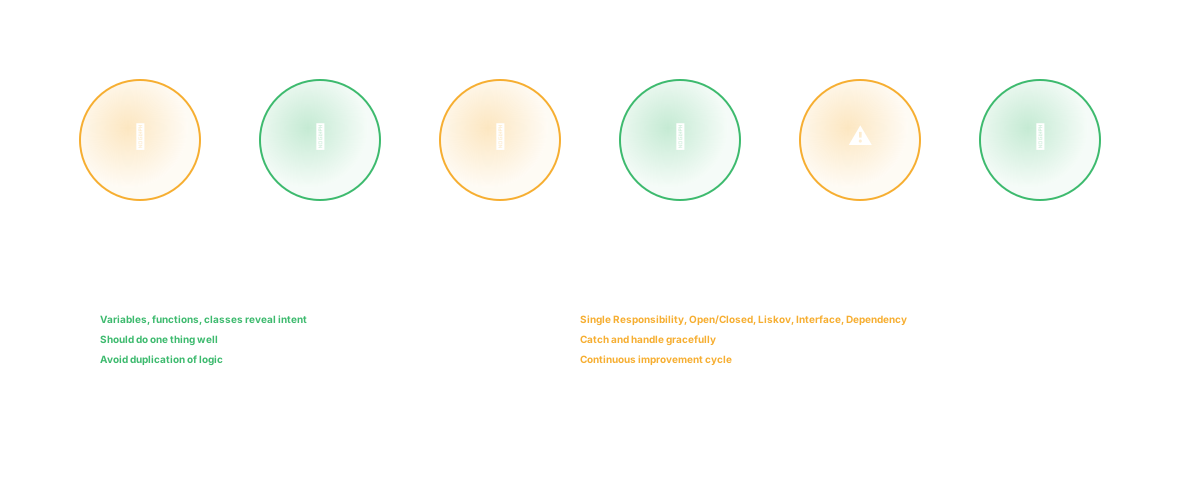
Clean code is readable (clear variable and function names), maintainable (changes don't cascade through the system), and follows a consistent style. The core principles: single responsibility (one reason to change), meaningful names (names reveal intent), small functions (under 30 lines usually), and pure functions (no side effects unless necessary). But these are guidelines, not laws. The moment you treat them as laws, you start producing code that satisfies the rules but confuses the reader.
Why Clean Code Principles Matter Now
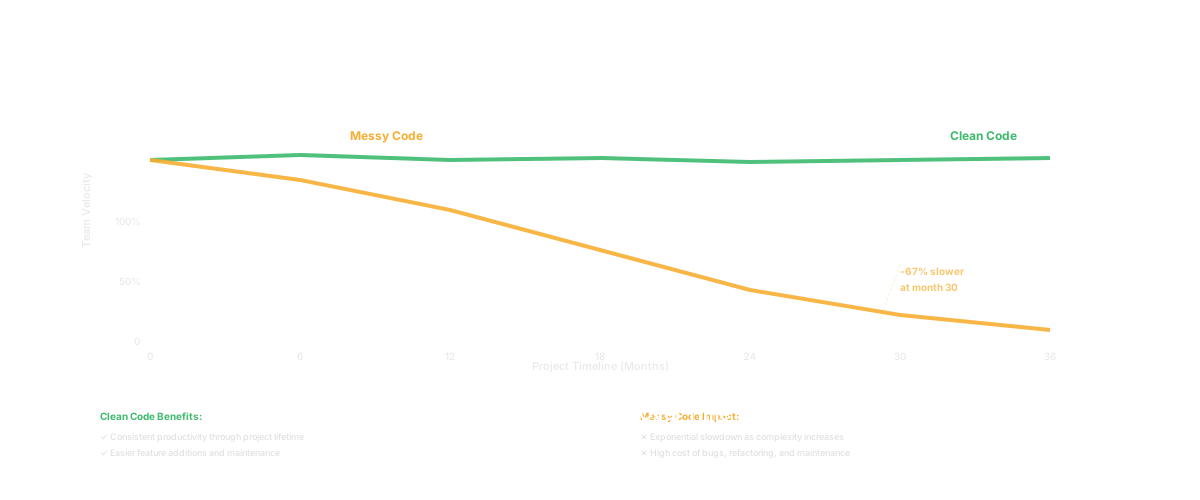
Code is read far more often than it's written. A function written once gets read dozens of times by different people over months or years. Optimizing for readability wins long-term. This feels obvious, but most engineers (myself included) still write code optimized for the moment of writing, not the moment of reading.
Understanding code is the bottleneck in maintenance. A developer inherits a messy system and spends three months just understanding it before they can add a feature. A clean system can be understood and modified in days. At UshaOm, we built our e-commerce platform on Magento with a team that grew from 5 to 27 engineers. The parts of the codebase that were written clearly stayed manageable as the team grew. The parts that were clever but opaque became bottlenecks. Only two or three people could work in those areas, and they became permanent blockers for everyone else.
Clean code is also cheaper in the aggregate. Fewer bugs because the code is understandable. Faster changes because you can predict impact. Faster onboarding because new developers can actually read the codebase without a Sherpa.
Genuine Clean Code Principles
Meaningful names: user_email_is_valid is better than check_user. elapsed_seconds is better than tmp. Names should reveal intent. If you need a comment to explain a variable, the name is wrong.
Single responsibility: A function should have one reason to change. If you're changing a function because the database query changed and the output format changed, it's doing too much. Split it.
Small functions: Long functions accumulate complexity. Under 30 lines is a useful heuristic. If a function is longer, it's usually doing multiple things. But I'd rather read one clear 50-line function than three 15-line functions where I have to jump between files to understand the flow.
No side effects in pure functions: A function named calculate_total should return a number. It shouldn't also send an email or write to a database. If it does, the name is lying, and callers will be surprised.
Reduce nesting: Code nested 4 levels deep is hard to follow. Extracting a function or using early returns helps. This is one of the simplest improvements you can make to any codebase, and it has an outsized impact on readability.
Consistent style: Within a codebase, code should look similar. Consistent indentation, naming conventions, structure. Reduces cognitive load. Inconsistency forces the reader to constantly adjust their mental model, which is exhausting over a long reading session.
Where Clean Code Goes Wrong
Premature abstraction. You see a pattern (even a tiny one) and create an abstraction before you've seen it a third time. This adds complexity without benefit. I learned this the hard way at Salesken. Early on, I pushed for abstracting our data access patterns after seeing the same query structure twice. We built a generic query builder. Six months later, it handled so many edge cases that it was harder to use than writing raw queries. The third time you see a pattern: extract it. The first or second time: leave it alone.
Over-engineering. Building a system with 15 layers of abstraction to solve a problem that needs 3 layers. Each layer adds cognitive load. Some of the most maintainable systems I've worked with were simple and direct. The Magento customizations at UshaOm that survived the longest were the ones that did the least clever thing possible.
Enforcing style without judgment. A team adopts "no function over 30 lines" as a law. Engineers split logical functions into three pieces that are harder to understand individually than the original was as a whole. They gained cleanliness metrics and lost actual clarity.
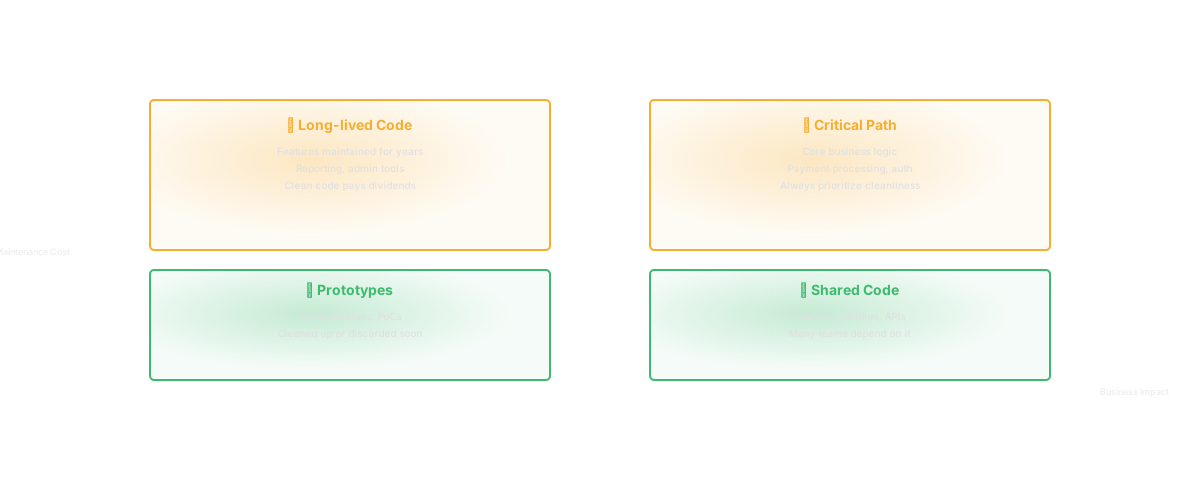
Treating clean code as a virtue, not a tool. The goal is maintainable software. Sometimes that means less clean code. Performance-critical code in real-time systems sometimes looks messy because it needs to be fast. At Salesken, our audio frame processing code used manual memory management patterns that would fail any clean code review. But it processed audio in under 10ms per frame, and the "clean" version was 3x slower. The messy version stayed. It was the right call.
How to Develop Judgment Rather Than Rules
Read a lot of code. Good code and bad code. See what works at different scales. In Bengaluru's tech ecosystem, the diversity of codebases you encounter across companies is enormous. Startups writing fast-and-dirty JavaScript. Enterprise teams writing ceremony-heavy Java. Neither is wrong in its context. Exposure to both builds judgment.
Code review intentionally. When reviewing, ask "is this clearer or more confusing?" not "does this follow the rules?" The best code reviewers I've worked with never cited a style guide. They asked questions: "What does this do?" If the answer wasn't obvious from the code, the code needed work. If it was, the code was fine, regardless of how many "rules" it bent.
Maintain your own code long enough to feel the pain. If you write something clever and don't touch it for 6 months, then have to modify it, you'll learn what matters. Nothing teaches clean code like debugging your own clever code at midnight.
Common Code Review Practices That Improve Quality
Require that reviews explain, not just approve. "Looks good" is useless feedback. "This is clearer than the old version because the error handling is explicit" is useful.
Push back on reviews that enforce style without reason. If a reviewer says "this variable name is too long," ask why. If it's "my linter doesn't like it," that's not a reason. If it's "it obscures the logic on this line," that's a reason.
Have junior and senior developers review each other. Juniors learn what clean code looks like in practice. Seniors remember why over-engineering is a trap. This bidirectional review was one of the best practices we had at Salesken.
Technical Debt That Matters vs. Debt That Doesn't
Technical debt is "do it quick now, fix it right later." Debt matters when it's a maintenance burden. A hacked-together authentication system you'll refactor in 3 months: matters. A variable named x in a utility function: doesn't.
Track debt that matters. Document it. Plan to pay it down. Debt that doesn't matter (minor style issues, suboptimal algorithms in non-critical paths) should be left alone, not added to a backlog where it accumulates guilt without value.
Connecting Clean Code to Codebase Intelligence
The question "where should we focus clean code effort?" is harder than it sounds. Not all messy code is equally costly. A messy utility function called once is harmless. A messy function called by 40 other files and modified every sprint is expensive.
Codebase intelligence helps by surfacing the intersection of complexity and change frequency. High cyclomatic complexity plus high churn means this code is both hard to understand and frequently touched. That's where clean code investment has the highest return. Low complexity, low churn code? Leave it alone, even if it doesn't look pretty.
At Glue, we surface this signal automatically. The part we're still working on: distinguishing between "this code is complex because the problem is complex" and "this code is complex because it was written hastily." Both show up as high complexity. Only one is worth refactoring. That distinction still requires human judgment.
Frequently Asked Questions
Q: Should we refactor all our old code to be cleaner?
No. Refactor code that you're actively maintaining and that's causing problems. Refactoring code that works and isn't changing is waste. Focus on the code that's broken and hard to fix.
Q: What about performance? Does clean code matter there?
Usually, yes. Clean, simple code often performs better than over-engineered code because the compiler can optimize straightforward patterns. In rare cases, you need to optimize for speed at the cost of readability. But measure first. Most performance problems aren't where you think they are.
Q: How do we enforce clean code without becoming dogmatic?
Code review that asks "why" not "what." A linter that catches real problems (unused variables, unreachable code) not stylistic preferences (line length, brace placement). Culture that values clarity over compliance.
Related Reading
- Code Refactoring: The Complete Guide to Improving Your Codebase
- Design Patterns in Software Engineering: A Practical Guide
- Code Health Metrics: Measuring What Actually Matters
- Pull Request Size and Code Review Quality
- Technical Debt Patterns: The 7 Types Costing You the Most
- Programmer Productivity: Why Measuring Output Is the Wrong Question