
The PM-engineer trust gap is a systemic organizational dysfunction where product managers and engineers operate with fundamentally different information about the same system, leading to misaligned priorities, inaccurate estimates, and mutual frustration. Product teams perceive engineering as over-engineering and slow; engineering teams perceive product as uninformed and scope-creeping. The root cause is not a communication problem but a visibility problem — PMs lack access to codebase state (architecture, dependencies, fragility) while engineers lack context on customer and business priorities. The solution is shared visibility into the same system information, not shared skills — PMs do not need to code, and engineers do not need to handle customers.
At Salesken, I worked alongside product managers daily. The gap between what PMs needed to know and what they could actually see in the codebase was enormous — and it cost us weeks of misaligned sprints.
I've sat in hundreds of product meetings. I've also sat in hundreds of engineering meetings. The same conversation happens in both, and nobody in either room realizes the other side is having it.
Product says: "Engineering doesn't understand the urgency. They push back on everything. They over-engineer simple features. They don't get that we need speed to compete."
Engineering says: "Product doesn't understand constraints. They treat all features as if they're equal. They change priorities constantly. They don't get that we're carrying three years of technical debt."
Both sides are right, and both sides are missing the actual problem.
The issue isn't trust. It's information asymmetry.
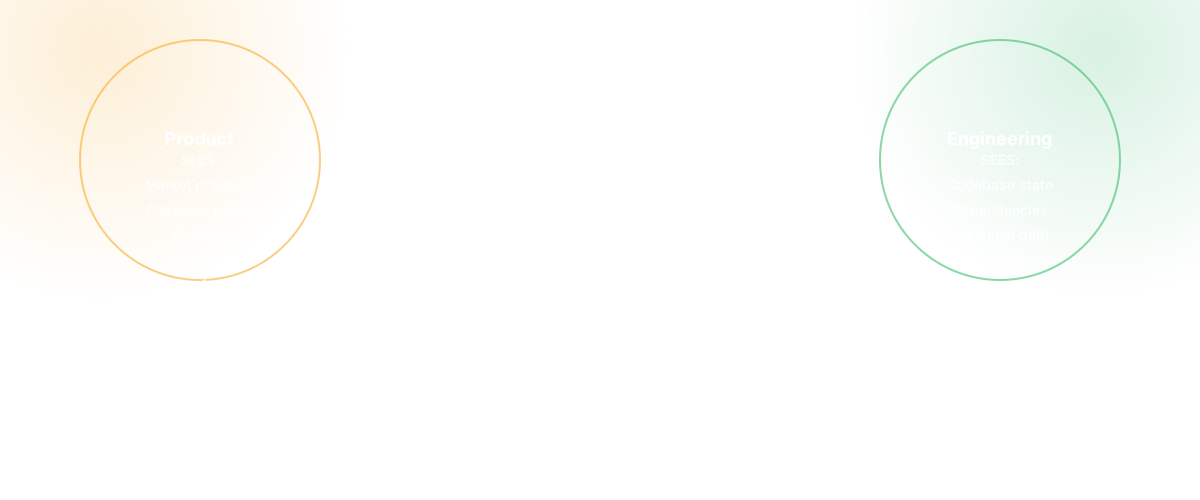
The Architecture of Miscommunication
Product can't see the codebase. They make decisions about what to build and when to build it without knowing what's actually there. They see a feature that should take a week and are shocked when engineering says four weeks. They think it's padding. It's not. They just can't see the ghosts in the system.
Engineering can't see the product strategy. They get tickets. They implement them. But they don't know why this feature matters more than technical debt, or whether this is strategic direction or someone's pet project that'll be deprioritized in two months. They think PMs are chaotic. Sometimes they are. But mostly they're just not communicating the full picture because they assume engineering doesn't care, and engineering doesn't ask because they assume it won't matter.
Both sides fill in the gaps with assumptions. PMs assume engineers are slow and don't understand business. Engineers assume PMs are moving targets and don't understand systems. And those assumptions compound into friction.
Where It Breaks Down
I've watched the same fights happen at every company. They're not about people - they're about information.
The estimation fight: PM asks for a scope and timeline. Engineer says "it depends." PM pushes back - depends on what? Engineer tries to explain that refactoring the auth module impacts the timeline, or that the checkout flow is fragile and any change risks breaking it. PM hears "technical debt as an excuse to go slow." Engineer hears "you don't understand why this matters." Both are right. The real issue: PM has no way to see that the auth module is fragile. They're estimating in the dark.
The "why is this taking so long" conversation: A story was supposed to take two days. It's been a week. PM asks what happened. Engineer says they discovered unexpected dependencies or realized the module was more complex than it looked. PM hears incompetence. Engineer hears "you should have known this already." What's actually true: PM can't see the codebase, so they couldn't have known. Engineer didn't want to overestimate because over-estimating gets punished. Both sides did what made sense with the information they had. Both sides got it wrong.
The priority ping-pong: PM sets a roadmap. Three weeks in, something urgent comes up. PM reprioritizes. Engineer asks "what about the refactoring we said was necessary?" PM says "there's no time for debt right now." Engineer says "there's always going to be something urgent." This is an unwinnable conversation because neither side has full information. PM can't see that skipping the refactoring will slow down future features. Engineer can't see that the urgent work actually matters more than the debt. Both are making the best decisions they can with incomplete pictures.
The planning poker theater: Teams gather to estimate. Engineer says 8 points. PM says "that seems high, it's just a form." Engineer explains that the form connects to five other systems. PM says "okay, 5 points then?" Engineer says 8 because that's what they actually think. PM says "let's compromise at 6." Engineer knows 6 is wrong but estimates are dumb anyway so they move on. Everyone leaves frustrated. The estimate fails. Everyone blames each other.
Why This Matters
I ran engineering teams and then built a product to help with this gap because I realized the issue doesn't get better with communication training. You can't communicate your way out of an information architecture problem.
PMs need to see what's actually in the system. Not the code - they don't need to read code. But what changed, where, how often, what's interconnected with what. How many times has the auth module been touched in the last six months? Who touched it? What modules does the checkout flow depend on? How old is it? When was it last refactored?
Engineers need to know what the business is actually trying to do. Not just the next sprint, but the next quarter. What are we building toward? What customers matter most? What problem are we trying to solve? Why is feature X more important than feature Y? Why do we keep getting reprioritized?
When PMs can see the codebase, estimation stops being theater. When engineers understand strategy, they stop treating all work as if it's equally urgent and they stop protecting technical debt that nobody else understands.
What Changed When We Fixed This
At Glue, we built visibility into the codebase specifically because I lived this gap. PMs can see what's actually there. When they ask "can we add this feature?" they're asking it with knowledge of the system. When they ask "how long will this take?" they're asking in context. And when engineers answer, they're not defending complexity the PM can't see - they're explaining complexity the PM can see.
Here's what stopped happening: The "why is this taking so long" conversation where both sides are frustrated. The estimation fights where it's clearly about guessing and someone's ego. The priority conflicts where neither side understands the other's constraints.
Here's what started happening: Conversations about tradeoffs instead of theater. "This feature will require us to refactor the auth module, which will slow down the payment feature we're planning next quarter" - PM sees that and can actually decide. "The urgent work does matter more than the debt" - engineer understands and stops resenting it. "This is going to take longer than we'd like, but here's why" - both sides believe it because they can see it.
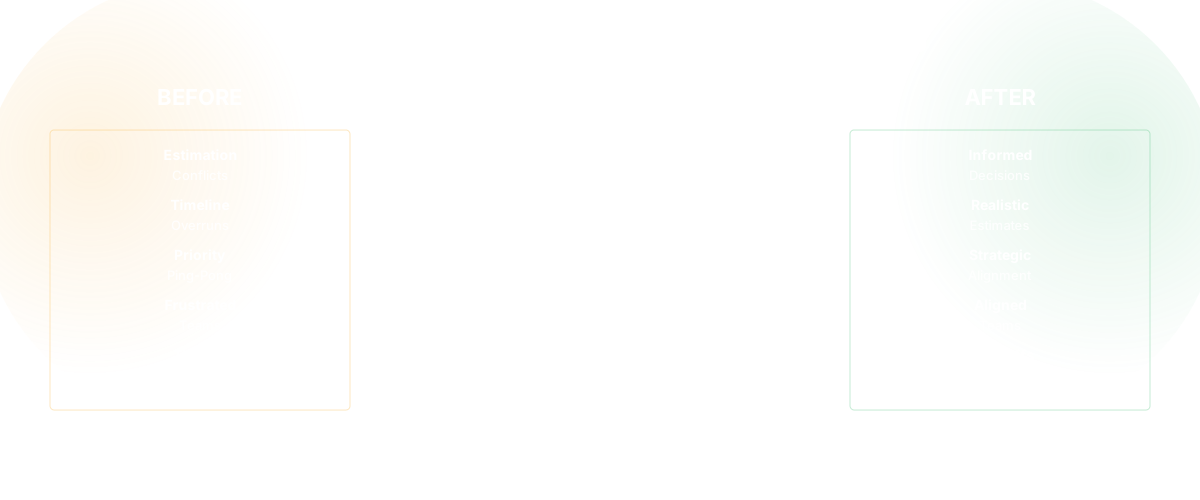
The Vision
The industry is moving toward this. Teams that survive the next five years will be the ones where product and engineering operate with shared visibility. Not the same knowledge - product doesn't need to code and engineers don't need to handle customers. But shared access to the same information about what's in the system.
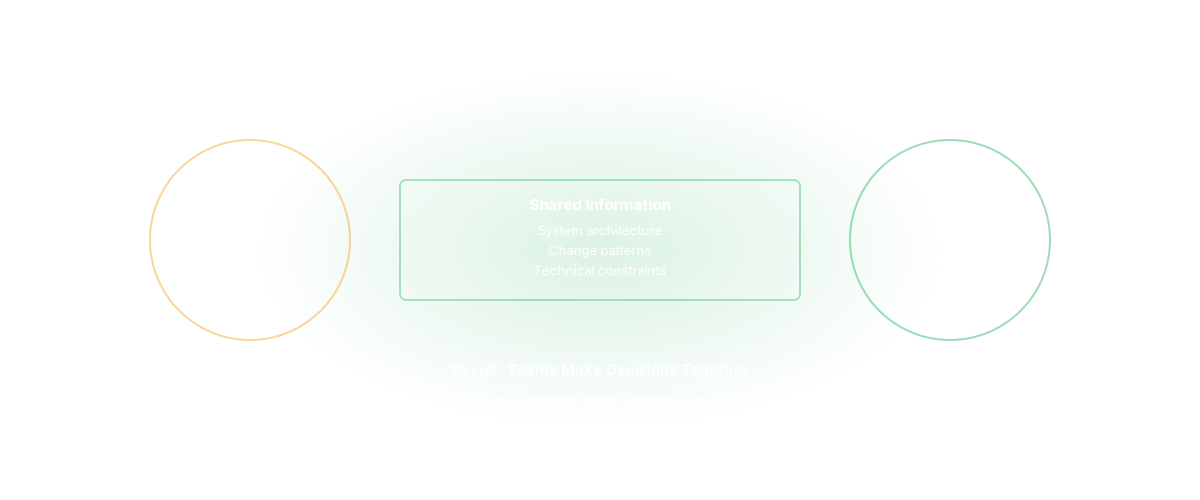
That's not a communication problem. That's an architecture problem. And it has a solution.
Frequently Asked Questions
Q: Does this mean PMs need to learn to code? A: No. Absolutely not. The whole point is that you shouldn't have to. PMs need to understand what's in the system and how it's organized — codebase intelligence provides this without requiring you to read code. You need visibility, not coding skills. There's a huge difference.
Q: What if my engineering team doesn't want to share this visibility? A: They probably do, actually. Most engineers will be honest about what's hard if they feel heard. The resistance usually comes from past experiences where technical explanations got ignored or used against them. Once they see that visibility is mutual - that PMs are using it to make better decisions, not to prove them wrong - most teams are eager to share. Start by being genuinely curious instead of defensive.
Q: How do I start building this with a team that has no existing visibility? A: Start small. Ask your lead engineer to walk you through the codebase. Not the code itself — the structure. What are the main systems? Which ones are fragile? Use dependency mapping and software architecture documentation to formalize that knowledge. Once both sides realize how much you didn't know, you'll be surprised how quickly trust improves.
Related Reading
- AI for Product Management: The Difference Between Typing Faster and Thinking Better
- The Product Manager's Guide to Understanding Your Codebase
- AI Product Discovery: Why What You Build Next Should Not Be a Guess
- Cursor for Product Managers: The Next AI Shift Nobody Is Talking About
- Product OS: Why Every Engineering Team Needs an Operating System
- Software Productivity: What It Really Means and How to Measure It