
By Vaibhav Verma
Non-technical product managers have a structural advantage over technical PMs: they ask "why" instead of assuming they know, forcing engineering teams to articulate reasoning and surface hidden assumptions. The disadvantage — lack of codebase familiarity — is increasingly solvable through codebase intelligence tools that translate technical complexity into product-level understanding without requiring coding skills. The three pillars of PM credibility with engineering teams are asking good questions, understanding customers deeply, and making decisions that actually ship — none of which require writing code.
I was sitting in a product review once when the VP of Engineering said something that stuck with me. "The smartest PM I've worked with was a former librarian." Everyone nodded like this made sense. It did. She asked why we were building things the way we were - not because she wanted to sound smart, but because she genuinely couldn't assume the answer. That question - that genuine curiosity instead of false familiarity - forced the team to articulate reasoning they'd never had to articulate before.
Being a non-technical PM isn't a disadvantage you need to overcome with a bootcamp course or a technical certification. It's a different kind of advantage if you play it right.
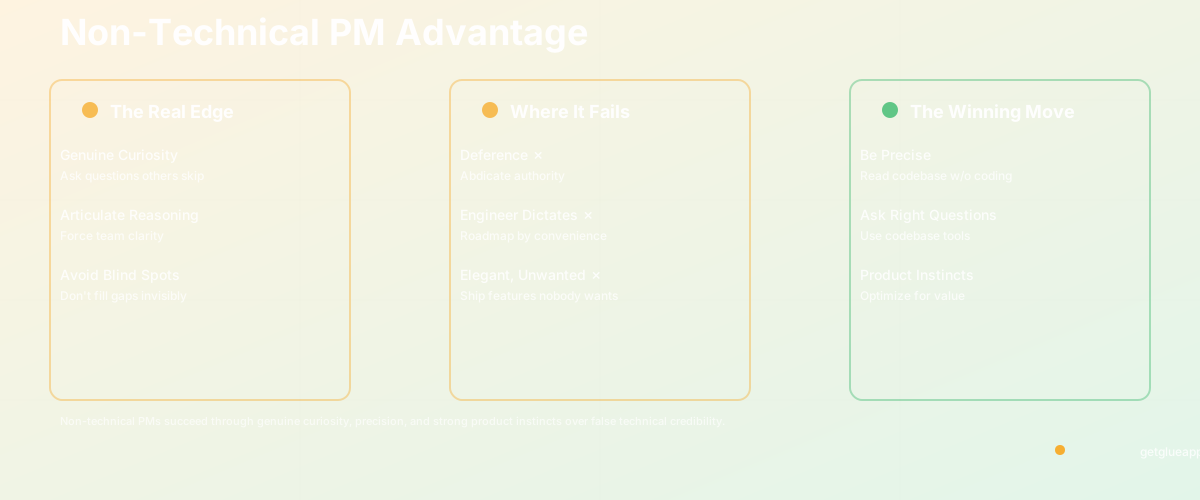
The Real Edge of Not Knowing
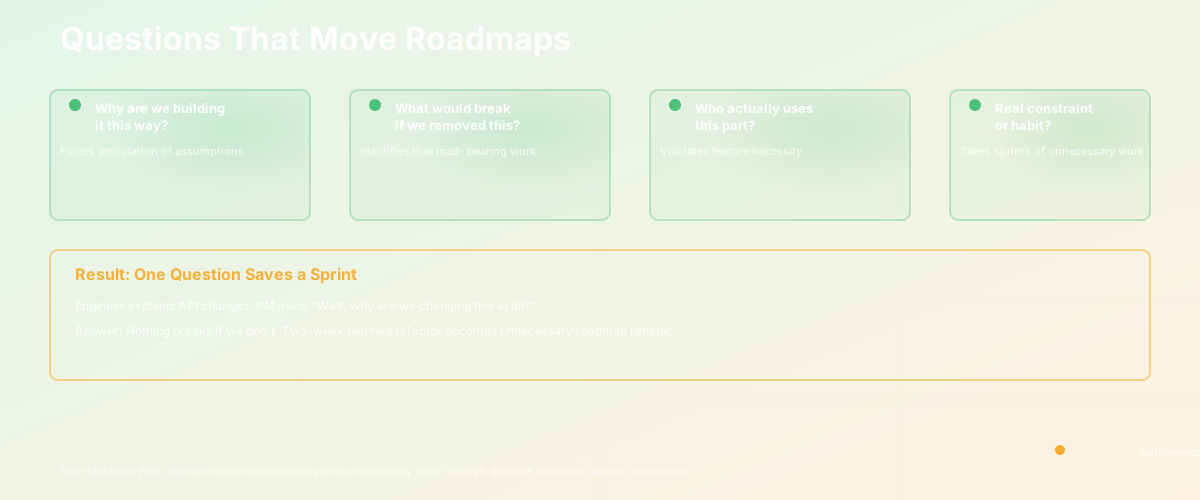
I've watched this pattern across three companies now. The non-technical PM who becomes effective doesn't do it by learning to code or trying to read GitHub commits. They do it by asking questions that technical PMs stop asking once they understand the stack. Why are we using this library? What would break if we removed this service? How many people actually use this part of the product? Is this a real constraint or a habit?
Technical PMs have intuition. They can walk through a codebase, see a pattern, and think "ah, that's why it works that way." But intuition is also dangerous. It lets you fill in gaps without realizing you're filling them. A non-technical PM can't do that. You have to actually articulate what you're seeing and why it matters.
I watched one PM - still one of the best I've worked with - run sprint planning by asking engineers "describe what you're building as if you're explaining it to someone who has no technical background." Not to test them. To force them to think past the implementation. One engineer started explaining API changes and she interrupted: "Wait, why are we changing this at all? What breaks if we don't?" Turns out, nothing. We'd been planning a two-week refactor that wasn't necessary. That single question saved a sprint and forced the team to rethink a whole chunk of roadmap.
Where Non-Technical PMs Actually Fail
But here's where it goes wrong. Some non-technical PMs respond to not knowing by being deferential. "Whatever the engineers think is best." Or "I wouldn't understand the tradeoff." This is the actual disadvantage. Not the lack of technical knowledge - the abdication of authority that comes with it.
When you don't understand the technical details, it's easy to feel like you're not qualified to make the call. So you defer. The engineering team becomes the true product decision-maker, and you become the person who schedules the meetings and writes the requirements. This sounds collaborative. It isn't. It's engineering dictating roadmap priorities based on what's interesting to build, not what matters to customers.
I've watched this kill products. Teams ship features that are technically elegant but nobody wants. Roadmaps slip because nobody questioned whether a specific technical approach was necessary. Customers leave because their problems aren't being solved - they're being solved in whatever way was technically convenient.
The Non-Technical PM's Real Play
The winning move isn't to become more technical. It's to become more precise. You learn to read your codebase without coding. You learn what questions matter. You develop genuinely strong product instincts instead of trying to fake technical credibility.
Here's what this actually looks like: You use tools that let you understand your codebase without reading code. Not because understanding code is impossible for non-technical people - it isn't - but because your time is worth more spent talking to customers, writing specs, and making decisions than spent learning to parse TypeScript. Tools like Glue exist specifically for this. You ask your codebase questions in natural language. "What does the checkout flow actually do?" "Which services would need to change if we added real-time sync?" "Where do we have the most technical debt?" You get answers.
Then you use those answers to make better decisions. Not engineering decisions - product decisions. Should we build this feature? Can we build it without rewriting three services? If the answer is yes, does it still matter? What would customers actually pay for?
A non-technical PM with genuine product instincts will beat a technical PM with weak instincts every single time. The technical PM will optimize for code quality and architectural elegance. The non-technical PM with good instincts will optimize for what actually matters - building things customers want, shipping on time, not painting yourself into technical corners.
Learning to See Without Coding
The hard part about being non-technical isn't understanding code. It's understanding why code is the way it is. Why does this module exist? Is it load-bearing? Could we change it? This is where codebase intelligence becomes non-optional.
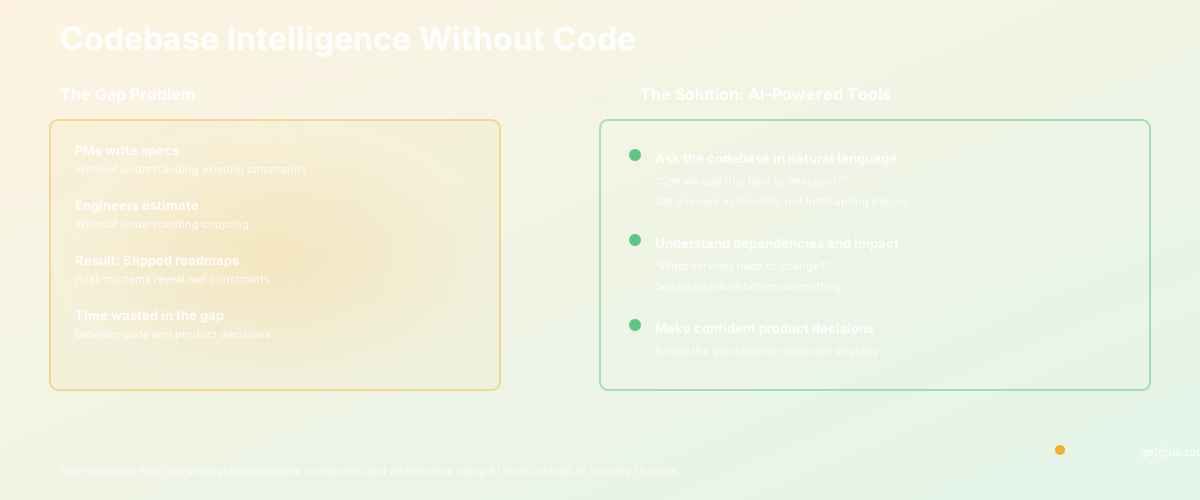
When I was building early product org processes at a scaling startup, I realized we were losing enormous amounts of time in the gap between "what does our product do?" and "what does our code actually do?" PMs would write specs that didn't account for existing constraints. Engineers would estimate aggressively without understanding coupling. The roadmap would slip. We'd have post-mortems where we learned the real constraints for the first time.
So we built tools - first internally, then as Glue - specifically to make a codebase understandable without requiring you to read code. A PM asks "can we add this field to the checkout flow?" and gets an answer in minutes instead of interrupting someone. An engineering manager asks "what's our deployment path look like for the payment system?" and sees the architecture instead of going down a hall asking questions.
This isn't dumbing down technical knowledge. It's respecting people's time. If you're a PM, your job isn't to become an engineer. Your job is to understand your product deeply enough to make smart decisions. If you can do that using AI-powered codebase analysis instead of learning TypeScript, you should.
The Confidence Part
There's something else that happens. When you stop apologizing for not being technical and start treating your lack of technical background as a tool, something shifts. You ask harder questions. You're not trying to prove you understand the code - you're trying to understand what matters. You push back more confidently on "that's too hard" because you can see whether it's actually hard or just unfamiliar.
I've hired both kinds of PMs over the years. The non-technical PMs who succeed are the ones who learn early that "I don't understand how this works" is just information. Use it. Ask the question. Make the engineering team articulate what they're assuming. Build toward clarity instead of faking certainty.
Frequently Asked Questions
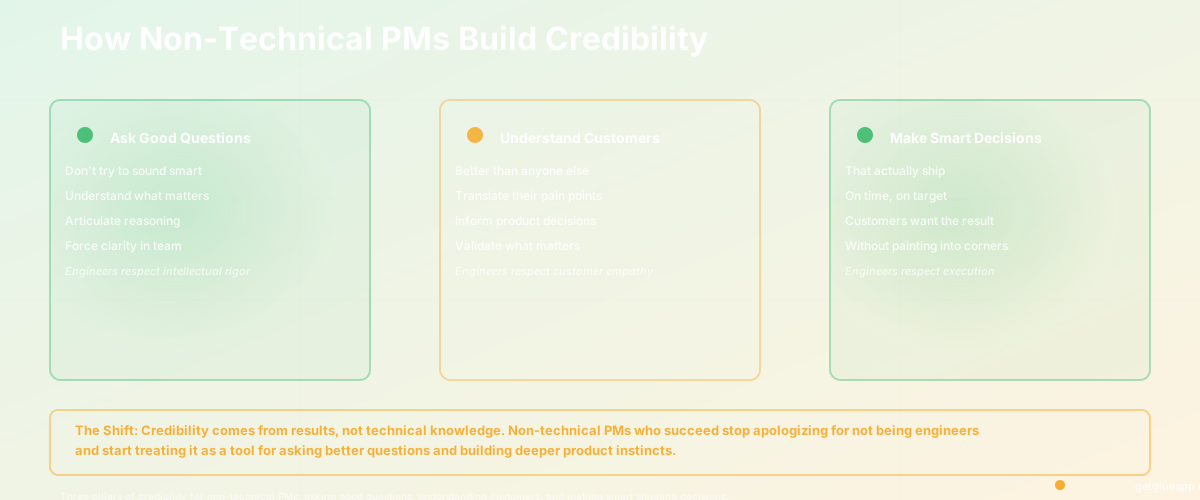
Q: As a non-technical PM, how do I gain credibility with my engineering team? Credibility doesn't come from understanding code syntax. It comes from three things: asking good questions, understanding your customers better than anyone, and making decisions that actually ship. If you ship a feature that customers want on schedule, engineers respect that regardless of whether you could read the PR. Focus on proving you understand what matters.
Q: Should I take a coding bootcamp to become a better PM? Only if you genuinely want to code. If you're doing it to prove something to engineers or to understand your codebase, there are better uses of your time. Learn to ask the right questions instead. Tools like codebase analyzers let you understand technical constraints at a PM level without learning to code. That's more valuable than learning JavaScript.
Q: How do I make decisions about technical tradeoffs if I don't understand the technical side? Ask your codebase directly. Use tools that translate technical complexity into product language. Understand the constraint - "this takes two weeks because we need to refactor X" - then evaluate whether it's worth it from a product perspective. Sometimes it is. Sometimes it isn't. That's your decision to make, and you can make it without being able to write the code yourself.
Related Reading
- AI for Product Management: The Difference Between Typing Faster and Thinking Better
- The Product Manager's Guide to Understanding Your Codebase
- AI Product Discovery: Why What You Build Next Should Not Be a Guess
- Cursor for Product Managers: The Next AI Shift Nobody Is Talking About
- Product OS: Why Every Engineering Team Needs an Operating System
- Software Productivity: What It Really Means and How to Measure It