
Code review is a software engineering practice where peers examine proposed code changes before they merge into the main codebase, and it directly impacts product outcomes — not just code quality. Product managers who understand the code review process can anticipate where specs will be ambiguous, identify which system areas will require complex review cycles, and recognize when review feedback signals a misalignment between the spec and the system architecture. PMs should not review code themselves, but should participate in design reviews and spec reviews upstream to catch ambiguities before implementation begins.
At Salesken, our product managers were some of the smartest people in the room. But they were making decisions with incomplete information because the codebase was a black box to them.
You're in a planning meeting and engineering says "we built this differently than the spec." You ask why. The engineer says "it came up in code review."
This happens constantly, and PMs mostly treat it as an engineering problem. Not my domain. They make decisions about implementation details, that's technical stuff. I just care about what ships.
But code review is actually where product decisions get made. It's where implementation tradeoffs get resolved. It's where "the spec said X but we realized Y is better" conversations happen. As a PM, you're not participating in that conversation, but the decisions made there affect your product.
I spent years thinking code review was purely an engineering quality gate. Then I started paying attention to what actually happened in reviews, and I realized: if I understood code review better, I could write better specs, I could set better timelines, and I could have better conversations about what done actually means.
What Actually Happens in Code Review
Let me describe the kind of thing that happens constantly:
An engineer submits a PR that implements the feature spec. In code review, another engineer says "wait, this approach won't work if we need to do X later, which is on the roadmap. We should refactor this first." The review goes back and forth. Three rounds of back and forth. What was estimated as two days turns into four days.
Or: an engineer implements the feature. In code review, someone says "this is going to cause performance issues with the way we do queries." The implementation gets reworked. More time.
Or: an engineer sends a PR, and in review it becomes clear that the spec was actually ambiguous about a specific case. Probably happens in 20% of code reviews. The engineer has to decide: implement what I think the spec means, or pull back and clarify with product? If they do the latter, your feature is delayed while I clarify. If they do the former, they might implement it wrong.
These are all normal. These are all part of the system. But if you're a PM and you're not thinking about these dynamics, you're not accounting for them in your estimates, and you're not writing specs that would prevent them.
Why Code Review Matters to PMs
Code review is basically quality assurance at the implementation level. The review is asking: does this code do what was asked? Does it do it in a way that won't break other things? Does it follow our standards? Does it make sense given the broader system?
If the answer to any of those is "not quite," the code gets sent back. More time. More iteration.
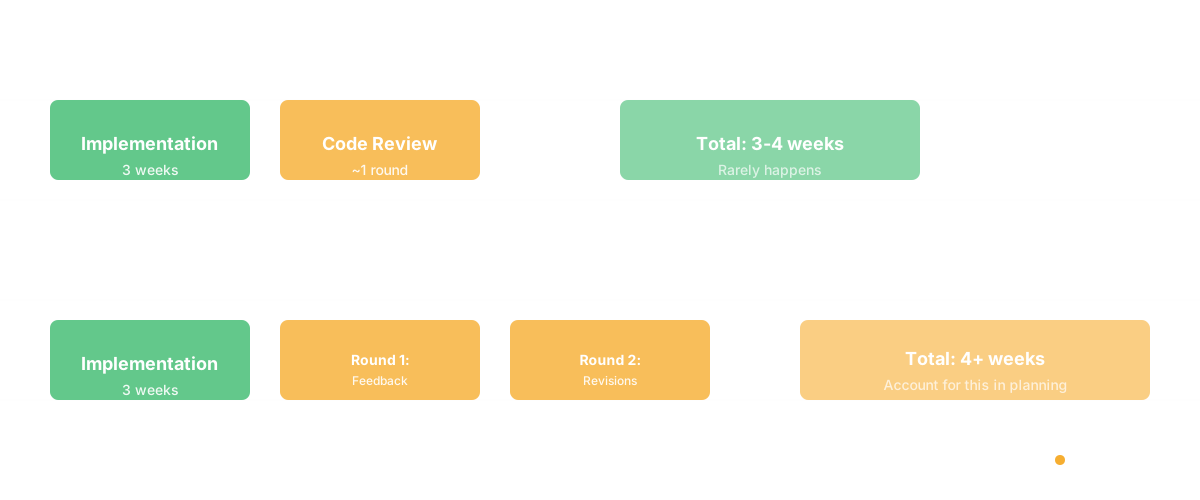
A feature might be estimated as three weeks, but if the code review process is going to add two rounds of revision, it's actually four weeks. You need to understand that when you're planning.
Also - and this is important - code review is where implementation decisions get made that affect your product. If you don't understand code review, you don't understand what "done" means. You might think a feature is done when the engineer says the PR is approved, but there might be a follow - up PR that refactors something, or optimizes something, or fixes something that came up in review. Is that still one feature? Three weeks or four? Nobody knows because the review process isn't transparent to you.
What a PM Should Understand About Code Review
You don't need to do code review. You don't need to understand how to write code. But you should understand the shape of code review in your organization.
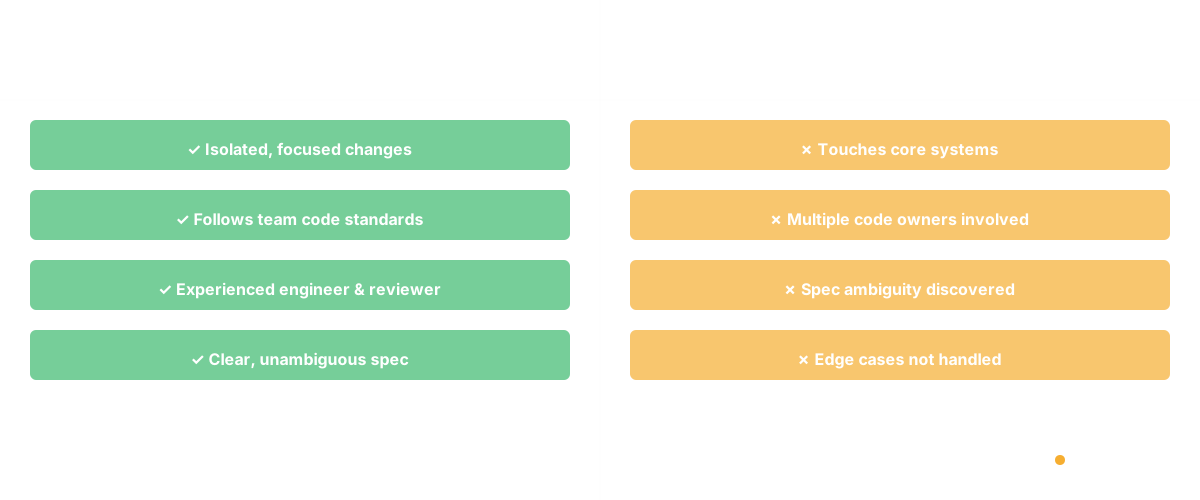
What makes a code review fast? Usually: the change is isolated and doesn't affect other systems, the code is well - written and follows team standards, the engineer who's requesting review is experienced and the reviewer is familiar with that part of the code, the spec was clear so the implementation matches expectations.
What makes a code review slow? Usually: the change touches core systems, the implementation affects areas of code that multiple people own, there's ambiguity in the spec that shows up during review, the code doesn't follow standards, the reviewer discovers an edge case that should have been handled differently.
When you're writing a spec, you should be thinking: which of these things can I influence? I can make the spec clearer. I can understand which parts of the codebase this feature touches and whether that's going to create review complexity. I can coordinate with the right people to make sure reviewers are available.
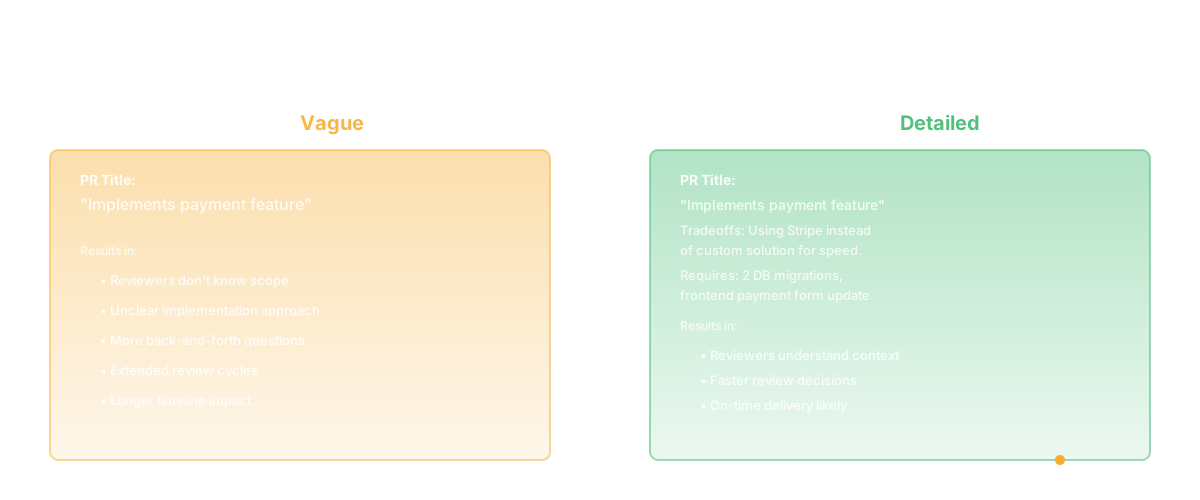
What should a good PR description look like? This is something I care about a lot. A PR description that just says "implements payment feature" is less useful than a PR description that says "implements payment feature with the following tradeoffs: using option A instead of option B because X, relying on existing library Y, will add two new database migrations, needs frontend change Z."
The second one tells the reviewer "here's the shape of what I did and why." Reviewers can quickly understand whether they need to read every line or whether they can skim. They know what to pay attention to.
As a PM, when I see good PR descriptions, I know I'm going to get on - time delivery. When I see vague ones, I know the feature is going to take longer because there will be back and forth about what the author was actually thinking.
What does code ownership mean? Different organizations do this differently. Some have code owners - specific people who have to review any changes to certain files. Some have team ownership. Some have just vibes. You should know how your organization does it, because it affects timeline. If the person who owns the code you're touching is on vacation, your feature is stuck in review.
How This Changes Your PM Work
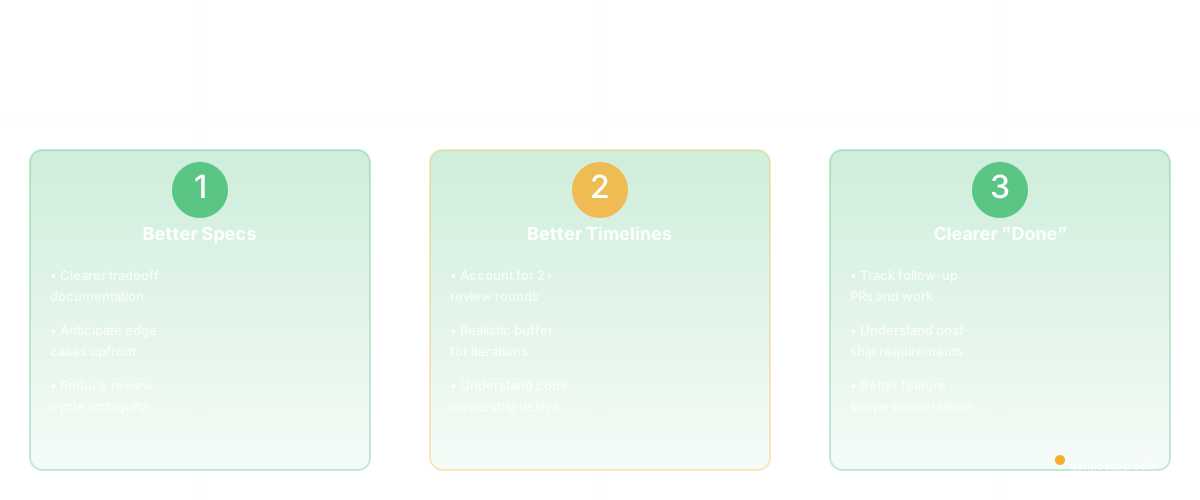
Understanding code review changes three things:
First, you write better specs. Because you understand that code review is where implementation decisions get made, you write specs that are clearer about tradeoffs. You think about edge cases upfront instead of assuming the engineer will discover them in review. You reduce the ambiguity that slows down code review.
Second, you set better timelines. Code review takes time. If you're estimating a feature at three weeks and that includes one round of review, you're optimistic. Two rounds is more likely. That's not the engineer being slow. That's the system working. When you understand this, you account for it.
Third, you have better conversations about what done means. You're not just asking "is the PR approved?" You're asking "are there any follow - up PRs we expect? Is there anything this PR will require after it ships?" You understand that code review sometimes surfaces work that wasn't in the original estimate.
The Visibility Problem
Here's the hard part: most PMs don't have visibility into what's actually happening in code review. You see a feature slip and you don't know whether it's because the implementation was harder than expected, or because code review revealed architectural issues, or because the spec was ambiguous.
When you have visibility into your codebase, you can understand the review process better. You can see which parts of the system are review - heavy because they're core infrastructure. You can understand which specs are going to be ambiguous before they go to development.
This doesn't require you to read code. It requires you to understand the shape of your codebase well enough to anticipate where code review is going to be complex.
Frequently Asked Questions
Q: Should PMs participate in code review? A: Not in the technical sense — you shouldn't be reviewing code. But you should understand it using codebase intelligence. You should know what code review looks like in your organization, what slows it down, what makes it fast. And if your organization has design reviews or spec reviews before code review, you should definitely participate — that's where you catch ambiguities before the engineer starts implementing.
Q: What if code review keeps surfacing issues with the spec? A: That's the signal that you should tighten up your spec process. If the same kinds of ambiguities keep showing up in review, that means your spec process isn't catching them. Spend more time on spec clarity upfront. Write specs that address the edge cases you can predict. Get someone technical to review your spec before the engineer implements it.
Q: How do we know if our code review process is healthy? A: Look at the shape of reviews. If PRs consistently get approved in one round and ship on time, healthy. If they consistently get sent back multiple times, something is wrong — track code review metrics and cycle time to diagnose whether the bottleneck is specs, reviewer strictness, or architectural misalignment.
Related Reading
- AI for Product Management: The Difference Between Typing Faster and Thinking Better
- The Product Manager's Guide to Understanding Your Codebase
- AI Product Discovery: Why What You Build Next Should Not Be a Guess
- Cursor for Product Managers: The Next AI Shift Nobody Is Talking About
- Product OS: Why Every Engineering Team Needs an Operating System
- Software Productivity: What It Really Means and How to Measure It