Use Case
Product managers can ask natural language questions about what's actually built. Discover hidden features, prevent duplicate work, and ground competitive analysis in technical reality.
Across three companies — Shiksha Infotech, UshaOm, and Salesken — I've seen the same engineering challenges repeat. The details change but the patterns don't.
Your product team doesn't know what your product actually does. Engineers built payment method support six months ago but it's never surfaced in the UI. Your product manager just told a customer "we can't support that" when the capability exists in your codebase, sitting idle. Competitive analysis meetings happen with incomplete information because nobody can answer "what does our product actually do?" with certainty.
Product managers face a fundamental gap between what's been built and what they know has been built. A PM asks engineering "can we do X?" and gets an answer that depends entirely on which engineer they asked and whether that engineer happens to know about X. Someone says "I think we built something like that two years ago" but nobody knows where it is or whether it still works.
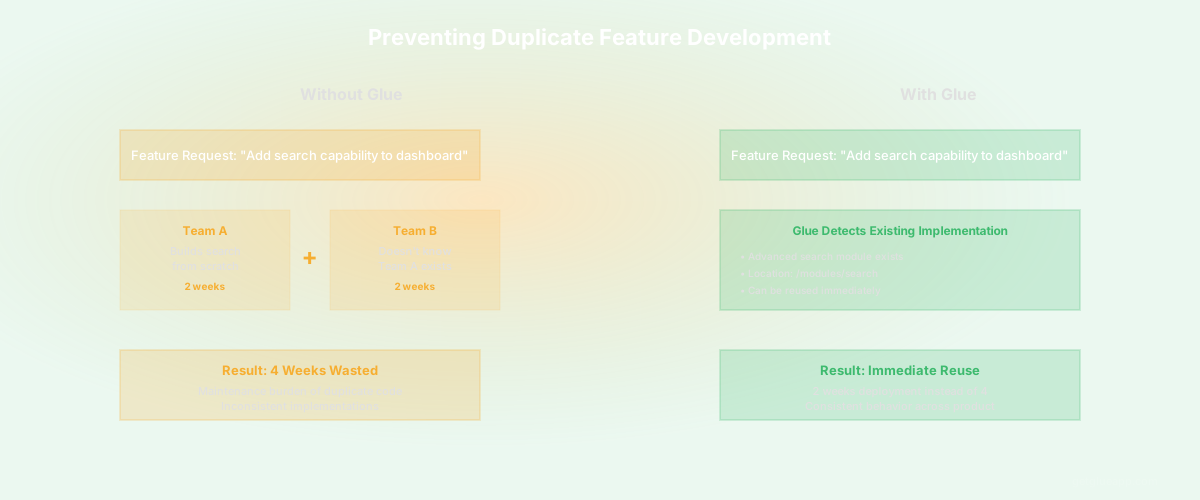
This gap creates three cascading problems. First, PMs commission features that are already partially or fully implemented, wasting development cycles. Second, they tell customers "we can't do that" about capabilities that exist but were never shipped or surfaced. Third, competitive analyses are built on incomplete product knowledge - your company looks less capable on paper than it actually is. You're competing with a handicap because your own team doesn't know your own product.
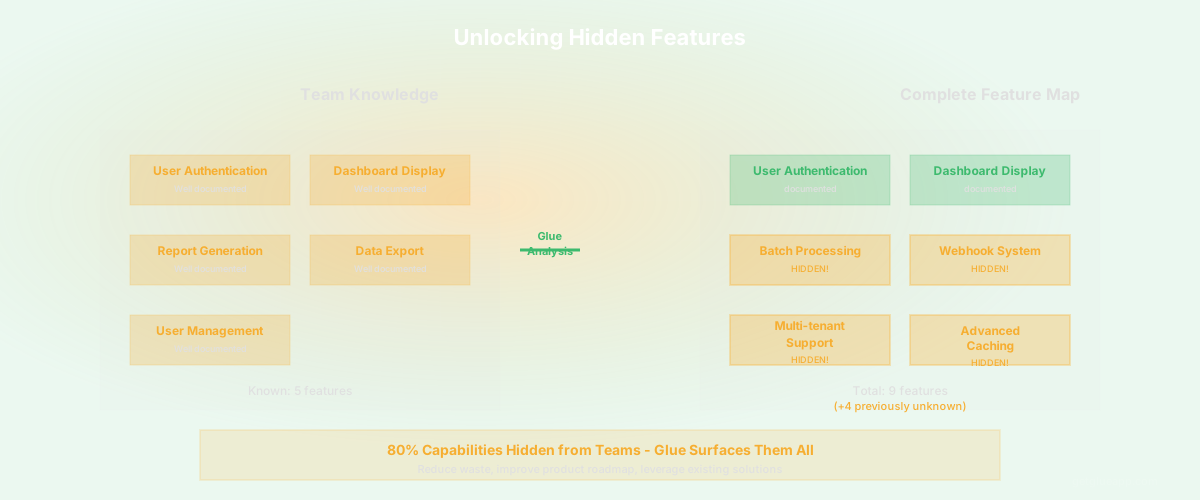
The root cause is simple: there's no reliable way for a non-engineer to ask "what does our product actually do?" and get a complete, accurate, current answer. PMs rely on documentation (stale), roadmaps (show planned, not shipped), verbal knowledge from engineers (fragmented and inconsistent), and feature flags (don't show what's possible, only what's enabled).
Most teams try several things. First, documentation. PMs read the docs and find them missing entire features, contradicting the actual code, or describing behavior that changed six months ago. Documentation requires a writer to keep it current, and that writer isn't there in most companies. Second, asking engineers. This works until you ask the wrong engineer, or until the engineer who built it left the company. Third, exploring the codebase directly. A PM might spend hours in the repo trying to understand whether a capability exists, only to find something that looks like it might work but has no tests and hasn't been touched in three years - so they can't actually trust it.
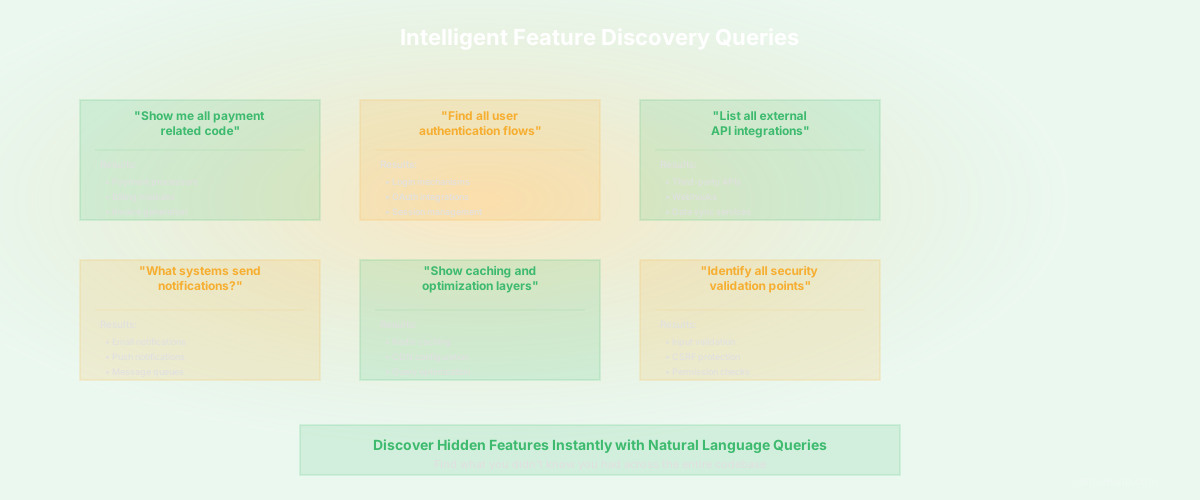
Feature flags and releases create another problem. A capability might exist in code but be completely hidden behind flags. A PM can't see the actual surface area of what's possible without instrumenting their entire codebase to understand which code paths are accessible in production. Even then, they're looking at what's enabled, not what's possible. A feature could be disabled while remaining in the codebase, invisible to everyone except the engineers who built it.
The deeper issue is that none of these approaches give PMs the ability to ask questions. They require either luck (finding the right engineer) or massive effort (reading code). They're not scalable, they're not current, and they don't give you a way to discover what you don't know you have.
Glue connects to your codebase and lets PMs ask natural language questions about what you've actually built. This isn't search - it's comprehension. Glue understands your codebase as a coherent system, so when you ask "what payment methods does our system support?" it doesn't just search for "payment" in files. It traces the payment logic, finds where payment methods are defined, follows the code paths, and tells you exactly what methods exist, where they're implemented, and whether they're tested.
A typical workflow starts with a PM preparing for a competitive evaluation. Instead of guessing, they ask Glue: "What payment methods does our system support?" Glue returns a detailed map showing credit card, PayPal, and Stripe integration in the payments module, including code snippets and test coverage. The PM asks a follow-up: "Are there any payment features that aren't surfaced in the UI?" Glue finds wallet functionality and recurring payment logic that exist in code but aren't exposed to users. The PM can now see: "We have this capability. We could launch it as a feature without building anything new. Engineering just needs to surface it."
Another real workflow: a PM writes a competitive matrix and wants to understand feasibility before presenting it. They ask Glue: "Does our codebase have any analytics or reporting capabilities?" Glue scans the codebase and reports back: "You have event tracking via Mixpanel, user behavior funnels, custom dashboard logic in the analytics module, and export-to-CSV functionality. Here's where each lives in your codebase." The PM now knows they can offer basic reporting to customers today, and can speak to engineering about what expansion would require.
For a new feature idea, the workflow is different. A PM asks: "What does our current checkout flow do?" Glue shows the entire flow - from cart to payment to confirmation - with each step's implementation, dependencies, and test coverage. The PM can then ask: "If we wanted to add gift card support, what parts of this flow would we need to change?" Glue can show which modules handle payment method selection and which would need modification. This turns feature discovery into feature planning.
The specifics matter. Glue doesn't just return keywords. When a PM asks "which feature flags are currently enabled in production?" Glue understands flag definitions, reads production config, and shows what's active. When they ask "what does our system's caching strategy look like?" Glue maps redis usage, caching decorators, and cache invalidation logic. When they ask "do we have webhook support?" Glue finds webhook infrastructure, subscription logic, and shows whether it's wired up to send events. These are the questions PMs actually need answered when they're trying to understand their product.
A PM preparing a quarterly roadmap no longer starts from scratch. They ask Glue what's already in the codebase related to their strategic priorities. They discover that three of the five features they were planning to propose are already partially implemented. They shift their roadmap to focus on completing those features instead of building new ones - cutting estimated delivery time from 12 weeks to 4. Leadership gets more impact delivered faster because the roadmap is based on actual product knowledge.
In competitive analysis meetings, the PM speaks with authority about what your product can do. When someone asks "can we compete on X?" the answer comes with specificity: "We have Y capability. We don't have Z, but we have the infrastructure to build it in two weeks." Competitive positioning improves because it's grounded in technical reality. Customers hear yes more often because the team knows what they actually have.
Q: Does Glue require me to ship new features? A: No. Glue helps you discover what's already possible in your codebase. Often it just surfaces capabilities that exist but aren't surfaced in the UI. Sometimes it means completing features that are partially built. Sometimes it reveals work that was done but never shipped.
Q: Can Glue tell me if a feature is used by customers? A: Glue can see if code exists and whether it's wired up. For usage data, you'd still need analytics, but Glue can show you the infrastructure is there to measure it.
Q: How often is Glue's information updated? A: Glue indexes your latest codebase on demand. Ask a question about your product and you're querying the current state of your code.
Q: What if a capability exists but we've decided not to support it? A: Glue shows what's in the code. Your team decides what to activate, promote, or deprecate. Glue is the source of truth about technical possibility, not business priority.
Keep reading
Related resources