Glossary
Implement closed-loop feedback systems where fixes are verified against the same signals that detected problems. Break the cycle of recurring issues.
Across three companies — Shiksha Infotech, UshaOm, and Salesken — I've learned that most engineering problems aren't technical. They're visibility problems.
Closed-loop engineering intelligence is a feedback architecture where engineering decisions are informed by signals from the codebase and production, and where changes are systematically verified against those same signals. The loop closes when the same metrics that detected a problem confirm that the solution actually addressed it. It contrasts sharply with open-loop practices, where problems are detected, fixes are implemented, and then no one verifies whether the fix actually worked.
Most engineering teams operate in open-loop mode. An incident fires. Engineers respond, fix the code, deploy. The incident is resolved. But did they address the root cause? Or just the symptom? Without verification, they don't know.
This creates recurrence. The same bugs reappear. The same modules generate incidents repeatedly. The same technical debt gets "addressed" without changing the underlying structural problem.
Closed-loop engineering intelligence breaks this pattern by making verification mandatory. You don't consider a fix complete until you've confirmed that the original signal improved.
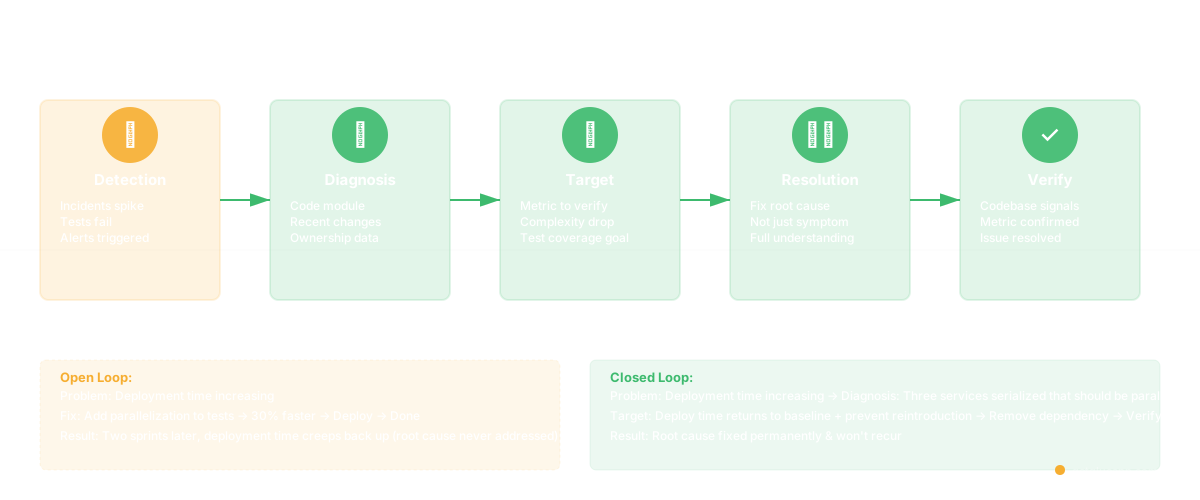
What does this look like?
Incident scenario:
Open-loop: An incident fires - payment processing is timing out. Engineers respond. They find that a database query was slow. They add an index. Query speeds up. Incident resolves. Ticket moves to "Done."
Closed-loop: Same incident. Engineers respond and dig deeper. The database query was slow because the product added a new filter that requires joining an additional table. Adding an index helps, but doesn't address why new joins were necessary. Engineers investigate further. They find that the new filter was added without considering performance implications. Closed-loop approach: (1) add the index (symptom fix), (2) understand why the filter was added (root cause discovery), (3) evaluate whether the architectural approach was sound, (4) implement a better solution if needed, (5) verify that not just the immediate query is faster, but that the system's overall response time improved and stayed improved over two weeks.
Code quality scenario:
Open-loop: Code analysis flags that a module has 95 complexity. Engineers refactor. Complexity drops to 65. Ticket closed.
Closed-loop: Same scenario, but verification goes further. Engineers refactor and confirm that complexity dropped. But they also track: did development velocity in this module actually improve? Are engineers spending less time in code review? Did incident rate in this system decrease? If these didn't improve, the refactor address the symptom (high complexity) but not the underlying problem (maybe the real issue was unclear ownership, not complexity).
The architecture has four components:
1. Signal Detection
Automated monitoring of codebase and production systems. Signals include: error rates, response time, code complexity, test coverage, deployment frequency, incident rate, change frequency, ownership clarity.
Signals are continuous. You're not doing quarterly code reviews - you're monitoring these metrics weekly, daily, or in real-time.
2. Diagnosis
When a signal becomes anomalous (error rate spikes, complexity increases, incidents cluster), diagnosis begins.
This is where codebase intelligence matters. A generic alert says "payment service error rate increased." Codebase intelligence says "error rate increased in the validatePayment function, which was changed in commit abc123 by engineer X, and it touches three other services including the deprecated legacy-billing service, and test coverage in this code path is below threshold."
Diagnosis isn't just "what's wrong?" It's "what's wrong, what changed, why might it have broken, what are the risks?"
3. Resolution
Engineers implement a fix. But the fix is targeted based on diagnosis. If the root cause was insufficient test coverage, the fix includes test work. If the root cause was architectural (new code touching deprecated systems), the fix includes architectural work, not just the immediate bug fix.
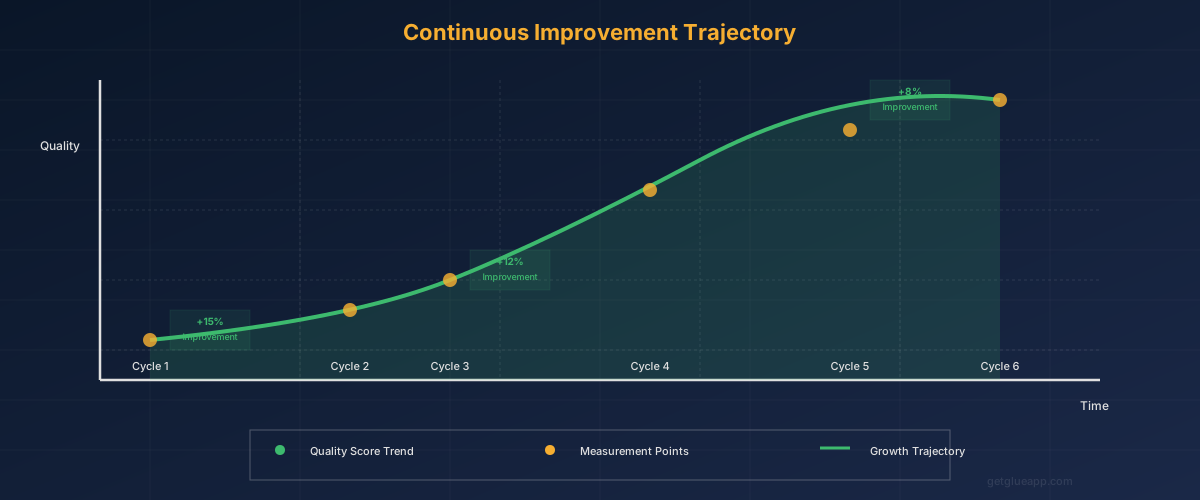
4. Verification
The same signals that detected the problem are checked again. Did error rate actually drop? Did it stay down? Is the system more stable? Did deployment frequency increase (engineers are less afraid to deploy)?
The verification loop isn't "did we change the code?" It's "did the underlying problem improve?"
Closed-loop processes require more rigor. They require tracking signals over time. They require post-fix verification, which takes longer than moving on to the next problem.
Most teams deprioritize closed-loop thinking because open-loop feels faster. But it creates recurrence and fragility.
The fastest teams actually run closed-loop processes. It's slower to fix a problem once, verify it stayed fixed, and understand the root cause. But it's much faster than fixing the same problem four times.
Week 1: Incident occurs. Standard response (alert, triage, fix, deploy).
Week 1 - 2: Instead of moving on, the team runs a post-mortem. Not "what went wrong?" but "what were all the factors that contributed?" and "what signals would have caught this earlier?"
Week 2: The team implements not just the immediate fix, but also the upstream changes that would prevent recurrence. This might include improving monitoring, increasing test coverage, or refactoring the code.
Week 3 - 4: The team verifies. Same metrics that triggered the incident are monitored. Did the incident rate in this system drop? Did it stay down? Did latency improve? Did engineers start deploying to this service more frequently (suggesting confidence increased)?
If verification confirms improvement, the issue is closed. If not, the investigation continues.
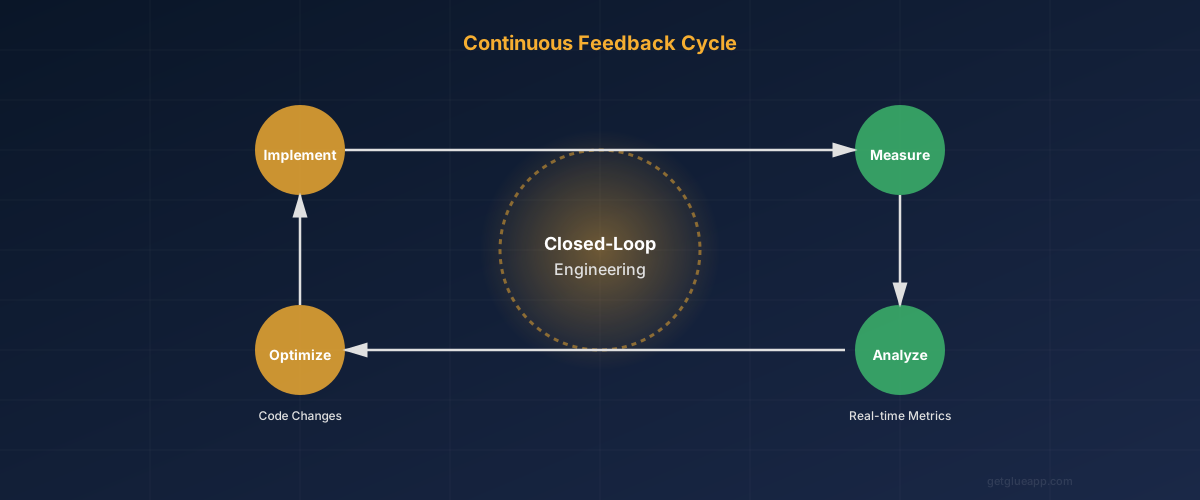
Closed-loop means you never fix the same issue twice: No. It means when you do, you investigate why. Maybe you never fully addressed the root cause. Maybe there's a different root cause you didn't see. Closed-loop processes adapt.
Closed-loop processes are too slow: Sometimes they take longer per incident, but they reduce incident frequency significantly. Net faster.
This only works for incidents: False. Apply closed-loop thinking to code quality issues, performance work, refactoring, anything where you're trying to improve something. Detect the problem, fix it, verify it stayed fixed.
Q: How do we track signals over time to verify fixes?
Dashboard and monitoring. Pick 3 - 5 key signals for critical systems (error rate, latency, incident frequency, deployment frequency). Track them weekly. When you fix something, check the signals 2 weeks later.
Q: Does this slow us down?
Initially, yes - a single incident takes longer to fully resolve. But over months, incident frequency drops. And you learn root causes instead of chasing symptoms.
Q: How do we prevent closed-loop processes from becoming bureaucracy?
Focus on signals and outcomes, not process. You're not checking boxes - you're verifying that fixes actually worked. Keep it lightweight. Don't make verification perfect - make it good enough to catch regressions.
Keep reading
Related resources