
Knowledge silos in software engineering are concentrations of critical system knowledge inside individual engineers' heads, creating bottleneck dependencies that block product decisions, slow incident resolution, and cause specification errors. Unlike purely engineering concerns, knowledge silos are a product problem: when a PM cannot answer "is the checkout flow different between web and mobile?" without asking a specific engineer, product velocity is constrained by that engineer's availability. Prevention requires structural changes — code review that demands understandability (not just functionality), architectural decision documentation at the point of change, and codebase intelligence tools that make system structure navigable without human intermediaries.
Across three companies — Shiksha Infotech, UshaOm, and Salesken — I've learned that most engineering problems aren't technical. They're visibility problems.
Last week I was building a spec for a new checkout experience and I needed to understand how our payment retry logic works. I asked the engineer who wrote it. He was helpful, explained it for 20 minutes, and I felt like I understood maybe 60% of it.
A month later we shipped, and it turned out there were edge cases around declined credit cards that nobody had told the product team about. The feature was technically correct but product - naive.
The engineer who wrote the code wasn't gatekeeping knowledge. He was just the only person who understood it deeply enough to explain it. And that's the real problem: the knowledge existed but it was siloed by human dependency.
Why This Is Different Than It Seems
When engineering leaders talk about knowledge silos, they usually mean "what happens if Bob leaves?" That's a real risk. But from a product perspective, there's a different pain point.
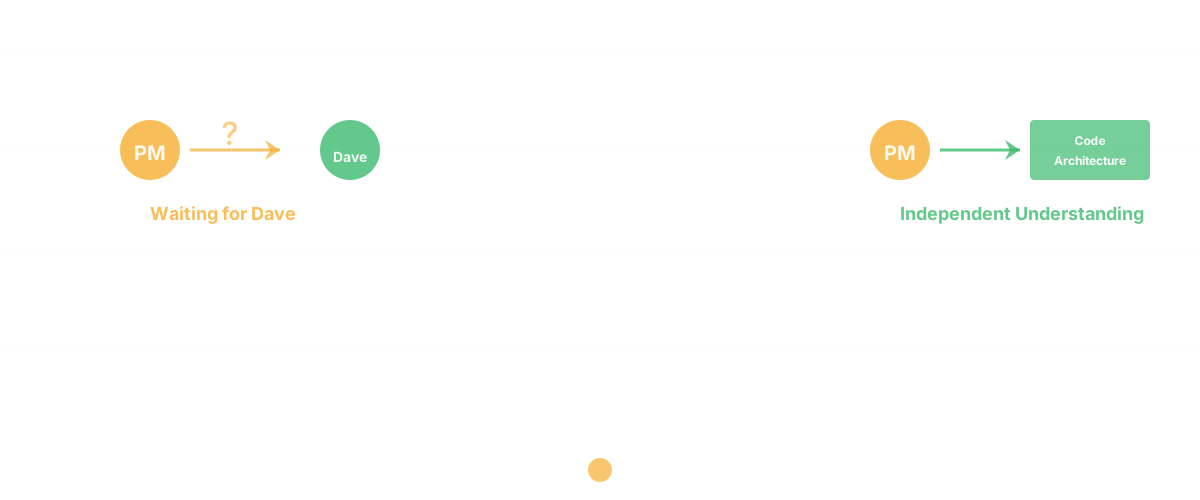
A knowledge silo is when I, as a PM, cannot understand what's possible without asking a specific person. And that person - through no fault of their own - becomes a bottleneck in my decision - making.
I can't see what exists. I can't know what's changed. I can't reason about edge cases. I can't evaluate whether a new feature is actually a one - day job or a three - week refactoring that looks like a one - day job.
That's not an engineering problem. That's a product strategy problem.
Silos Aren't Accidental
Here's what I've learned about knowledge silos: they're almost always architectural.
When you have one engineer who understands a system deeply and everyone else knows it vaguely, it's usually because:
- The system has no documentation (documentation takes time, why do it when you can just explain it?)
- The system has confusing or inconsistent architecture (easier to know the one weird history of why it works this way than to read the code)
- The system touches too many other systems (understanding it requires context that isn't visible in the code)
- The system was built by one person or a small team that's no longer here
It's not malice. It's the inevitable result of how the codebase evolved.
But when you look at it from the product side: I cannot see into these systems. I can't ask code questions. I can to ask people questions. And people are the bottleneck.

What Good Visibility Looks Like
I started asking high - performing teams: "How do you avoid this?" The answer is almost always the same: "We made it possible to understand the codebase without asking people."
That doesn't mean writing documentation (though some do that). It means making the codebase itself queryable.
This looks like:
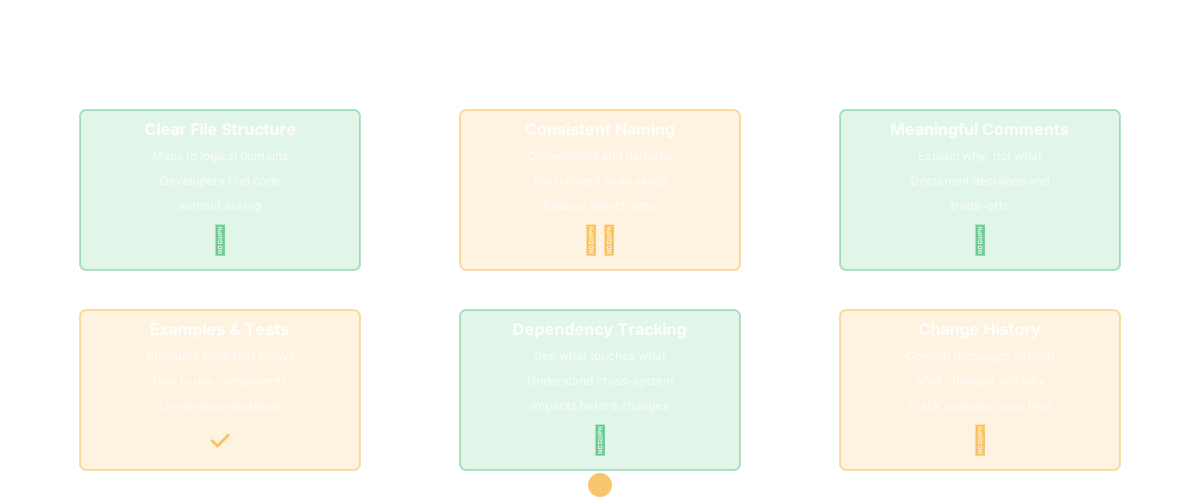
- Clear file structure that maps to logical domains
- Consistent naming conventions so you can find related code
- Code comments that explain why, not what
- Runnable examples and test coverage that shows how to use something
- Tracking of cross - system dependencies so you see what touches what
- Change logs or commit histories that explain what changed and why
The teams that do this well don't have fewer silos because they have better people. They have fewer silos because the codebase teaches you.
I can read a PR about the checkout flow and understand what changed because the diff is small and focused. I can ask "what happens if a payment fails?" and find the answer in the code instead of asking Dave.
The PM's Invisible Cost
Here's what keeps me up at night as a PM: the unknowns I don't know I don't know.
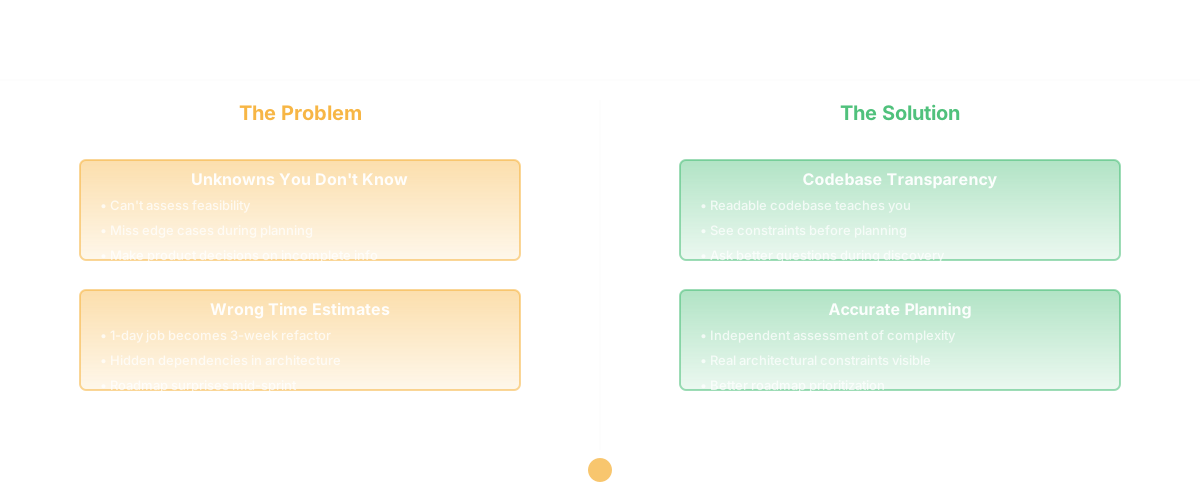
When the knowledge of a system is locked in someone's head, I might make product decisions based on incomplete information. I might say "yes, we can add customer - specific pricing logic" without realizing it touches seven different services and the core pricing system has assumptions that make this impossible.
Then the engineer says "wait, that won't work because..." and suddenly a three - week project becomes a half - day refactoring job.
Not because the engineer was hiding information. Just because I couldn't see the system clearly enough to ask the right questions.
Knowledge silos create not just technical risk (what if this person leaves) but product risk (what if I plan the roadmap wrong because I don't understand what's actually possible).
How Visibility Breaks the Bottleneck
Once the codebase is readable, the dynamic changes:
Instead of: "I have a question about the checkout system, let me wait for Dave to be free" → "I have a question about the checkout system, let me look at the code"
The engineer still needs to do the work, but I can do the thinking independently.
I can look at a three - month backlog and assess what's feasible based on the actual codebase, not based on what I remember from a meeting with Dave.
I can write a spec that accounts for real architectural constraints because I can see them.
I can raise my hand in planning and say "this requires touching the auth module, and that's complicated because..." instead of asking "is this hard?" and getting a vague yes.
The Radical Transparency Part
I think the deepest benefit of breaking down silos is that it forces everyone to be honest about the codebase.
When knowledge is in someone's head, you can say "it's complicated" and people nod. When knowledge is in the code, you have to articulate why it's complicated. You have to document the assumptions. You have to make the trade - offs visible.
And then - this is important - you can actually make trade - off decisions. We could simplify the auth system, but it would take two weeks. Do we want to do that? That's a choice. Right now it's not a choice because nobody can articulate what simplifying would take.
Moving From Silos to Transparency
If you're dealing with knowledge silos right now, here's what works:
Start with one high - silo area. Not the whole codebase. Just the system that everyone agrees is confusing. The checkout flow. The auth module. The recommendation engine.
Map the system. What files are involved? What other systems does it touch? What are the key decisions or constraints?
Document the constraints, not the code. You don't need line - by - line documentation. You need "here's why we made the database schema this way" and "here's what happens when a customer's card is declined."
Add examples. "Here's how to add a new payment method" or "here's what changes if we modify the refund logic."
Use tools that make the codebase queryable. This is where I see the biggest difference. When you have a tool that lets you see "what files changed this sprint," "which functions call this function," "who last touched this file," suddenly the codebase becomes like a map instead of a maze.
The Glue Connection
We built Glue because we hit this problem so hard at Glue itself. As we grew, we'd have product questions we couldn't answer without an engineer. "Is the checkout flow different between web and mobile?" "Who owns the payments module?" "What changed in the user auth system?"
Those should not require asking people. The code should tell you.
That's what code intelligence means - not static analysis or code coverage reports that go to engineers only. It means making the codebase transparent to the people who need to understand it: product managers, new engineers, tech leads trying to understand dependencies.
Frequently Asked Questions
Q: Doesn't this just mean good documentation?
A: Not exactly. Documentation rots. Code doesn't. What matters is making the code itself navigable and understandable through proper software architecture documentation. Good docs help, but a readable codebase is the prerequisite. Good documentation helps, but a readable codebase is the prerequisite.
Q: What if our codebase is already a mess?
A: You start somewhere. Pick the highest - impact module (the one that blocks the most product decisions or affects the most customers). Make that one navigable. Yes, it takes time. But it frees up the expert who was the bottleneck for harder problems. That's usually worth it.
Q: How do we prevent new silos from forming?
A: This is mostly cultural. Code review that requires changes be understandable, not just functional. New features should include a brief "here's the architecture we chose and why" comment. When someone becomes the expert on something, that's a signal to start documenting it before it becomes a silo. And use tools that make codebase changes visible — codebase intelligence platforms let you see what changed, so you can ask questions about it before knowledge silos form.
Related Reading
- Knowledge Management System Software for Engineering Teams
- Software Architecture Documentation: A Practical Guide
- Conway's Law: Why Your Architecture Mirrors Your Org Chart
- Developer Onboarding Metrics: How to Measure and Accelerate Time-to-Productivity
- Code Dependencies: The Complete Guide
- What Is a Technical Lead? More Than Just the Best Coder