
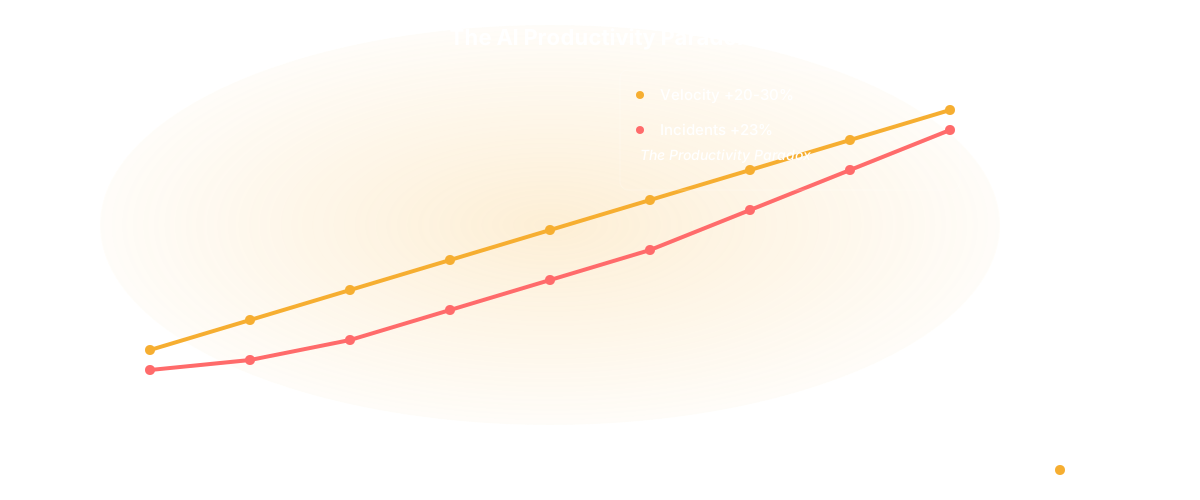
The AI productivity paradox describes how engineering teams using GitHub Copilot and Cursor ship features 20–30% faster while simultaneously experiencing 15–25% increases in production incidents, because AI code assistants generate syntactically correct code that violates system-level architectural constraints invisible to the tool's limited context window. The solution is not abandoning AI tools but pairing them with explicit architectural documentation, constraint-aware prompting, and senior code review focused on system coherence rather than just correctness.
At UshaOm, I used sprint velocity as a planning tool for two years. Our velocity was steadily increasing — until I realized engineers were inflating story points to make the numbers look better.
I've watched this pattern repeat at three different companies now. Engineering leadership sees GitHub Copilot, Cursor, or Claude Code as a pure velocity win. The numbers are real - teams report completing features 20-30% faster. Deploys increase. Velocity charts go up and to the right.
Then the incident tickets start piling up.
Not in obvious ways. The code doesn't have syntax errors or pass blatant tests. The features work in isolation. But six weeks in, you're dealing with subtle coupling problems, inconsistent patterns, and architectural decisions that conflict with the existing system. A service that's supposed to be stateless suddenly caches things. A module that should be independent now has tight dependencies. Error handling follows three different patterns in code written in the same sprint.
The paradox isn't that AI tools are bad. They're genuinely useful. The paradox is that the speed gains from AI require a compensating investment in architectural clarity - or the speed gains become technical debt on an accelerated timeline.
Why This Happens
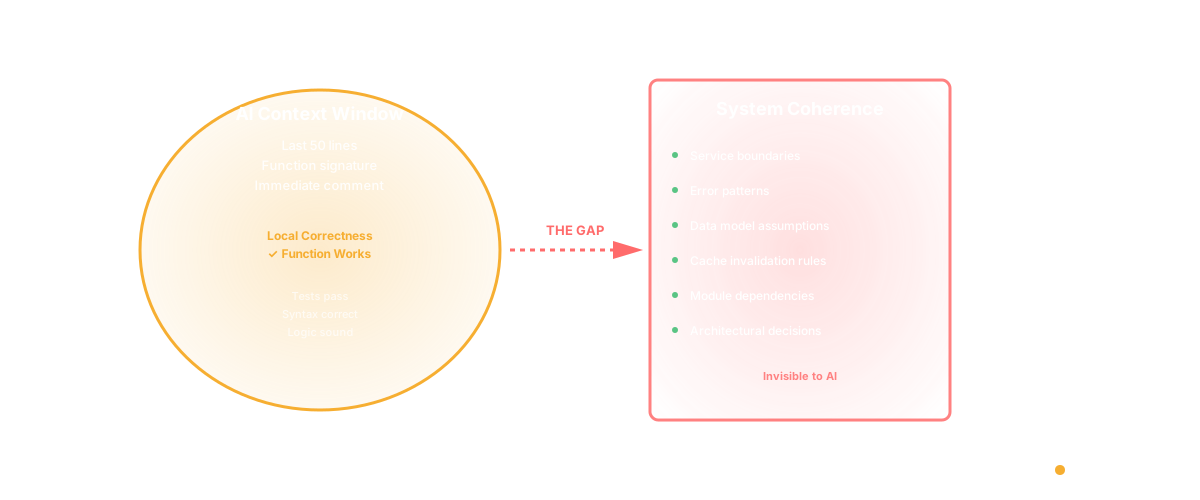
AI coding tools are optimized for local correctness. They answer the question "does this function work?" brilliantly. Given a function signature, some context, and a comment, Copilot will write working code. Syntactically correct. Logically sound. It passes the tests you write for it.
But that's not the question systems engineering asks. Systems engineering asks "does this function work in context?" Does it respect service boundaries? Does it follow the error handling patterns we established? Does it align with the data model assumptions baked into the rest of the system?
Here's the problem: your AI assistant has no way to answer those questions. It sees the immediate context window - maybe the last 50 lines of the file it's editing. It has general training data about how code is usually written. It doesn't have access to your architectural decision records. It doesn't understand that you've spent the last two years trying to isolate business logic from infrastructure. It doesn't know that the module it's working in has strict invariants about cache invalidation.
An engineer who's been with the codebase for a year has internalized these constraints. They hold them as mental models. They might not be documented, but they're present. They live in code review comments, in team Slack discussions, in the way existing code is structured.
Copilot has none of that context. So it generates code that's individually correct but systemically incoherent.
The Acceleration Problem
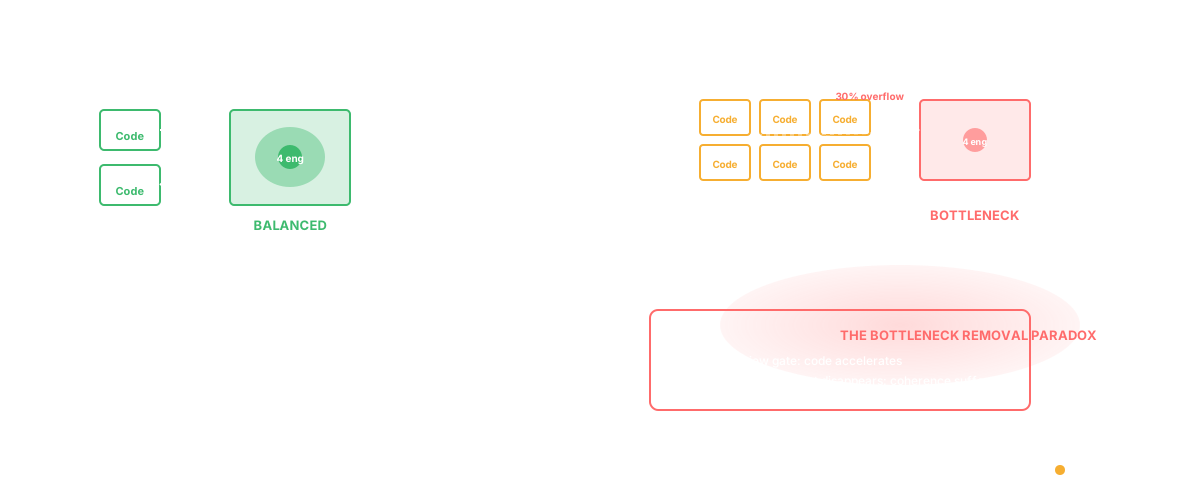
This is where velocity becomes dangerous. Humans are bottlenecks. Code review was your constraint. If human review took three days, that was the feature cycle time - even if the writing took two hours.
Remove the human bottleneck, and you're not just accelerating. You're uncapping production rate. More code, faster.
But review isn't just a gate. It's a constraint that enforced coherence. Every line passed through someone who understood the system. Not perfectly - code review has plenty of problems. But at some baseline, it enforced "does this fit?"
When you increase code production faster than you increase review capacity, you lose that baseline. A team of four engineers writing code 30% faster but with the same review capacity is now shipping code that gets less review per line. Not less time in review - less cumulative expert scrutiny.
And here's the kicker: the people most able to catch these coherence problems are the most senior people. But senior people are expensive. So the tradeoff becomes: use junior engineers with AI assistance to write more code, reviewed quickly by whoever's available.
That's how you get systems that are individually correct but architecturally incoherent.
What Actually Works
If you're using AI coding tools - and honestly, you should be - the fix isn't to slow down or abandon them. The fix is to invest in architectural clarity and shift what your review process is actually looking for.
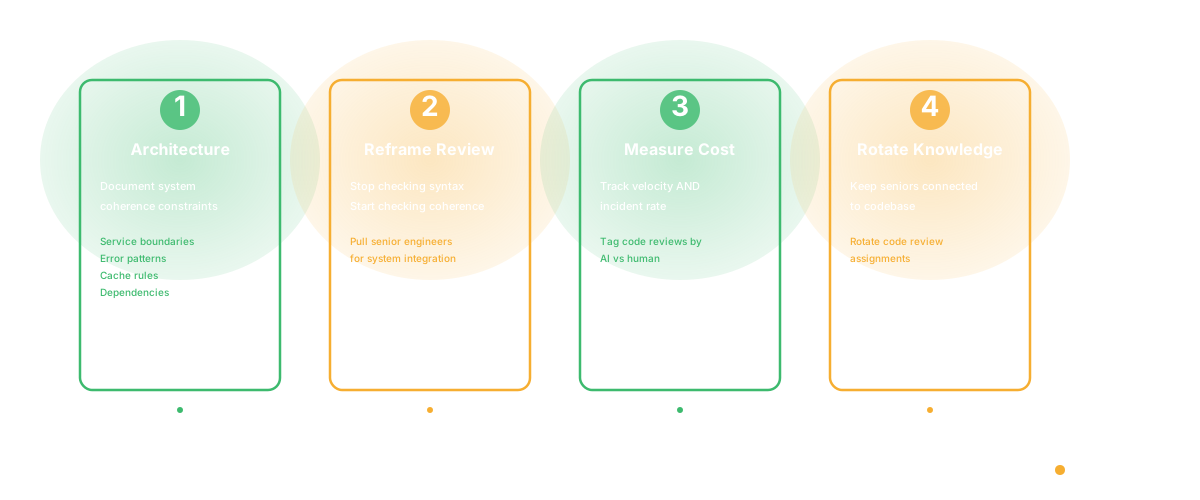
First: explicit architecture guidelines. Before your team uses these tools, document your system's coherence constraints. I don't mean exhaustive documentation. I mean: "When you add a new endpoint, it goes through the gateway - never direct service-to-service. Here's why. Here's an example. Here's what failure looks like." "Our error handling uses this pattern. New code follows it." "Caching decisions need to pass this checklist - here's what we've learned about cache invalidation in our system."
Put these constraints in your README, in your code comments, and literally in your AI prompts. When you use Copilot, you give it the constraints up front: "I'm adding a new query to the user service. Our system uses the following pattern for database access ( - ) here's the code to reference. Here's what the error handling should look like. Generate code that follows both."
This isn't just faster than arguing about it in review. It's more coherent because the AI has signal about what matters.
Second: reframe code review. You're not checking syntax anymore - linters do that. You're not checking "does this function work?" - tests do that. You're checking "does this change respect our system's coherence?" This requires different people and different focus.
Pull the senior engineers into review specifically for coherence. Have them look at how new code integrates with existing systems, not whether it compiles. Have them catch the coupling problems before they propagate.
Third: measure the cost. Velocity is one metric. Incident rate in AI-generated code vs. human-generated code is another. If incidents go up 23% while velocity goes up 25%, you have a real problem. If they stay flat, you've found an actual win. Most teams don't measure this because it's uncomfortable. Measure it anyway.
Fourth: rotate knowledge. If junior engineers are writing most of the code (with AI assistance), senior engineers need to stay connected to the codebase. Rotate code review assignments. Have senior engineers pair with juniors on architecturally sensitive changes. This isn't mentoring for its own sake - it's maintaining the coherence constraint network while you accelerate.
The teams that win with AI tools aren't the ones that just accept faster output. They're the ones that treat the speed as permission to be more intentional about system design. They document the constraints. They enforce them upstream (in prompts) and downstream (in review). They measure both velocity and coherence.
The Real Lesson
The AI productivity paradox tells us something important about how systems work. Velocity without coherence is just accelerating toward a cliff. You can drive a car 30% faster if you remove the steering wheel, but you're going to crash harder.
AI tools are genuinely powerful. But they require you to be more explicit about what matters in your system. That's hard. It requires time. It requires senior people. But if you're shipping 30% faster, you have the productivity margin to invest in clarity.
Use it.
Frequently Asked Questions
Q: Should we not use Copilot if this is the risk?
No. Use it. The risk is real, but the win is real too. The answer is deliberate integration: architectural guidelines up front, explicit constraints in prompts, and review focused on coherence. Teams that do this ship faster and maintain quality while keeping change failure rate stable. Teams that don't use AI tools but also ignore coherence fail just as badly.
Q: How do we measure if our incident rate actually went up?
Track it explicitly. Tag code reviews and incidents by whether the code was AI-assisted or human-written. After two months, you'll have signal. Most teams find either "no difference" or "slight improvement" when they control for code quality in other ways. If you see a real increase, the fix is usually better prompts and more senior review.
Q: Isn't documenting architecture what we should have done anyway?
Yes. You're right. Most teams don't. AI tools make it urgent. Start with software architecture documentation and dependency mapping — these give AI tools the context they need to generate coherent code.
Related Reading
- Sprint Velocity: The Misunderstood Metric
- Cycle Time: Definition, Formula, and Why It Matters
- DORA Metrics: The Complete Guide for Engineering Leaders
- Programmer Productivity: Why Measuring Output Is the Wrong Question
- Software Productivity: What It Really Means and How to Measure It
- Automated Sprint Planning: How AI Agents Build Better Sprints
- Cursor and Copilot Don't Reduce Technical Debt
- What Is AI Technical Debt?