
Roadmaps slip because of invisible codebase problems — hidden dependencies between services, technical debt that inflates estimates, ownership gaps where no engineer fully understands the module being modified, and coupling that turns a two-week feature into a six-week refactor. These are information problems, not discipline problems: teams estimate based on assumptions about the codebase rather than actual data about complexity, dependency graphs, and code health. The minimum viable fix is dependency mapping — knowing which services call which, which databases are modified by which systems — which prevents most roadmap surprises before commitments are made.
At Salesken, our roadmap slipped every quarter for three consecutive quarters. The problem wasn't engineering capacity — it was that our estimates were based on vibes, not data.
By Vaibhav Verma
Every company I've worked at has had the same conversation about six months in. The roadmap keeps slipping. We said Q3 would have features A, B, and C. We shipped A. B got delayed. C got cut. Engineering says they'll do better. Product says they'll be more realistic with estimates. They both mean it. It happens again next quarter.
I stopped blaming discipline a long time ago. The roadmaps don't slip because teams aren't serious enough. They slip because nobody can see what's actually going to cause delays until the delay is already happening.
The Three Information Failures
There are three underlying reasons roadmaps slip, and all three are information problems - not process problems, not people problems.

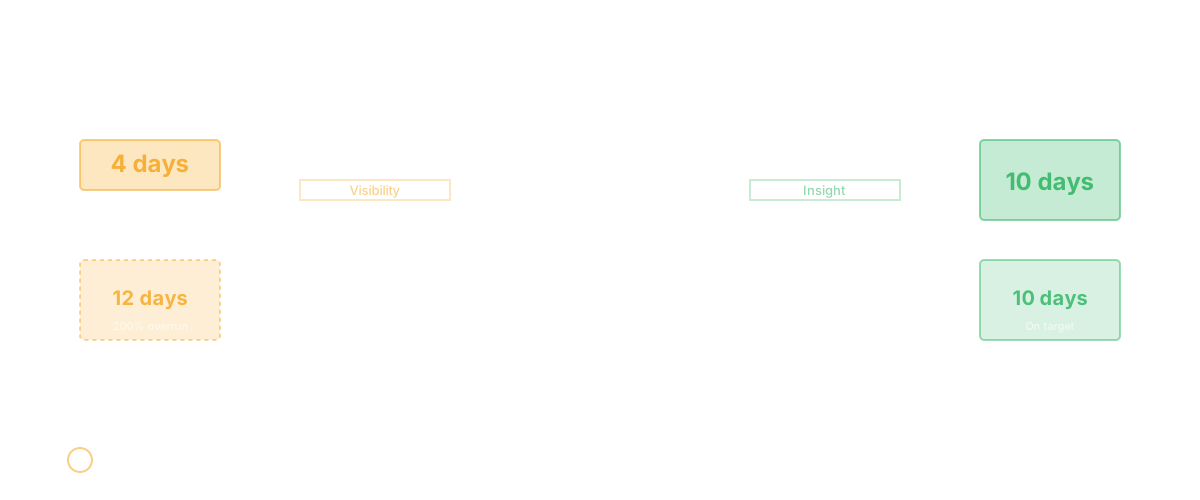
First: estimates are systematically wrong because engineers don't have the codebase context they need to know what they're getting into. Someone's building a feature that touches the auth system. They estimate four days. Reasonable estimate for the obvious work. But they didn't know the auth system was refactored three years ago and only the original engineer still knows how it works. They didn't know there's a legacy payment integration that authenticates in a way that breaks if you change the auth schema. They didn't know about the mobile app that cached auth tokens in a way that will fail if you modify the flow. Four days becomes twelve days by day three, when they hit the first unknown. The estimate wasn't wrong - the information was incomplete.
Second: scope grows because the person writing requirements can't see the boundaries of what "done" actually looks like at the code level. A PM writes: "Users should be able to save their cart." Seems straightforward. But done at the code level might mean: updating the data model, changing the API, updating the frontend, handling edge cases with sessions, ensuring it works for guest checkouts, maintaining backward compatibility with old versions of the mobile app, adding tests, updating documentation. Scope exploded because the requirement looked simple but wasn't.
Third: dependencies are invisible until they bite you. You commit to shipping a new checkout flow in Q4. Halfway through, you realize it requires changes to the payment processor integration, which is owned by a different team that's working on something else, and those changes might affect the reconciliation system, which hasn't been touched in two years. By the time all this comes out, your timeline is already wrong. If you'd known about the dependency chain upfront, you would have planned differently.
None of these failures are about discipline. All three are about visibility. Engineering doesn't have visibility into what's actually in a module they've never touched. Product doesn't have visibility into what the code-level boundaries are. Nobody has visibility into the dependency chain until it matters.
What Estimates Actually Measure
Here's something I learned watching this cycle repeat: bad estimates aren't usually about incompetence. They're about guessing. A good engineer will estimate a task they understand clearly. A bad estimate comes when you're taking a guess at how long something will take in code you're not familiar with.
The industry response to this has been to increase estimates. Padding. Tacking on a safety factor. It helps a little. You slip less catastrophically. But you've just made every estimate 30% longer, which means your roadmap looks fake from day one. You say something takes eight weeks, everyone knows that's really a six-week task with safety buffer, so they ask you to squeeze it anyway.
What actually works is reducing the guesswork. An engineer who has codebase context for a module will estimate it in days, not weeks. An engineer who understands the architecture knows what can be parallelized and what has to be sequential. A PM who understands what "done" actually means at the code level will scope features more realistically upfront.
I've watched teams go from slipping 40% of features to slipping less than 10% by doing one thing: making codebase context visible before planning. Not learning the code better. Not hiring smarter people. Just making sure that when an engineer sits down to estimate, they can actually see what they're estimating.
The Dependency Chain Problem
The trickiest invisible problem is dependencies. You plan assuming independence when almost nothing is actually independent.
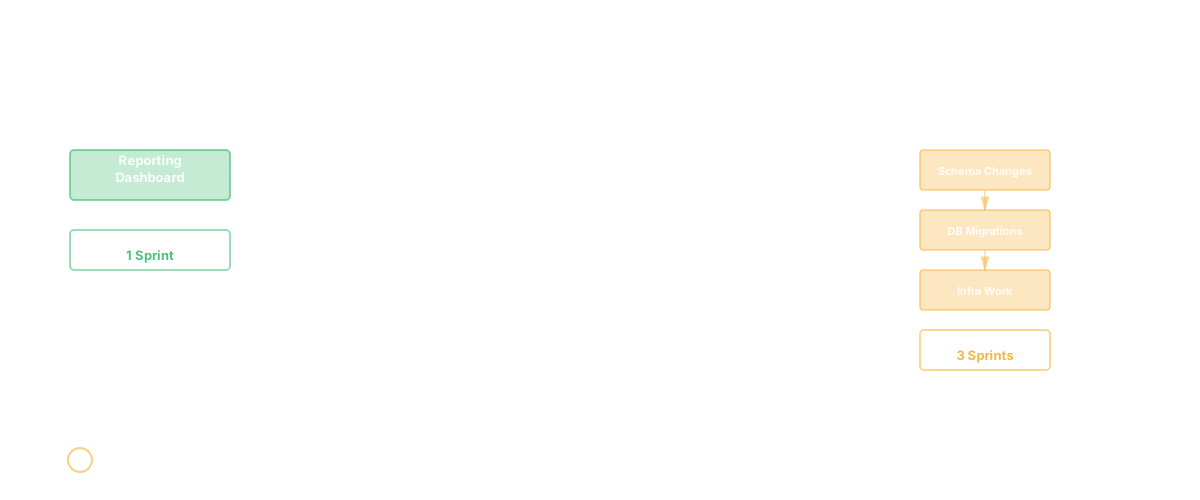
Consider a real example: you want to build a new reporting dashboard. Seems isolated. It reads data, displays it, shipping in a sprint. But the data you need doesn't exist in the current database schema in the right format. So you need schema changes. But the database is replicated across three services that all have their own migration processes. So now you're coordinating with three teams. One of them uses a tool that hasn't been updated in a year. Now you're waiting on infra work. That "one sprint" feature is suddenly a three-sprint project when you finally see all the dependencies.
This isn't about asking more questions in meetings. Asking more questions helps, but you'll still miss dependencies because they're not obvious. The original developer of the payment system doesn't think to mention it's entangled with the checkout system because of course it is - they built both. But someone touching checkout for the first time won't know unless they can see it.
A PM who can see the dependency chain at the architecture level won't promise features that require coordinating with three teams silently. An engineering manager who can see which systems are coupled will make different staffing decisions. A CTO who can see where technical debt is concentrated will prioritize differently.
Making Dependencies Visible
This is where tools matter. Not process improvements or more meetings. Tools that let you ask your codebase: "If I change this, what else breaks?" Tools that show you which systems talk to which. Tools that make visible what's currently invisible.
When I was building Glue, this was the core insight. Teams don't slip roadmaps because they're undisciplined. They slip because they're flying blind. A PM needs to be able to see "feature X requires changes in systems A, B, and C" before the sprint starts. An engineer needs to be able to see "this module I'm about to estimate depends on this other module that I've never looked at" before they give a number.
It sounds simple. It's shockingly rare. Most teams plan roadmaps without seeing the dependency graph. They estimate without seeing the codebase context. They're doing math without all the numbers.
The Real Conversation
When a roadmap slips, the post-mortem usually focuses on the wrong things. "We need to improve estimation. We need more buffer time. We need better planning processes." Those things help at the margins. But the core problem is information.
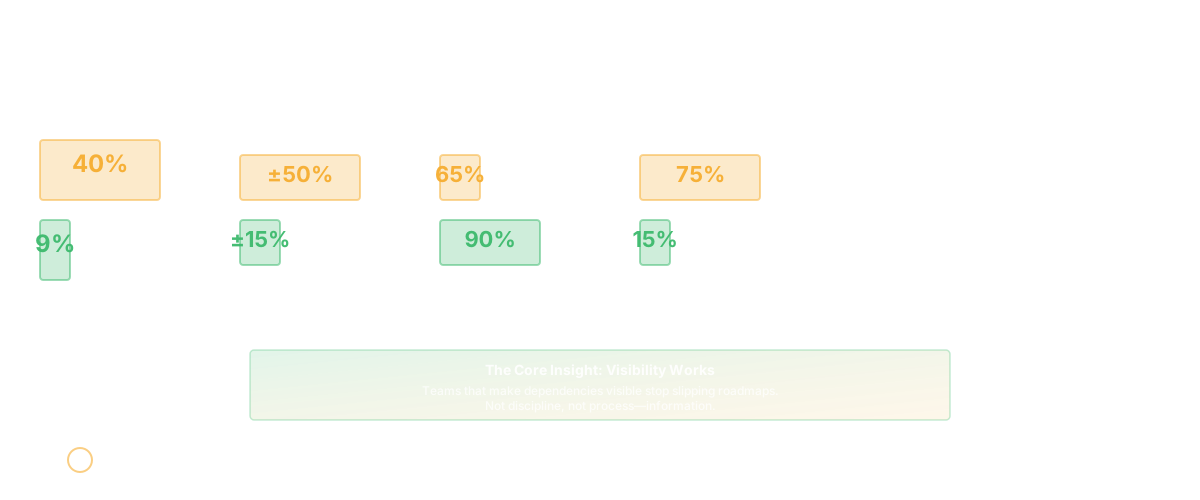
An estimate that slips by 200% wasn't a bad estimate - it was an estimate made without the necessary information. Adding 30% buffer doesn't fix that. Making that information visible before estimation does.
A scope that grows isn't scope creep in the traditional sense. It's discovering scope that should have been obvious upfront if you could see the code. Writing clearer requirements helps. Having codebase visibility before writing requirements helps more.
The teams I've worked with that have stopped slipping roadmaps consistently have done the same thing: they made the invisible visible. They built codebase context into their planning process. Not instead of good estimation and clear requirements. Along with it.
Frequently Asked Questions
Q: Is roadmap slipping ever about team discipline? Sometimes yes, sometimes no. If your team is sandbagging estimates intentionally or if you're consistently adding new scope mid-sprint, that's a discipline issue. But if you're having unexpected blockers, dependencies you didn't see, or estimates that are off by 50%+, that's usually an information problem. Discipline won't fix it - visibility will.
Q: How do I know if my roadmap slip is an information problem or a planning problem? Ask these questions: Did we know about the dependency before we started? Did the engineer who estimated have access to the actual codebase for the module they were estimating? Did we know what "done" meant at the code level? If the answer to any of these is no, you have an information problem. You can't plan your way out of missing information.
Q: What's the minimum viable version of codebase visibility? Start with dependency mapping. Who calls what? Which services talk to which? Which databases are modified by which systems? That single piece of information - the dependency graph - prevents most roadmap surprises. You can add more (codebase intelligence, technical debt visualization, coupling analysis) after that, but the dependency graph is where it matters most.
Related Reading
- AI Product Discovery: Why What You Build Next Should Not Be a Guess
- Automated Sprint Planning: How AI Agents Build Better Sprints
- Sprint Velocity: The Misunderstood Metric
- Cycle Time: Definition, Formula, and Why It Matters
- DORA Metrics: The Complete Guide for Engineering Leaders
- Software Productivity: What It Really Means and How to Measure It
- What Is AI Product Roadmap?
- AI Roadmap
- Scope Creep Prevention
- The Roadmap as a Command Center
- Glue for Engineering Planning